
You take your aligners out after a day of wear, bring them closer to rinse them, and notice a stale smell you weren’t expecting. For a lot of patients, that moment is equal parts frustrating and embarrassing. You chose Invisalign because it’s discreet, comfortable, and fits into daily life. A bad odor feels like the opposite of all that.
The good news is that this is a common problem, and in most cases it’s manageable. If you’ve been searching why does my invisalign smell, the answer usually isn’t that anything is “wrong” with you. It’s usually a sign that the trays, your teeth, your saliva, or your cleaning routine need a few adjustments.
Around Rancho Bernardo and across San Diego, I see this concern most often in busy adults, teens with packed school schedules, and parents trying to keep treatment on track between meals, sports, and work. The pattern is familiar. Someone is doing many things right, but one or two small habits are letting odor build up.
Your Confident Smile Starts with Fresh Aligners in San Diego
A patient often starts by saying something like, “My trays smell weird, even though I brush.” That detail matters. Brushing your teeth is important, but aligner odor isn’t only about your teeth. It’s also about what’s happening on the plastic itself.
Invisalign can be a great option when you want a straighter smile without metal braces. That’s one reason people looking for a cosmetic dentist in San Diego or a dentist near me often ask about clear aligners first. But the trays need daily attention. If they don’t get it, they can start to smell fast.
What many patients notice first
The odor usually shows up in everyday moments:
- Morning removal after a full night of wear
- After coffee when trays stayed in a little too long
- At work or school when aligners sat in a case without being rinsed first
- Late in a tray cycle when buildup has had time to collect
That smell can affect more than confidence. It can make people wear the trays less consistently, and that creates a different problem. If you don’t want to wear something that smells unpleasant, you’re less likely to keep it in for the time your treatment requires.
Slight odor can happen. Strong, repeated odor usually points to a hygiene or oral health issue that can be improved.
Why this matters beyond smell
Fresh aligners aren’t just about comfort. They support healthy gums, cleaner teeth, and smoother treatment. When trays stay cleaner, patients usually find it easier to stay consistent, and consistency is a big part of clear aligner success.
That’s also why this topic belongs in the same conversation as regular cleaning and exams, new patient exams, and preventive dental care. If you’re looking for the best dentist in Rancho Bernardo, CA or a dentist in San Diego, CA who can help with Invisalign and the oral health habits around it, this is exactly the kind of issue worth bringing up.
Understanding Why Your Invisalign Trays Smell
Your aligners sit over your teeth for most of the day. That creates a small enclosed space where saliva, plaque, and tiny food particles can collect. Imagine covering a surface that already has moisture on it. If it isn’t cleaned regularly, buildup forms.
Bacterial buildup is the primary cause
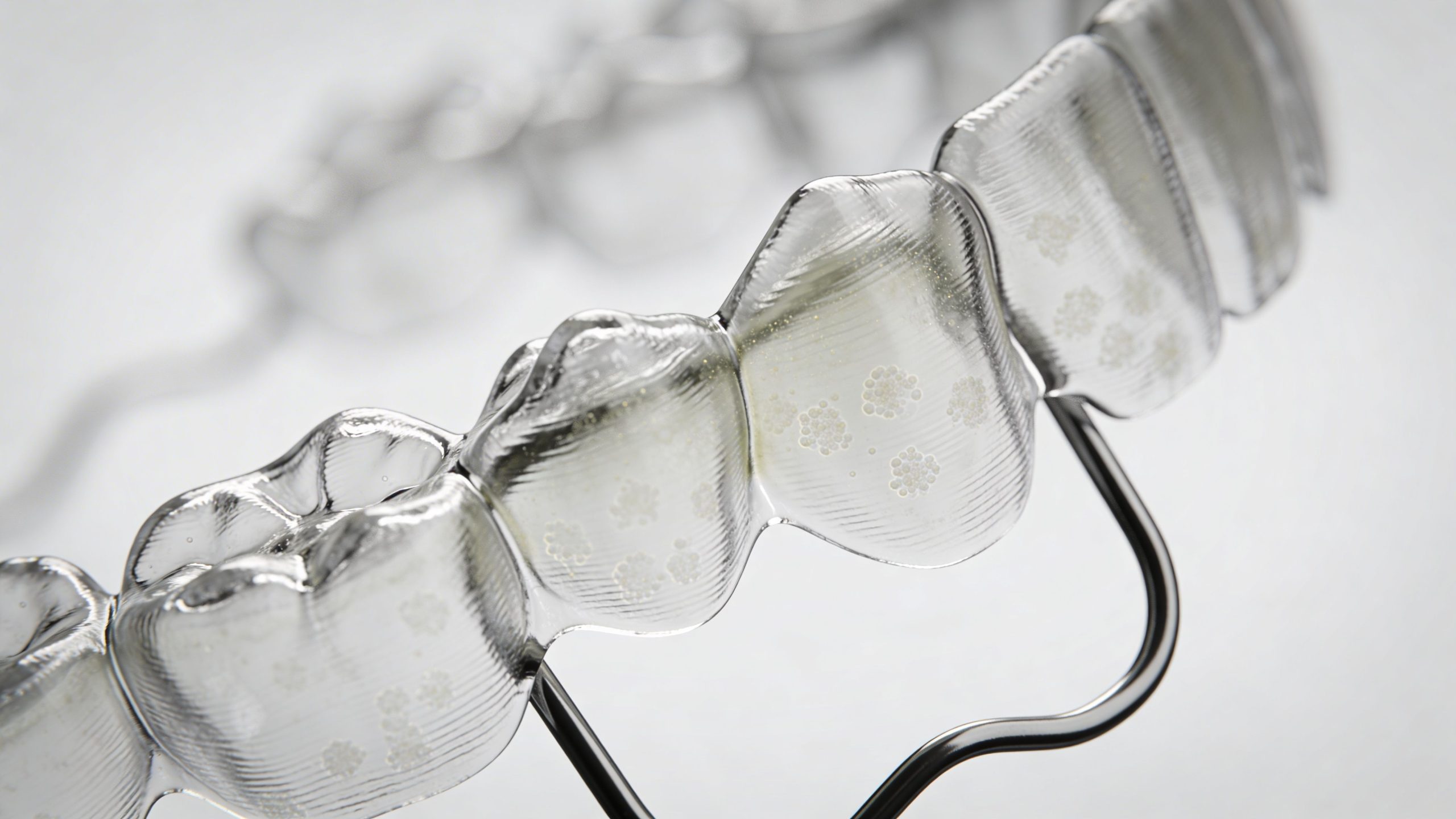
The primary cause of aligner odor is bacteria. According to this review on why Invisalign trays smell, up to 80% of patients experience noticeable odor if trays aren’t cleaned daily, and the smell develops when saliva and food debris allow bacteria to grow into a biofilm that traps odor-causing volatile sulfur compounds, which are responsible for 90% of bad breath cases.
Biofilm is the sticky film that clings to teeth, gums, and aligners. Once it settles onto the trays, a quick rinse usually isn’t enough. That’s why some patients say, “I washed them, but they still smell.” They rinsed away loose debris, but the film stayed behind.
If you’re newer to treatment and want a better sense of tray design and wear patterns, this page on how clear aligners work gives a helpful overview.
Why plastic trays hold odor so easily
Clear aligners are smooth, but they still collect residue. During the day, your mouth constantly introduces:
- Saliva
- Plaque bacteria
- Microscopic food particles
- Proteins from the mouth
Once those sit under and around the aligner, odor has a place to develop. If you drink anything other than water with trays in, the process gets worse. Dark drinks can stain, sweet drinks can feed bacteria, and acidic drinks can irritate the environment around the teeth.
Why the smell can seem stronger than regular bad breath
Many people assume the odor is “just bad breath trapped in plastic.” That’s only part of it. The tray itself can become the source.
Practical rule: If the aligner smells bad right after you remove it, the tray surface needs attention, not just your toothpaste.
This is why aligner care has to include two targets. Clean the mouth, and clean the trays. If only one is cleaned well, smell often lingers.
Are You Making These Common Invisalign Mistakes
Most aligner odor doesn’t come from one big mistake. It comes from small habits repeated every day. Patients are often surprised by which ones matter most.
Habits that make trays smell worse
A few patterns come up again and again in practice:
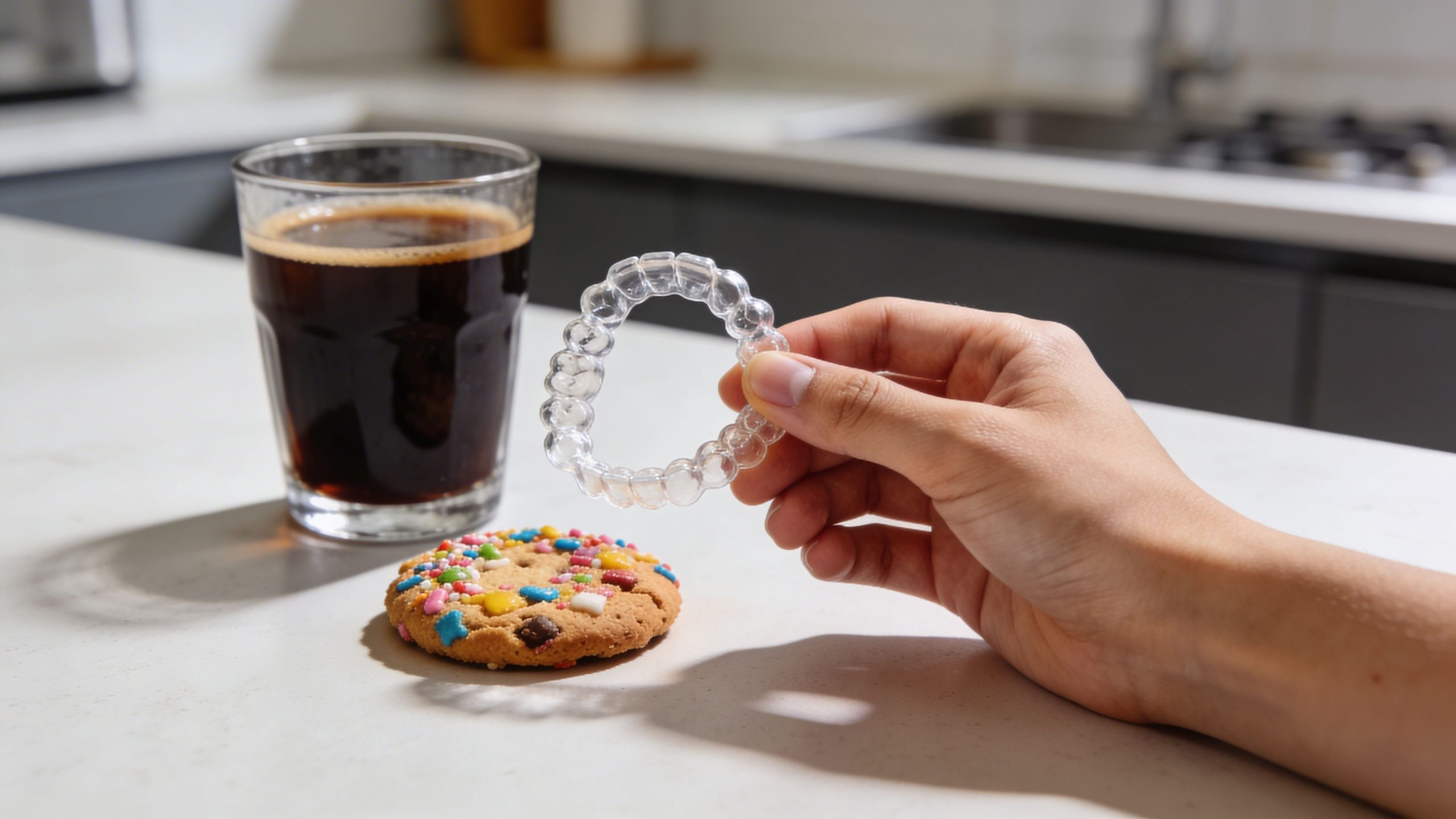
- Drinking coffee with trays in. Even black coffee leaves residue and can intensify odor.
- Skipping a rinse after removal. Saliva dries on the plastic and creates a film.
- Putting trays back in after eating. Even a “small snack” leaves enough behind to matter.
- Wrapping aligners in a napkin. That often leads to contamination, drying residue, or accidental loss.
- Using hot water. Heat can distort the tray and make cleaning less effective if the fit changes.
Some patients also overcorrect. They scrub aggressively with toothpaste, thinking more abrasion means more cleanliness. Usually it means scratched plastic, and scratched plastic can hold onto buildup more easily.
Dry mouth can be a hidden cause
Not every smelly tray is the result of poor habits. Sometimes the mouth itself is drier than usual.
According to this review on Invisalign smell and dry mouth, Invisalign wear can induce dry mouth in up to 30% of patients, which reduces saliva’s natural antimicrobial action. That allows odor-producing bacteria to generate 2 to 5 times higher levels of smelly compounds within 12 hours. The same source notes that drinking over 2 liters of water per day can reduce this incidence by 50%.
That matters because saliva is part of your natural cleaning system. When saliva flow drops, odor tends to stick around longer.
Signs dry mouth may be part of the problem
Consider dry mouth if you notice:
- Your mouth feels sticky when trays are in
- Odor is worse overnight
- You wake up thirsty
- You breathe through your mouth, especially during sleep
- Your trays smell stronger even when your routine seems solid
If your aligners smell worst after long stretches of wear, don’t only blame the trays. Check your hydration and your breathing habits too.
A simple fix like drinking more water can help. So can removing trays for meals promptly, rinsing them right away, and avoiding long periods where the plastic sits coated in dried saliva.
A Step-by-Step Guide to Cleaning Your Aligners
Good aligner care doesn’t need to be complicated. It does need to be consistent. The most successful routines are simple enough to repeat every day, even when life gets busy.
Your daily routine
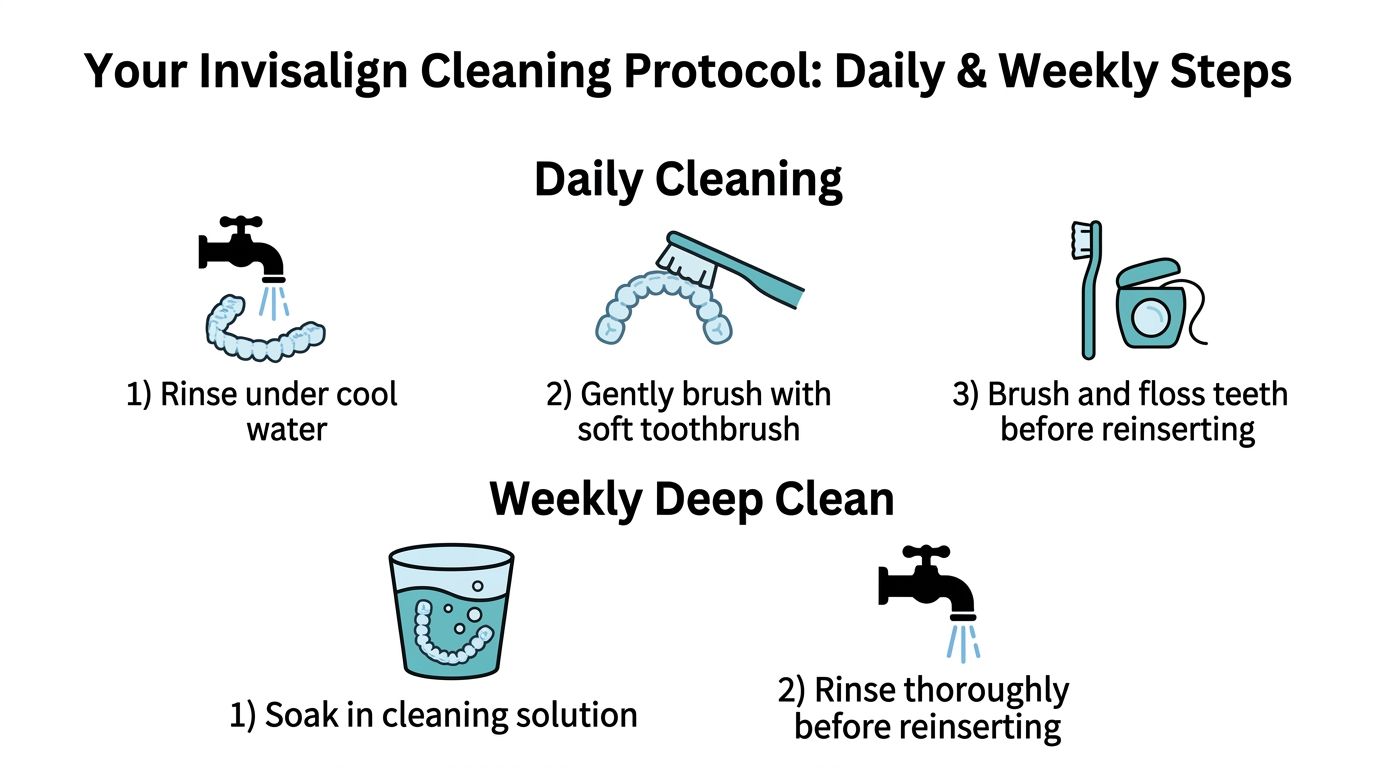
Use this as your baseline system:
Rinse as soon as you remove them
Cool or lukewarm water helps wash off saliva before it dries on the tray.Brush the trays gently
Use a separate soft toothbrush reserved for aligners. A small amount of clear, unscented soap works well for many patients.Brush and floss before reinserting
Clean trays placed onto unclean teeth pick up new debris right away.Store them in a clean case
Don’t leave them loose in a pocket, car console, or napkin.
A visual routine can make it easier to remember the order. This short video gives a helpful walkthrough:
Your deeper clean
A soak helps remove the film that brushing may miss. Many patients benefit from soaking aligners regularly, especially near the end of each tray’s wear period.
You can also review this guide on how to clean Invisalign aligners for another practical breakdown of at-home cleaning habits, along with this page on how to clean aligners for patient-friendly instructions.
What to use and what to skip
| Option | Good choice | Why it helps |
|---|---|---|
| Soft toothbrush | Yes | Removes film without rough scrubbing |
| Clear unscented soap | Often yes | Cleans without gritty abrasion |
| Invisalign cleaning crystals | Yes | Made for aligner soaking |
| Effervescent aligner tablets | Often yes | Useful for deeper cleaning |
| Toothpaste | Usually no | Many formulas are too abrasive |
| Colored soaps | Better to avoid | Can leave residue or taste |
| Hot water | No | Can warp the plastic |
A few essential points
Patients get the best results when they remember three things:
- Rinse first. Don’t let saliva dry onto the tray.
- Be gentle. Hard scrubbing can make the tray harder to keep clean.
- Clean your teeth too. A clean tray over plaque-covered teeth won’t stay fresh.
Clean aligners are part of treatment, not an optional extra. If the trays aren’t clean, your mouth spends hours sealed in with buildup.
Choosing the Best Cleaning Products for Your Invisalign
There isn’t one perfect product for every patient. The best choice depends on how much buildup you get, how often you’re away from home, and whether you prefer a fast daily routine or a deeper clean at night.
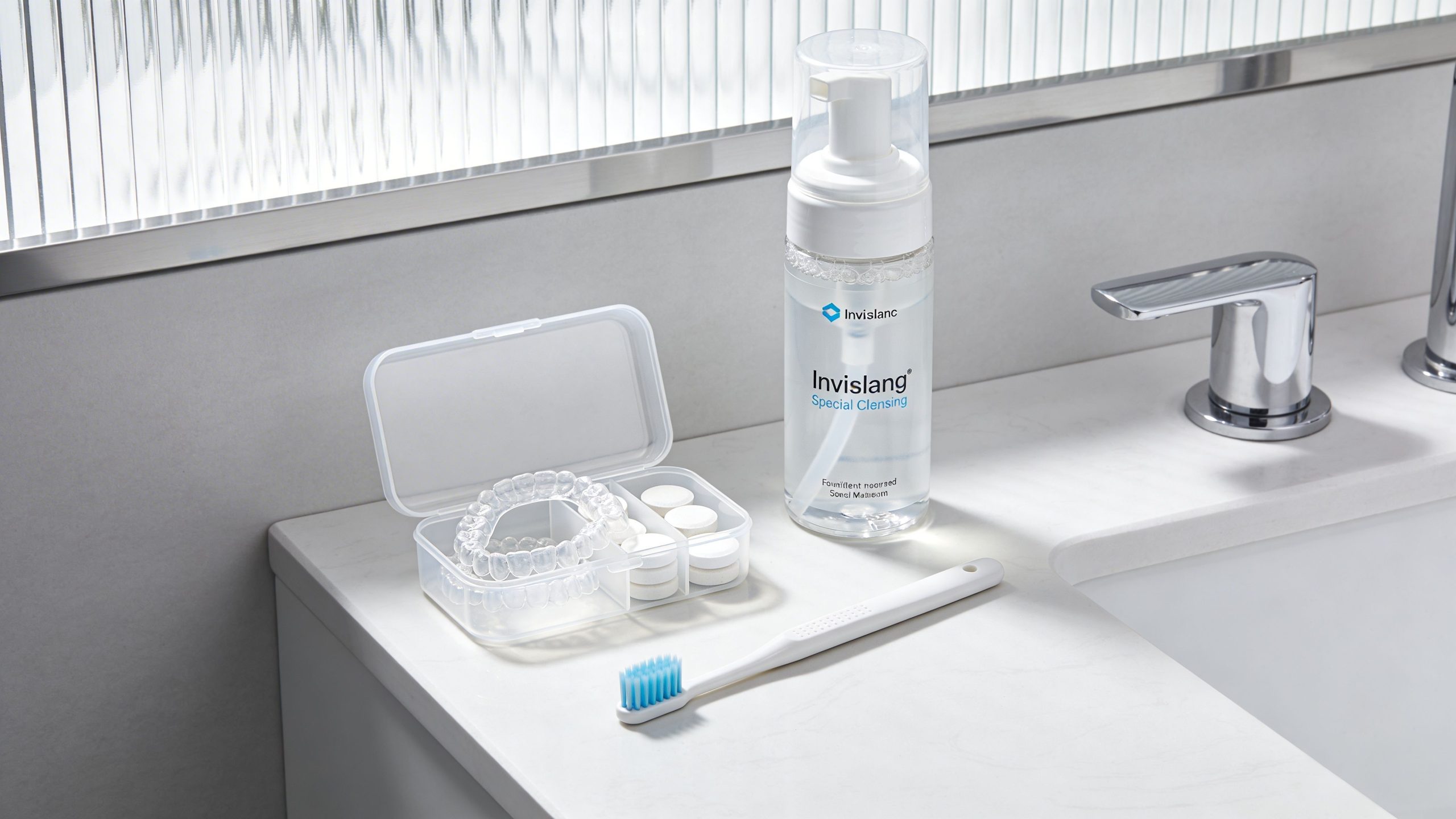
The main options patients ask about
Some products are designed specifically for aligners. Others are general oral appliance cleaners. Each has trade-offs.
Invisalign Cleaning Crystals
These are convenient for patients who want a product made for the trays they already wear. They’re easy to fit into a nightly routine and are a strong option when odor is the main complaint.
Best for people who want something straightforward and product-specific.
Effervescent tablets
Products like Retainer Brite are popular because they’re simple. Drop a tablet into water, soak, rinse, and you’re done. They’re often a good fit for teens, travelers, and anyone who wants less mess.
A tablet soak can work well when the trays look cloudy or carry that “end of the day” odor.
Foam cleansers and soaps
Foam cleansers are quick and portable. Clear soap is easy to keep by the sink. These options are useful for daily brushing, but they may not feel like enough if you’re dealing with heavier film.
They’re often best as part of a routine, not the entire routine.
A simple comparison
| Product type | Convenience | Deep-clean feel | Good fit for |
|---|---|---|---|
| Cleaning crystals | High | Strong | Nightly soaks |
| Effervescent tablets | High | Strong | Busy schedules |
| Foam cleanser | High | Moderate | Quick daytime care |
| Clear soap with soft brush | High | Moderate | Daily maintenance |
| Ultrasonic cleaner | Moderate | Strong | Patients who want a more thorough home setup |
Some patients also ask about sanitizing other oral items such as retainers, toothbrushes, and cases. This overview of the best ways to sanitize oral appliances is a useful general reference for keeping the rest of your oral care tools cleaner too.
What usually doesn’t work well
A few choices create more problems than they solve:
- Whitening toothpaste can scratch aligners
- Very hot water can affect fit
- Strong colored mouthwashes may leave an aftertaste or discoloration
- Household cleaners should never touch anything you wear in your mouth
If you’re deciding between products, think in terms of consistency. The best cleaner is the one you’ll use correctly every day.
When Aligner Smell Signals a Bigger Dental Issue
Most odor comes from tray buildup. Sometimes it doesn’t. If the smell keeps returning even after careful cleaning, I’d stop treating it like a simple tray problem.
Persistent odor deserves a closer look
A strong smell that doesn’t improve can point to an issue in the mouth itself, such as plaque retention around the gums, an early cavity, or inflammation. In some cases, the trays are clean enough, but the breath or the teeth underneath are the primary source.
That’s why a checkup matters if you notice any of these:
- Bad smell even after cleaning the trays well
- Bleeding when brushing or flossing
- A bad taste that keeps returning
- Sensitive spots or pain
- Visible buildup near the gumline
- A tray that no longer seems to fit correctly
Why professional care matters here
Aligners cover the teeth for long periods, so they can make an existing problem more noticeable. If there’s early decay, gum irritation, or plaque collecting in hard-to-reach areas, the trays may trap the environment that makes the smell easier to detect.
Clean trays with a foul odor still present usually mean it’s time to examine the teeth and gums, not just the plastic.
In these cases, a professional dental exam, dental x-rays, or a new patient exam can help. If needed, treatment may include preventive care, periodontal therapy, or restorative dentistry to address the source. In a few situations, patients who have delayed treatment may also need care for a damaged tooth, from a filling to a crown, and occasionally more urgent services such as a tooth extraction or an emergency dentist visit if pain is involved.
The important point is simple. Don’t keep masking the smell if it keeps coming back. Find the reason.
Partner with San Diego’s Trusted Invisalign Provider
Clear aligner treatment works best when it’s a partnership. The trays move teeth, but daily habits protect your results. That includes cleanings, home care, hydration, and speaking up when something doesn’t seem right.
What patients should expect from local dental support
If you’re in Rancho Bernardo, Rancho Peñasquitos, Poway, Escondido, or nearby parts of San Diego, you shouldn’t have to guess whether aligner odor is normal, whether your trays fit properly, or whether bad breath is coming from the aligners or something deeper.
Good Invisalign support should include:
- Clear instructions you can follow at home
- Practical answers about odor, fit, and cleaning products
- Regular exams to protect teeth and gums during treatment
- A broader oral health plan that supports both appearance and long-term health
That broader view matters. Straightening teeth is part of smile care, but so are healthy gums, strong enamel, and comfortable function. Patients who start with aligners often end up asking about teeth whitening, cosmetic dentistry, TMJ concerns, or future restorative needs. A long-term dental home helps tie all of that together.
A healthier smile should also feel fresh
If you’ve been typing why does my invisalign smell into search results late at night, you’re not overreacting. It’s worth fixing. In most cases, the cause is manageable with a better routine. In the stubborn cases, a dental visit can catch something early before it becomes a bigger issue.
Fresh aligners make treatment easier to stick with. Easier treatment means fewer interruptions. And fewer interruptions help you get to the smile you wanted in the first place.
If your aligners smell, your breath feels off, or you want a local dental team to help you stay on track with Invisalign and overall oral health, schedule a visit with Pegah S. Salami, DMD, FAGD. Patients in Rancho Bernardo, Poway, Rancho Peñasquitos, Escondido, and the greater San Diego area can come in for a cleaning, exam, consultation, or new patient visit and get clear, practical guidance in a warm setting.





