

A San Diego trip should start with excitement, not with a tooth that suddenly throbs the night before your flight. Many people notice a small twinge when they sip coffee, chew on one side, or clench their jaw during stress. Then they board a plane and that mild annoyance turns into sharp, distracting pain.
If you're dealing with flying with a toothache, your concern is valid. Tooth pain during air travel has a real clinical cause, and it often points to a dental problem that needs attention before you leave. For patients in Rancho Bernardo, Poway, Escondido, and nearby San Diego communities, getting it checked early can mean the difference between a smooth trip and a miserable flight.
Flying with a Toothache? Your Pre-Travel Guide from a San Diego Dentist
A common version of this problem starts the same way. A patient has a flight coming up, assumes the discomfort will pass, and tries to push through. The bag is packed, the rideshare is booked, and then the ache gets worse during takeoff or landing.
The medical term for this is barodontalgia, also called aerodontalgia or tooth squeeze. It refers to tooth pain triggered by changes in atmospheric pressure during air travel, and it affects an estimated 0.26% to 2.8% of flight crews, passengers, and divers globally, according to a review published through the National Library of Medicine. That same review notes an important point. Healthy teeth do not experience this pressure-related pain, which means flying tooth pain often signals an underlying dental issue.
What this usually means for travelers
If your tooth only hurts when you fly, that doesn't mean the problem is imaginary or minor. It often means there's a hidden vulnerability such as decay, a compromised filling, inflammation inside the tooth, or a crack that's easy to miss on your own.
For frequent travelers, that matters. A quick dental exam before a trip can catch the problem before you end up trying to manage severe pain in a cramped airplane seat.
Practical rule: If a tooth has been "acting up" on the ground, don't assume it will behave better in the air.
Why San Diego travelers should act early
People in San Diego often travel for work, family visits, school breaks, and vacations. That means tight schedules and a strong temptation to delay care. In practice, waiting is usually what creates the bigger disruption.
The better move is simple. If you have a nagging toothache, sensitivity when biting, gum swelling, or jaw tension before a trip, treat it like a time-sensitive dental problem. A local exam can determine whether you need a filling, crown, root canal, periodontal treatment, TMJ care, or just reassurance that it's safe to fly.
That kind of clarity is especially important if you've been searching for a dentist near me, an emergency dentist, or a dentist in San Diego, CA because a flight is approaching. When travel is on the calendar, guesswork isn't a plan.
Why Cabin Pressure Makes a Mild Toothache Worse
The simplest way to think about flight-related tooth pain is this. Air expands when outside pressure drops. That's why a bottle or snack bag can look puffier on a plane than it did at the gate.
Your tooth can react in a similar way if there's trapped air inside a compromised area.
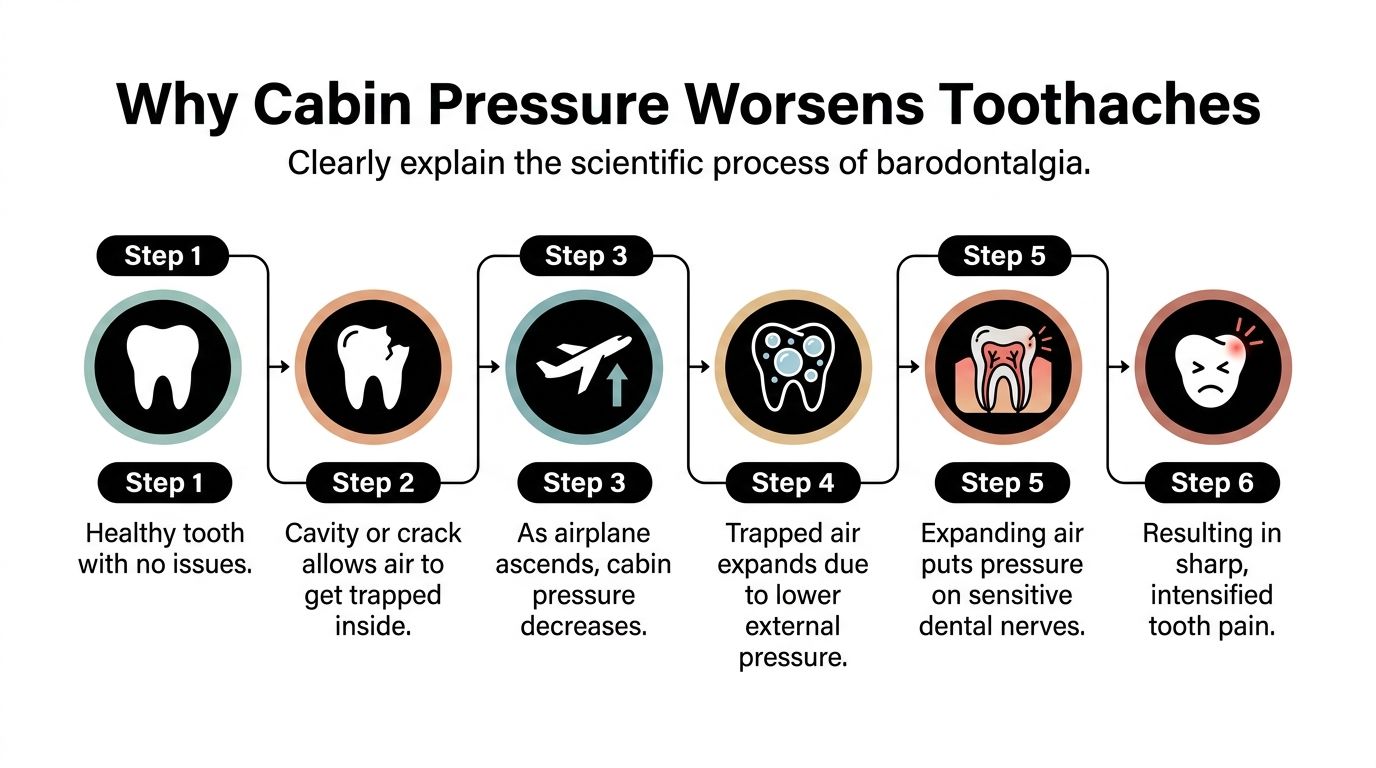
What happens in the cabin
At cruising altitude, cabin air mimics about 6,000 to 8,000 feet of elevation, and gas pockets in teeth can expand by up to 30% to 40% under Boyle's Law, according to South Kent Dental's discussion of barodontalgia. That pressure can push against the nerve inside the tooth.
The same source notes that this problem, once called aviator's ache, affects roughly 1% to 3% of at-risk flyers. The key phrase is "at-risk." The flight isn't creating a cavity or crack. It's exposing one.
Which dental problems are most likely to flare up
Certain issues are much more likely to cause pain in the air:
- Deep decay: A cavity can weaken the tooth and let irritation build close to the nerve.
- Older fillings: Tiny gaps around an older restoration can become a trouble spot.
- Cracks: Even a small fracture can create pressure sensitivity.
- Recent dental work: A tooth that's already inflamed may react more strongly during ascent or descent.
- Hidden nerve problems: Sometimes the tooth seems fine on the ground but still has internal inflammation.
A healthy tooth generally doesn't react this way. If one specific tooth hurts on a plane, that's a useful clue.
Why pain often peaks during takeoff and landing
Most patients don't describe a constant, steady ache from gate to gate. They notice spikes when the plane climbs or descends. That's when pressure changes happen more noticeably, and those shifts can aggravate an already sensitive tooth.
This is also why some people think their pain is "sinus pressure" or "just stress." Sometimes it is. But if the discomfort is focused around one tooth, one side of the mouth, or an area with previous dental work, a tooth problem moves much higher on the list.
Flying doesn't usually create the dental problem. It reveals the problem you already had.
The overlooked TMJ connection
Not every case of flying with a toothache starts in the tooth itself. Some patients clench during travel, especially if they're anxious flyers. If the jaw joint and chewing muscles are already irritated, that pressure can radiate into the teeth and make the whole side of the face feel sore.
That overlap matters because TMJ discomfort, tooth pain, and dental anxiety can feed into each other. A person who's nervous about flying may clench harder. A person who clenches harder may feel more pain. Then the pain increases anxiety even more.
Immediate Steps to Take Before Your Flight
If your flight is coming up soon, focus on decisions that help. The goal isn't to "tough it out." The goal is to lower the chance of pain in the air and avoid making a rushed choice at the airport.
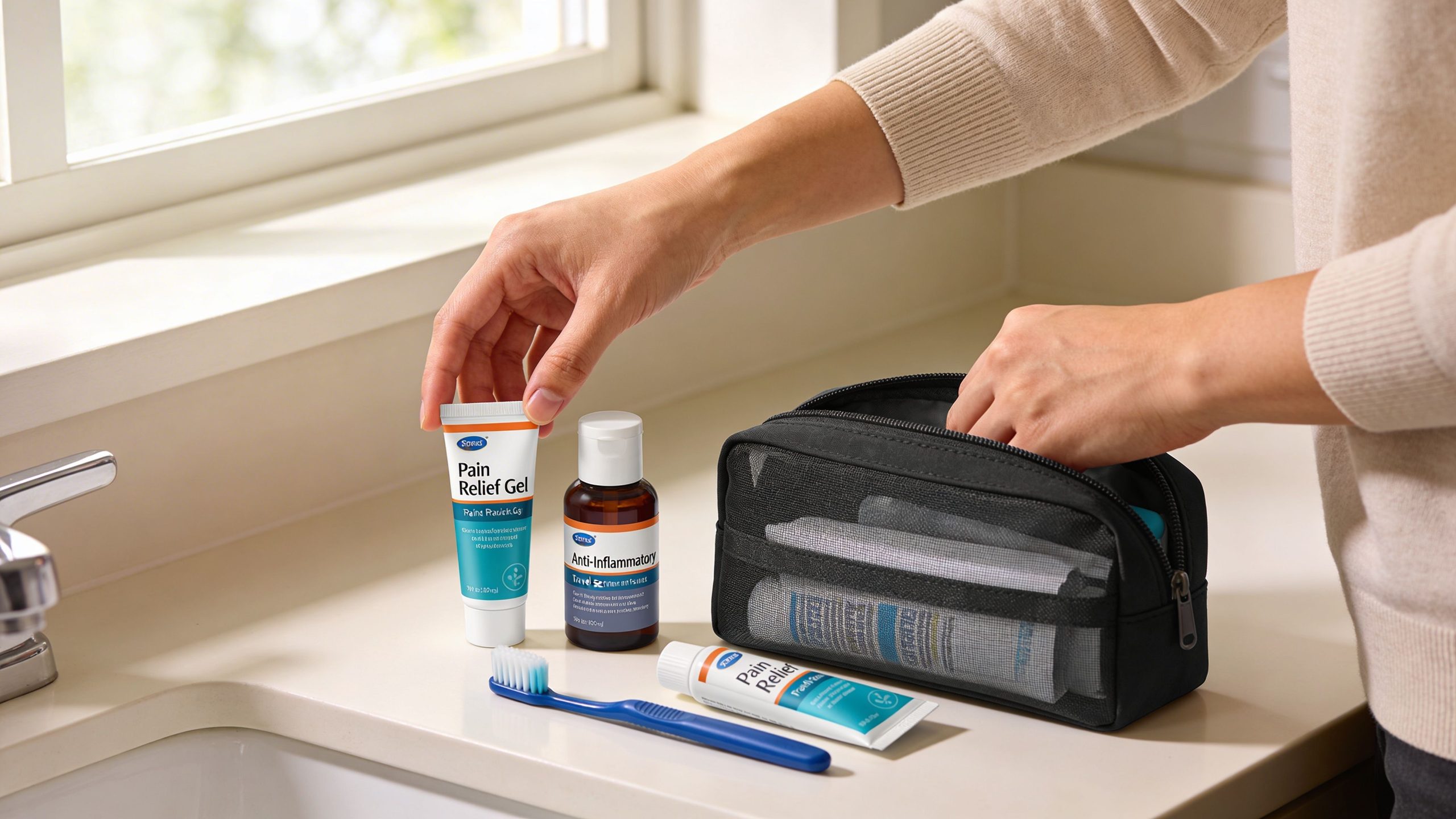
Start with a quick self-check
Ask yourself a few practical questions:
- Is the pain triggered by biting, cold, sweets, or pressure?
- Is one tooth clearly involved, or does the whole area feel sore?
- Do you have swelling, a bad taste, gum tenderness, or trouble sleeping from the pain?
- Have you had recent dental work on that tooth?
- Does jaw clenching or limited opening make it worse?
These answers help sort out whether you're likely dealing with decay, a cracked filling, nerve inflammation, infection, or a TMJ flare.
Call a dentist before you call it "travel stress"
A pre-flight dental evaluation can identify pulpal necrosis or air entrapment, and treatment such as a complete root canal has a near-100% resolution rate for barodontalgia, while 80% to 90% of cases stem from undetected problems like defective fillings with micro-gaps, according to 123Dentist's review of flying-related tooth pain. That same review notes it's important to avoid flying within 24 to 48 hours after certain dental surgeries.
When you call for an urgent visit, say exactly what's happening. Mention the flight date, whether the pain is getting worse, whether the tooth has prior work, and whether you're noticing swelling or bite sensitivity. That helps the team decide how quickly you should be seen.
What usually works before travel
Some treatments can stabilize the problem quickly, depending on the cause. In a dental office, that may involve:
- Replacing a failing filling: If a margin has opened or decay has formed underneath, a new restoration may solve the problem.
- Protecting a cracked tooth: A crown may be the right long-term answer, and same-day CEREC treatment can be helpful in the right case.
- Treating the nerve: If the pulp is inflamed or infected, root canal therapy may be the best way to stop the pain.
- Managing TMJ-related pain: If the source is clenching and jaw tension, the plan may look very different from cavity treatment.
If you're not sure whether your symptoms point toward nerve pain, this page on https://salamidds.com/how-to-know-if-you-need-a-root-canal/ can help you understand common warning signs before your visit.
What doesn't work well
Patients often try to "baby" the tooth for a few days and hope for the best. That rarely gives reliable answers.
These choices usually backfire:
- Ignoring bite pain: That's often a clue that the tooth is structurally compromised.
- Chewing on the other side and waiting: It may reduce irritation, but it doesn't remove the cause.
- Taking random pain medicine without a plan: Temporary relief can mask a problem that still gets worse in flight.
If you need a simple guide to finding common over-the-counter pain relievers like Tylenol or Aleve, that can help you make a sensible short-term choice while you arrange care.
The best pre-flight move is not guessing. It's getting the tooth examined while you still have options.
How to Manage Tooth Pain at 30,000 Feet
If you're already traveling and the pain starts mid-flight, your job is to control irritation and keep it from escalating. You won't fix the underlying cause on the plane, but you may be able to get through the flight more comfortably.
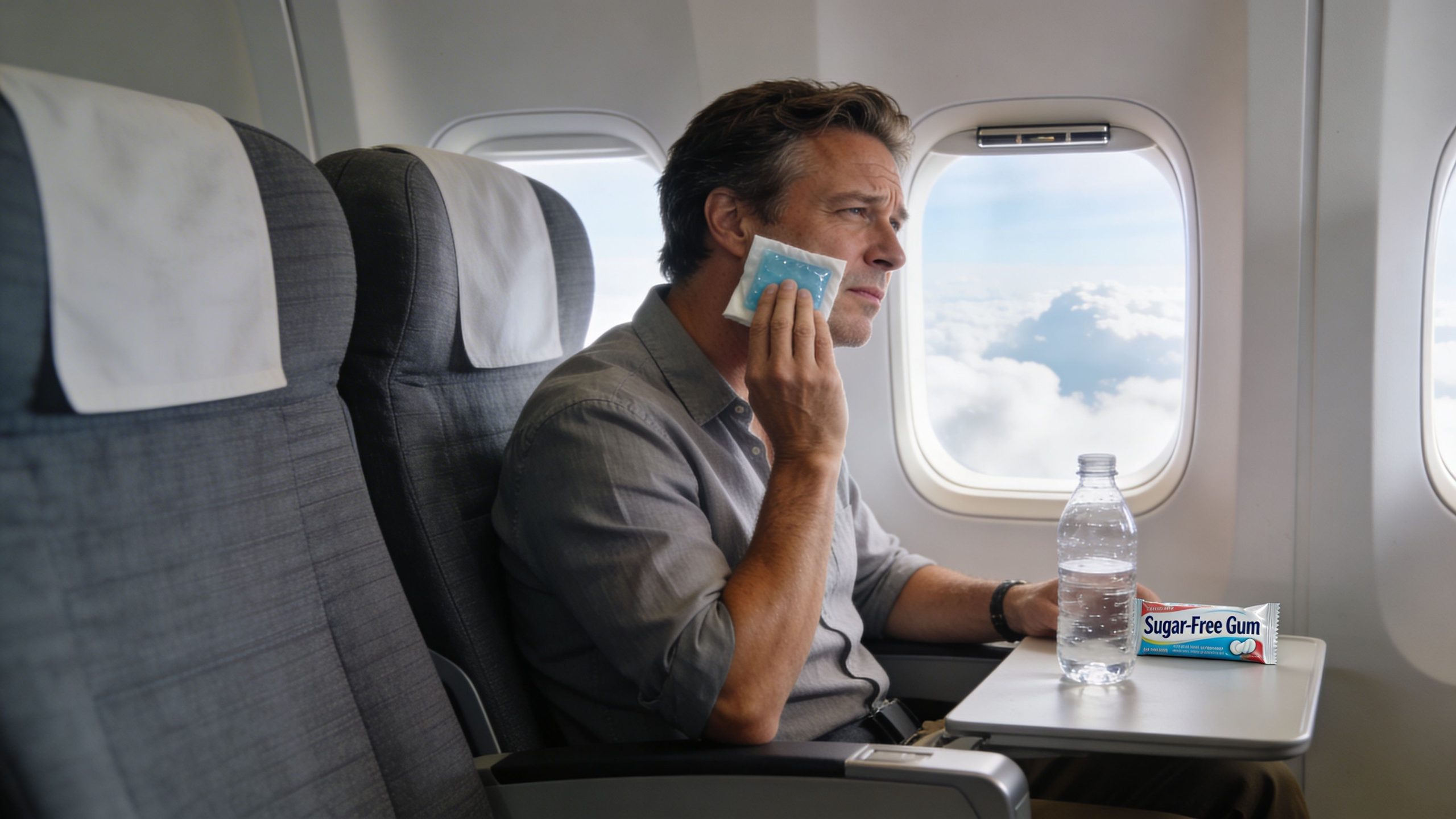
What to pack in a small dental kit
A simple travel kit is often enough:
- Ibuprofen if you normally take NSAIDs safely: A source discussing in-flight dental pain recommends ibuprofen 600 mg before boarding for pain management in appropriate cases, along with other comfort steps, in Stone Creek Dental's article on travel with dental infection or pain.
- A soft toothbrush: Food trapped around a sore tooth can make pain worse.
- Dental floss picks: Useful if something is lodged between teeth.
- Gauze: Helpful if an area is irritated or if you need gentle pressure.
- Lip balm and water: Dry mouth often makes everything feel worse.
Use temperature to your advantage
That same article advises lukewarm fluids and avoiding temperature extremes, which can trigger 30% more pain. On a plane, that usually means skipping ice water, very hot coffee, and anything else that provokes the tooth.
If you can, hold a cool compress against the cheek from the outside. Keep it gentle. You want to calm the area, not shock it.
Help your body equalize pressure
Yawning and swallowing help equalize pressure, which is one reason flight crews often recommend them during ascent and descent. If your pain tracks with those transitions, this can make a noticeable difference.
Try this routine:
| Time in flight | What to do | Why it helps |
|---|---|---|
| Before takeoff | Take your usual pain reliever if appropriate | Lowers the pain response before pressure changes begin |
| During ascent | Sip lukewarm water and swallow often | Encourages pressure equalization |
| Mid-flight | Avoid chewing hard snacks on the painful side | Reduces direct stress on the tooth |
| During descent | Yawn, swallow, and stay relaxed in the jaw | Limits pressure-related aggravation |
If you also have TMJ tension
For anxious flyers, tooth pain and jaw pain often blend together. If you catch yourself clenching, rest your tongue gently on the roof of your mouth behind the front teeth and let the teeth stay slightly apart. That relaxed jaw posture can reduce muscle strain.
The same travel pain source warns that ignoring a throbbing tooth before flying can lead to 3 to 5 times more pain at altitude. If that describes your situation, plan on seeing a dentist soon after landing, even if the pain settles back down.
A tooth that hurts in the air but "feels okay now" still deserves attention once you're home.
When to Cancel Your Trip for an Emergency Dentist Visit
Some travel pain is uncomfortable but manageable. Some is a clear sign that you shouldn't get on the plane.
If your face is swelling, your gum looks puffy, you have a foul taste in the mouth, or the tooth is throbbing hard enough to keep you awake, treat that as urgent. The same is true if you feel feverish, can't bite down normally, or have pain that shoots through the jaw and ear.

Signs the trip should wait
Cancel or postpone your flight if you have any of these red flags:
- Visible swelling: Especially if it affects the cheek, jawline, or gum.
- A persistent throbbing tooth: Constant pain often points to inflammation or infection.
- A gum bump or drainage: Patients often describe this as a pimple on the gum.
- Pain with limited jaw opening: That can signal both infection and TMJ involvement.
- Rising anxiety with facial pain: This combination can spiral quickly in flight.
The TMJ and anxiety factor matters more than people realize
Flight-related tooth pain isn't only about cavities. A source focused on safe travel with dental pain notes that patients with TMJ may experience 2 to 3 times amplified pain due to poor jaw equalization, and it highlights the need for pre-flight assessment and gentle, sedation-friendly care for anxious patients in South Kent Dental's article on flying with tooth infection or toothache.
That matters because a long flight can trap you in exactly the conditions that make clenching worse. You're seated for hours, you may be stressed, your jaw stays tight, and then pressure changes add another layer of discomfort. For some people, that's enough to turn a manageable problem into a true in-flight panic.
What urgent care may involve
An emergency dentist visit may lead to:
- Root canal therapy if the tooth can be saved and the nerve is the source of pain
- Tooth extraction if the tooth is too damaged or the infection is severe
- Drainage or targeted treatment if infection is present
- TMJ-focused evaluation if the pain pattern suggests the jaw joint and muscles are heavily involved
If you need prompt local care, this emergency page can help you take the next step: https://salamidds.com/emergency-dentist-near-me/
Before an urgent appointment, some patients feel calmer when they have a plan. This guide on how to prepare for a doctor's appointment is a helpful framework for organizing symptoms, questions, and medications so the visit goes more smoothly.
Find Lasting Toothache Relief in Rancho Bernardo
A lasting solution to flying with a toothache isn't a better travel pillow or stronger willpower. It's identifying why the tooth or jaw is reacting, then treating the cause before the next trip.
That may be straightforward. A cavity may need a filling. A weakened tooth may need a crown. An inflamed nerve may need root canal therapy. If the problem is advanced, treatment may involve tooth extraction and a long-term replacement plan such as a bridge or dental implants near me search results often point patients toward. If the pain is tied to clenching, then TMJ care becomes part of the answer.
What a visit should feel like
Patients with travel-related tooth pain usually want three things. They want a clear diagnosis, a realistic plan, and a calm experience.
A thorough visit often includes:
- A focused exam: The dentist checks the painful tooth, surrounding gums, bite, and jaw joint.
- Dental x-rays: These help reveal decay, failing dental work, infection, or structural damage.
- A discussion of timing: If you have a flight soon, treatment recommendations need to match that deadline.
- Comfort-minded care: This is especially important for people with dental anxiety or TMJ tenderness.
For many anxious patients, having someone explain what's happening in plain English is a big part of relief. Pain feels more manageable when the cause makes sense and the next step is clear.
If you're anxious about treatment, say so early. That changes how the appointment is paced, explained, and planned.
Why preventive care matters for travelers
A lot of emergency appointments start with a problem that had been developing for months. Regular cleaning and exams, updated dental x-rays, and new patient exams catch many of those issues before a plane ride exposes them.
That matters for families, busy professionals, and patients planning cosmetic or restorative work. If you're considering veneers, bonding, a crown, bridge work, or implants, timing your treatment around travel is part of good planning. The same is true for people interested in Invisalign or other clear aligners who already clench or have TMJ symptoms.
Care that supports both function and confidence
Travel pain often starts with restorative needs, but it also intersects with appearance and long-term oral health. A stable, healthy bite matters whether you're looking for an emergency dentist, a cosmetic dentist near me, or the best dentist in Rancho Bernardo, CA.
Dental care can include:
- Restorative dentistry: White composite fillings, crowns, bridges, dentures, and root canal therapy help remove pain and restore chewing function.
- Dental implants: When a tooth can't be saved, implants can provide a durable replacement.
- Cosmetic dentistry: Veneers, whitening, and bonding can improve appearance while correcting worn or damaged areas.
- Periodontal therapy: Healthy gums support comfortable teeth and stable long-term results.
- TMJ treatment: If clenching and jaw strain are part of the picture, treating only the tooth may miss the full cause.
A practical first step for local patients
If you're in Rancho Bernardo, Rancho Peñasquitos, Poway, Escondido, or nearby San Diego neighborhoods, start before the pain becomes a travel emergency. Book the exam, get the x-rays, and let the office determine whether the problem is a cavity, a cracked restoration, an infected tooth, gum inflammation, or a TMJ-related issue.
That's the most reliable path to pain-free travel. It's also the best way to protect your overall oral health, avoid disrupted vacations, and stop guessing every time a tooth feels "off."
The good news is that most patients don't need to live with this cycle. Once the underlying issue is treated properly, flying doesn't have to be something you dread.
If you're dealing with flying with a toothache, jaw tension before a trip, or sudden dental pain that can't wait, Pegah S. Salami, DMD, FAGD offers compassionate, relationship-focused care in Rancho Bernardo for patients throughout San Diego, Poway, Rancho Peñasquitos, and Escondido. Whether you need an urgent exam, tooth extraction, root canal therapy, CEREC same-day crown care, TMJ support, or a long-term restorative plan, the team can help you get answers quickly and comfortably. New patients can also ask about the Exam + X-Ray and Cleaning special. Schedule your visit today and get ahead of the pain before your next flight.





