

You are at a work lunch in downtown San Diego, someone pulls out a phone for a group photo, and your first thought is how to hide your teeth. I hear versions of that story all the time from adults in Rancho Bernardo, Poway, and Rancho Peñasquitos. Many have lived with crowding, spacing, relapse after braces, or bite problems for years because they assumed treatment would be too visible, too disruptive, or too late to be worth it.
Adult treatment is common, and healthy teeth and gums can often be moved successfully well past the teenage years. The American Association of Orthodontists discusses why more adults are seeking orthodontic care and how treatment can work well at different ages. Age alone is rarely the deciding factor. Gum health, bone support, existing dental work, bite function, and your goals matter more.
At our Rancho Bernardo office, Dr. Pegah Salami and her team help patients sort through those details without the sales pitch. Some adults want a discreet option they can wear in client meetings. Some need stronger tooth movement than aligners can predictably deliver. Others are less concerned with moving teeth perfectly and more interested in improving the look of the front teeth with a cosmetic plan.
That broader view matters. A better smile is not always a braces-only conversation. It may involve orthodontics, bonding, whitening, veneers, or restorative treatment, depending on what is causing the problem and how long you want the result to last.
If you are weighing adult Invisalign vs braces in Rancho Bernardo, the right choice usually comes down to three practical questions. How complex is the correction. How visible can the appliance be during daily life. How much maintenance are you realistically willing to handle.
This guide walks through the main teeth-straightening options for adults in San Diego, including cosmetic alternatives for patients who want a faster smile upgrade. If you’re comparing providers and doing your homework online, the same careful decision-making matters in other areas too, which is why many local businesses also invest in data-driven marketing in San Diego to make sure the right people find the right fit.
1. Clear Aligners The Discreet, Removable Solution
A Rancho Bernardo professional has a presentation at 9, coffee with a client at noon, and dinner with family that night. For many adults in that routine, clear aligners appeal because they fit into real life without putting brackets front and center.
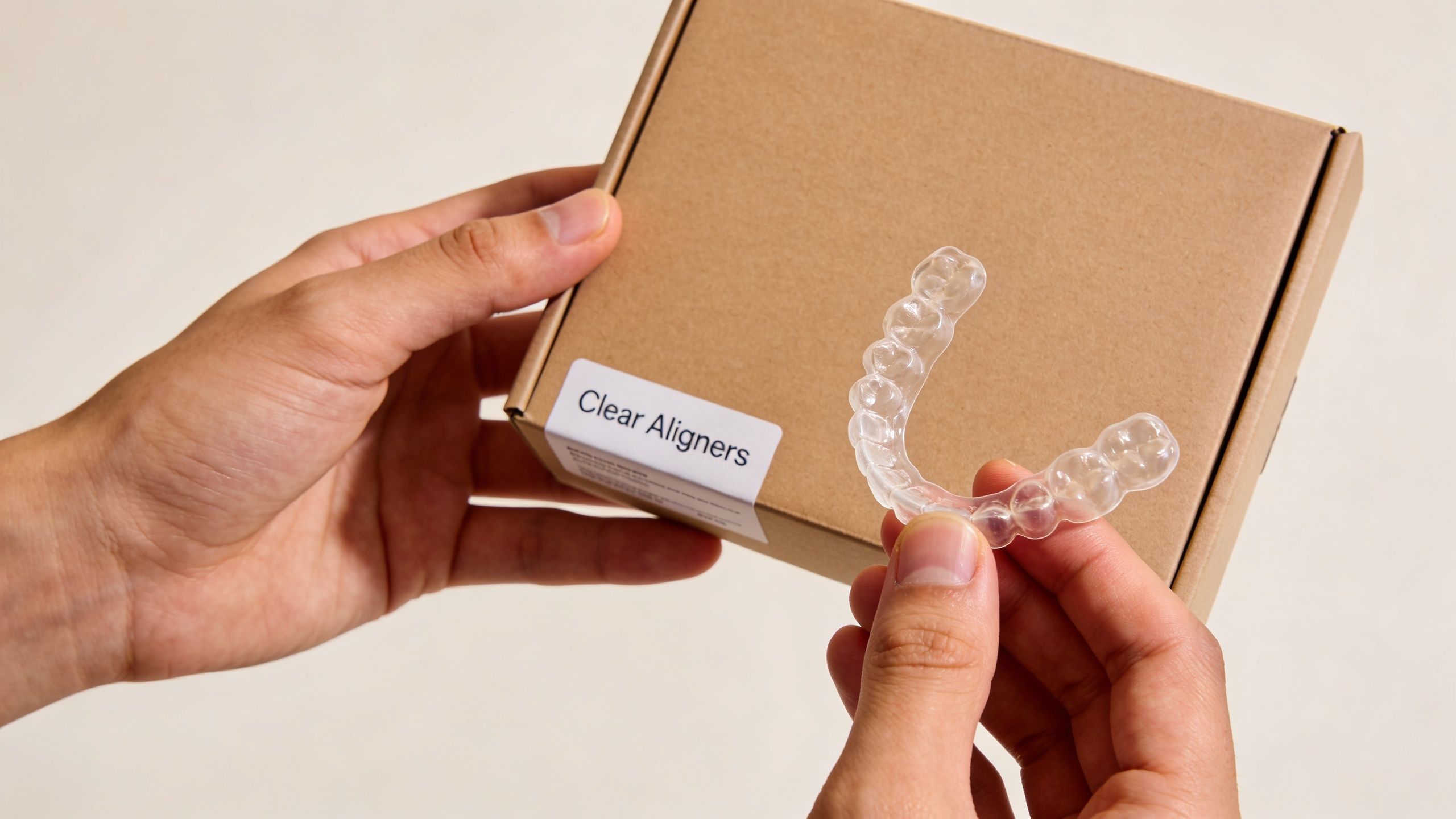
Clear aligners such as Invisalign and ClearCorrect use a series of custom trays to move teeth in small, planned stages. They are popular with adults for a simple reason. The trays are hard to notice in conversation, and they come out for meals and brushing. Align Technology reports that more than 18 million patients had started Invisalign treatment worldwide by 2025, which gives you a sense of how mainstream this option has become.
In our part of San Diego, I see clear aligners chosen most often by adults who want privacy during treatment. Teachers, attorneys, sales professionals, healthcare workers, and patients getting ready for weddings or reunions often ask for something that keeps their smile improvement low-profile. That does not make aligners the right answer for every case, but it explains why they are usually the first option adults ask about.
Why adults choose them
The biggest everyday advantage is control over your routine. You remove the trays to eat, brush, and floss, so oral hygiene is usually simpler than it is with fixed braces. Many adults also like avoiding food restrictions. No one wants to skip crunchy tacos or a dinner out in Rancho Peñasquitos because of wires and brackets.
There is a trade-off. Removable treatment only works if the trays are worn as directed. The American Association of Orthodontists notes that aligners generally need to be worn 20 to 22 hours per day to stay on track.
Practical rule: Clear aligners reward consistency. If trays spend too much time in a case, treatment slows down or stops tracking.
At Dr. Salami’s office, digital scans help show how teeth are likely to move before treatment starts. That planning matters, especially for adults comparing appearance, comfort, and control. If you are sorting through those trade-offs, this page on Invisalign vs. braces for adults gives a useful side-by-side view.
Where they tend to work best
Clear aligners are often a strong fit for mild to moderate crowding, small gaps, and orthodontic relapse after braces from years ago. They can also work well for adults who are disciplined with routines and want fewer interruptions to work and social life.
They are less predictable in some complex cases. Severe rotations, significant bite discrepancies, teeth that need large root movement, and certain extraction plans often respond better to fixed appliances. Attachments, elastics, or refinement trays can expand what aligners can do, but there are still limits. A careful exam matters more than marketing claims.
A few habits make the difference between a smooth aligner case and a frustrating one:
- Keep the case with you: Napkins and restaurant tables are where trays get lost.
- Put them back in after meals: Long gaps in wear time add up fast.
- Seat them fully: If your dentist gives you chewies, use them as directed so the trays track properly.
- Clean them every day: A soft brush, lukewarm water, and a clear cleaner help prevent buildup and odor.
For the right adult patient, clear aligners offer privacy, comfort, and flexibility. For the wrong patient, they can become a long, expensive detour. In Rancho Bernardo, the best result usually comes from looking at the whole smile first. Sometimes that leads to aligners. Sometimes it leads to braces. Sometimes, especially if the goal is cosmetic improvement rather than full orthodontic correction, a smile design plan with bonding or veneers makes more sense.
2. Traditional Metal Braces The Powerful and Cost-Effective Standard
A Rancho Bernardo adult who has put off treatment for years often says the same thing during a consult: “I do not need invisible. I need this fixed correctly.” Traditional metal braces are still one of the most dependable ways to handle significant crowding, rotated teeth, deep bites, crossbites, and other cases that need precise, continuous control.
For adults with harder tooth movements, fixed braces often give the dentist more control from start to finish. That matters when the goal is not just straighter front teeth, but a bite that functions better and holds up well over time.
When fixed control matters
Metal braces work around the clock because they stay on the teeth. There is no tray to remove at lunch, forget in a napkin, or leave out during a long workday. For adults with demanding schedules, inconsistent routines, or a history of stopping treatment halfway through, that constant force can make treatment more predictable.
They are also usually the most budget-friendly fixed option. Cost is not the only factor, but it is a real one for many San Diego adults comparing aligners, ceramic braces, and larger smile design plans.
The trade-offs are straightforward. Metal braces are the most visible option. They catch food more easily, take more time to clean, and require regular adjustment visits to keep teeth moving on schedule. In return, they offer a level of mechanical control that is hard to match in more complex cases.
The right appliance is the one that can move your teeth safely, predictably, and efficiently for your specific bite.
What daily life looks like
Modern braces are smaller than they used to be, and most adults adapt faster than they expect. The first week still takes some patience. Lips and cheeks need time to toughen up, and certain foods need to come off the menu for a while.
A few habits make a noticeable difference:
- Use orthodontic wax as needed: It reduces irritation from a bracket or wire while your mouth adjusts.
- Clean with more than a toothbrush: Interdental brushes or a water flosser help remove food around brackets and under wires.
- Show up for adjustments: Delayed visits can slow treatment and leave wires or ties in place longer than intended.
- Change how you eat: Cut apples, sandwiches, and other firm foods into smaller pieces instead of biting straight in.
Metal braces are often the right choice for adults who care more about control, value, and long-term bite correction than a low-profile look. In Dr. Salami’s Rancho Bernardo office, that decision is made in the context of the whole smile. Some patients need full orthodontic correction. Others are better served by a shorter cosmetic plan or, in select cases, veneers or other restorative options if the concern is shape, spacing, or appearance more than tooth movement.
3. Ceramic Braces The Discreet Fixed Appliance
A lot of San Diego adults want something in between. They do not want the visibility of metal braces, but they also do not want the responsibility that comes with removable trays. Ceramic braces fit that middle path well.
They use tooth-colored or clear brackets, so the appliance blends in more during conversations, work meetings, and everyday life around Rancho Bernardo. At Dr. Salami’s office, ceramic braces often come up for adults who need the control of a fixed system and still want a more polished appearance.
Fixed treatment with a softer look
Ceramic braces work much like metal braces in how they move teeth. They stay bonded in place, allow precise adjustments, and can handle many moderate and complex alignment problems. That makes them useful for adults who need reliable tooth movement and bite correction, not just mild cosmetic changes.
The trade-off is maintenance.
Ceramic brackets and elastic ties can pick up stain more easily than metal. Coffee, tea, red wine, curry, and tobacco are the usual culprits. The brackets themselves often hold up well, but the small clear ties can discolor between visits if home care slips. Adults who choose ceramic braces need to be realistic about that from the start.
Who usually prefers ceramic braces
This option tends to suit adults who care about appearance but are not good candidates for aligners, or who do better with a treatment that stays on full-time. Public-facing professionals often ask about ceramic braces for that reason. So do patients who know they would rather not keep track of trays during long workdays, social events, or travel.
Comfort and convenience still differ from aligners, as noted earlier. Fixed brackets create more friction against the lips and cheeks, and brushing takes more effort. In return, treatment keeps working around the clock because there is nothing to remove or forget.
That consistency matters more than people expect.
Helpful habits make a big difference:
- Rinse after dark drinks: Water right after coffee, tea, or red wine can reduce staining on ties.
- Brush with extra attention near the gumline: Plaque around ceramic brackets is easier to notice and harder to ignore once it builds up.
- Choose tie colors strategically: Light grey or smoke-colored ties often look cleaner between visits than bright clear ones.
- Skip hard, sticky foods: Ceramic brackets can be a little more brittle than metal, so ice, hard candy, and sticky snacks are not worth the risk.
Ceramic braces make sense for adults who want dependable tooth movement and a lower-profile look, and who are willing to be a little more careful with food choices and staining.
For some patients, they are the right balance. For others, a short cosmetic orthodontic plan or even veneers may fit the goal better if the concern is mainly the visible front teeth rather than full bite correction. That wider smile design conversation is part of good adult treatment planning in Rancho Bernardo.
4. Lingual Braces The Completely Invisible Option

Lingual braces stay hidden because they’re attached to the back side of the teeth. From the front, people don’t see them. For adults who want the force of braces without visible hardware, that can be extremely appealing.
This option tends to attract a very specific kind of patient. Executives, attorneys, performers, and anyone who feels visible braces would interfere with their image often ask about lingual treatment first.
What makes lingual braces different
These braces are customized to the tongue side of the teeth. They’re fixed, so you get the compliance advantage of braces, but they’re also completely out of sight in normal conversation. That makes them different from both metal braces and clear aligners.
The main downside is adaptation. Because the brackets sit where the tongue normally moves, speech can feel off at first, and the tongue can get irritated during the early adjustment phase. Most adults improve with practice, but they need to know that up front.
This isn’t the easiest option. It’s the most hidden one.
Best for patients who prioritize invisibility above all
Adults who choose lingual braces usually have a strong reason. They may need extensive treatment but don’t want clients, coworkers, or social contacts to notice any appliance. If that’s your priority, few options compete.
A different consideration is comfort and lifestyle. Real-world data on invisible orthodontics shows high satisfaction, but it also notes compliance challenges and daily wear demands for removable systems, especially for busy professionals juggling treatment with work and family life as described in this clinical review of invisible orthodontics and adult adoption. Lingual braces remove the compliance issue because they stay in place, but they replace it with a speech and cleaning learning curve.
A few practical adjustments help adults settle in faster:
- Read aloud at home: Speaking practice helps your tongue adapt more quickly.
- Use a water flosser and interdental brushes: Cleaning the back side of the teeth takes more intention.
- Try warm saltwater rinses: They can soothe tongue irritation in the first weeks.
Lingual braces are not the first-line answer for most adults. They’re a specialized solution for patients who value invisibility so strongly that they’re willing to accept a more challenging adaptation period. In the right case, that trade-off is worth it.
5. Short-Term and Cosmetic Orthodontics
A common Rancho Bernardo consult goes like this: an adult patient is not bothered by the whole bite. They are bothered by the one front tooth that shifted after teenage braces, the small overlap that shows in photos, or the gap they notice every time they join a video call. In that situation, short-term cosmetic orthodontics may be the right tool.
This approach focuses on visible front teeth and modest movement. It is often a good fit for adults with relapse after earlier orthodontic treatment, mild crowding, or a smile design plan that includes veneers or crowns and needs better tooth positioning first. At Dr. Salami’s office, that distinction matters because treatment planning starts with the result you want, not just the appliance.
Best for focused cosmetic goals
Systems such as Six Month Smiles® are built for appearance-driven alignment, not broad bite correction. That can be a real advantage for the right patient. Treatment is usually shorter than full orthodontic care because the goal is narrower and the movement is limited to what shows when you smile.
That shorter path appeals to busy adults in San Diego. It can also create confusion.
A cosmetic orthodontic plan can improve the look of the smile quickly. It will not reliably fix deeper functional problems such as a strained bite, heavy wear, unstable tooth contacts, or significant crowding. If those issues are present, a short cosmetic case may leave the main problem in place.
Where careful case selection matters
Brand names get attention. Diagnosis matters more.
Before recommending short-term treatment, I look at how the teeth fit together, whether the front teeth can be moved safely, and whether the patient wants a visual improvement or a lasting bite correction. Those are different goals. Adults sometimes come in asking for the fastest option, then learn they really want something more complete once we examine the bite and discuss long-term stability.
Short-term treatment can also work well as part of a bigger cosmetic plan. For example, small alignment changes may reduce how much enamel has to be adjusted before veneers. In other cases, bonding or veneers may make more sense than moving teeth at all, especially if the concern is shape, edge wear, or a small space. Patients comparing those options often find our guide on dental bonding vs. veneers cost helpful before deciding on the next step.
A few practical questions help clarify whether this path fits:
- Is the problem mainly in the front teeth? Short-term systems are best for the smile zone.
- Is the bite already stable? If not, limited treatment may look better without functioning better.
- Are you planning other cosmetic work? Tooth position can affect veneers, bonding, and crown design.
- Will retainers be worn afterward? Minor relapse is still relapse. Retention matters.
For the right adult, short-term cosmetic orthodontics is an efficient way to improve a smile without committing to full treatment. For the wrong case, it is a partial fix. The best decision comes from matching the method to the goal, then confirming that the bite, gum health, and long-term plan all support it.
6. Restorative and Cosmetic Alternatives
Sometimes the best teeth straightening option for adults isn’t tooth movement at all. If the issue is a small gap, minor unevenness, worn edges, chips, or slight visual misalignment, cosmetic dentistry may deliver the result faster and more directly than braces or aligners.
Smile design is particularly relevant. Adults who come in saying, “I want straighter teeth,” often really mean, “I want a better-looking smile.” Those are related goals, but they aren’t always solved the same way.
When veneers or bonding make more sense
Porcelain veneers and dental bonding can reshape the front of the smile without months of orthodontic treatment. For a patient with slightly crooked, discolored, or uneven front teeth, that may be the most efficient path to the look they want. A small gap between the front teeth is another classic example.
This approach works best when the overall bite is stable and the concern is mostly cosmetic. If teeth are seriously crowded, if the bite is unhealthy, or if gum and bone support need attention, true orthodontic treatment may still be the better answer.
Adults often appreciate that cosmetic dentistry can address multiple concerns at once. Shape, color, symmetry, and minor alignment issues can all improve together.
Fast results, different trade-offs
Veneers and bonding can create dramatic changes quickly, but they are not orthodontics in disguise. They don’t move teeth through bone. They visually refine what you already have.
That means the discussion has to be honest. Cosmetic treatment can be a strong choice when a patient wants speed and aesthetics. It’s a weak choice when a patient really needs bite correction or healthier tooth positioning for function.
A few guidelines help clarify whether this route fits:
- Choose it for cosmetic concerns: Minor gaps, chips, shape issues, and slight crookedness are common reasons.
- Ask to preview the plan: Digital smile design can help you visualize the intended result.
- Protect the investment: Excellent brushing, flossing, and regular dental visits matter after treatment.
If you’re comparing materials and appearance, this page on dental bonding vs. veneers cost can help you understand the trade-offs.
For adults in San Diego who want a faster transformation and already have a reasonably healthy bite, cosmetic dentistry can be the smarter and more satisfying route. It isn’t the right answer for every case, but in the right hands, it can create a polished, natural-looking smile without a long orthodontic timeline.
6-Option Comparison: Teeth Straightening for Adults
| Treatment | Implementation complexity | Resource requirements | Expected outcomes | Ideal use cases | Key advantages |
|---|---|---|---|---|---|
| Clear Aligners (Invisalign®, ClearCorrect™) | Moderate, requires digital 3D planning and strict patient compliance | 3D scan, lab-fabricated trays, periodic check-ups, patient adherence | Predictable cosmetic and functional improvement for mild–moderate cases | Adults/professionals seeking discreet, removable treatment | Nearly invisible; removable for eating/cleaning; fewer visits |
| Traditional Metal Braces | Moderate, standard bonding and routine adjustments; well-established workflow | Stainless-steel brackets/wires, regular office visits, orthodontic auxiliaries | Reliable correction for simple to severe malocclusions | Severe crowding, complex bite/jaw issues, budget-conscious patients | Powerful and durable; most cost-effective; no patient compliance needed |
| Ceramic Braces | Moderate, similar clinical process to metal braces but requires careful handling | Ceramic brackets, tooth-colored/white-coated wires, slightly higher material cost | Comparable correction to metal braces for moderate–complex cases with improved aesthetics | Adults wanting a fixed option with reduced visibility | Less noticeable than metal; effective for more complex cases; aesthetic |
| Lingual Braces | High, custom CAD/CAM fabrication and more complex chairside adjustments | Custom lingual brackets, specialized lab work, experienced orthodontist, longer appointments | Comprehensive correction comparable to traditional braces, invisible from front | Executives, performers, people requiring complete invisibility | Completely hidden from view; full corrective power |
| Short-Term & Cosmetic Orthodontics (Six Month Smiles®) | Low, focused mechanics on anterior teeth with simplified protocol | Clear brackets/wires, short treatment duration, fewer visits | Fast cosmetic alignment of front (“social six”) teeth; not bite correction | Event-driven needs, minor anterior relapse, cosmetic-only goals | Rapid results (4–9 months); lower cost; discreet |
| Restorative & Cosmetic Alternatives (Veneers & Bonding) | Moderate, tooth preparation, lab fabrication; often irreversible (veneers) | Dental lab, porcelain/composite materials, cosmetic dentistry expertise, 1–2 visits | Immediate aesthetic transformation; does not reposition teeth or fix bite | Patients needing color/shape correction, chips, small gaps, or instant makeover | Instant, highly customizable results; addresses color and shape issues |
Find Your Perfect Smile Path in Rancho Bernardo
You finally decide to do something about the crowding you notice in photos, or the one front tooth that shifted after years without a retainer. Then the real question hits. Do you need aligners, braces, veneers, or something else entirely?
The right answer depends on two things. What your mouth needs clinically, and what you can realistically follow through on in daily life.
For one adult in Rancho Bernardo, the best fit may be clear aligners because they want a removable option and can wear them as directed. For another, fixed braces are the smarter choice because the bite needs more control and treatment cannot depend on patient compliance. Some adults are not good orthodontic candidates at all for the result they want. If the main concern is small gaps, worn edges, shape, or symmetry, veneers or bonding may create the smile they want faster and with a more predictable cosmetic result.
That distinction matters. Teeth that look slightly crooked can reflect crowding, tooth wear from grinding, gum changes, missing teeth, or a bite problem that affects function as much as appearance. I often find that adults come in expecting one solution, then leave relieved to learn they have better options than they assumed. Sometimes that means choosing orthodontics over veneers to preserve natural tooth structure. Sometimes it means choosing cosmetic dentistry because moving the teeth would not solve the primary concern.
At our dental practice serving Rancho Bernardo, Poway, Rancho Peñasquitos, Escondido, and the greater San Diego area, Dr. Pegah Salami and the team evaluate the full picture. That includes digital X-rays, digital scans, gum health, existing crowns or fillings, bite function, clenching habits, and your goals for treatment. If you also need ongoing care from a dentist in San Diego, CA, or want one office that can coordinate cleanings, cosmetic work, restorative treatment, and future planning such as dental implants near me, that continuity can make treatment simpler and more consistent.
Adults also deserve a realistic conversation about trade-offs. Clear aligners are discreet, but they only work well if you wear them consistently. Metal and ceramic braces give us steady control, but they are fixed appliances and require more attention around food and brushing. Lingual braces stay out of sight from the front, but they usually involve a bigger investment and a longer adjustment period for speech and tongue comfort. Veneers can transform a smile quickly, but they do not move roots or correct a bite.
A good consultation should make the decision clearer, not more confusing.
If you have been searching for a cosmetic dentist near you or a local office that will explain your options plainly, start with an exam and ask direct questions. Ask what problem is being treated. Ask what the treatment will not fix. Ask how long it will take, how visible it will be, how it affects long-term dental health, and what kind of maintenance comes after.
Pegah S. Salami, DMD, FAGD is one local option for adults who want that kind of guidance in one place. Whether the right path is Invisalign, braces, veneers, bonding, or a staged plan that combines treatments, the goal is the same. Choose a solution that fits your smile, your health, and your life in San Diego.
A healthier, more confident smile can start at any age. It starts with a plan built for you.
If you’re ready to explore the best teeth straightening options for adults with a trusted local team, schedule a consultation with Pegah S. Salami, DMD, FAGD. Dr. Salami and her Rancho Bernardo office serve patients from San Diego, Poway, Rancho Peñasquitos, Escondido, and nearby communities with personalized care, clear treatment guidance, and cosmetic and restorative solutions designed around your goals.





