
A damaged tooth rarely happens at a convenient time. It’s often a cracked molar before a weekend in Coronado, a broken filling before a family dinner in Poway, or a tooth that suddenly starts hurting when you’re already juggling work, school pickups, and traffic across San Diego.
In that moment, the consistent priorities are a fixed tooth, controlled pain, and a clear answer about what will last.
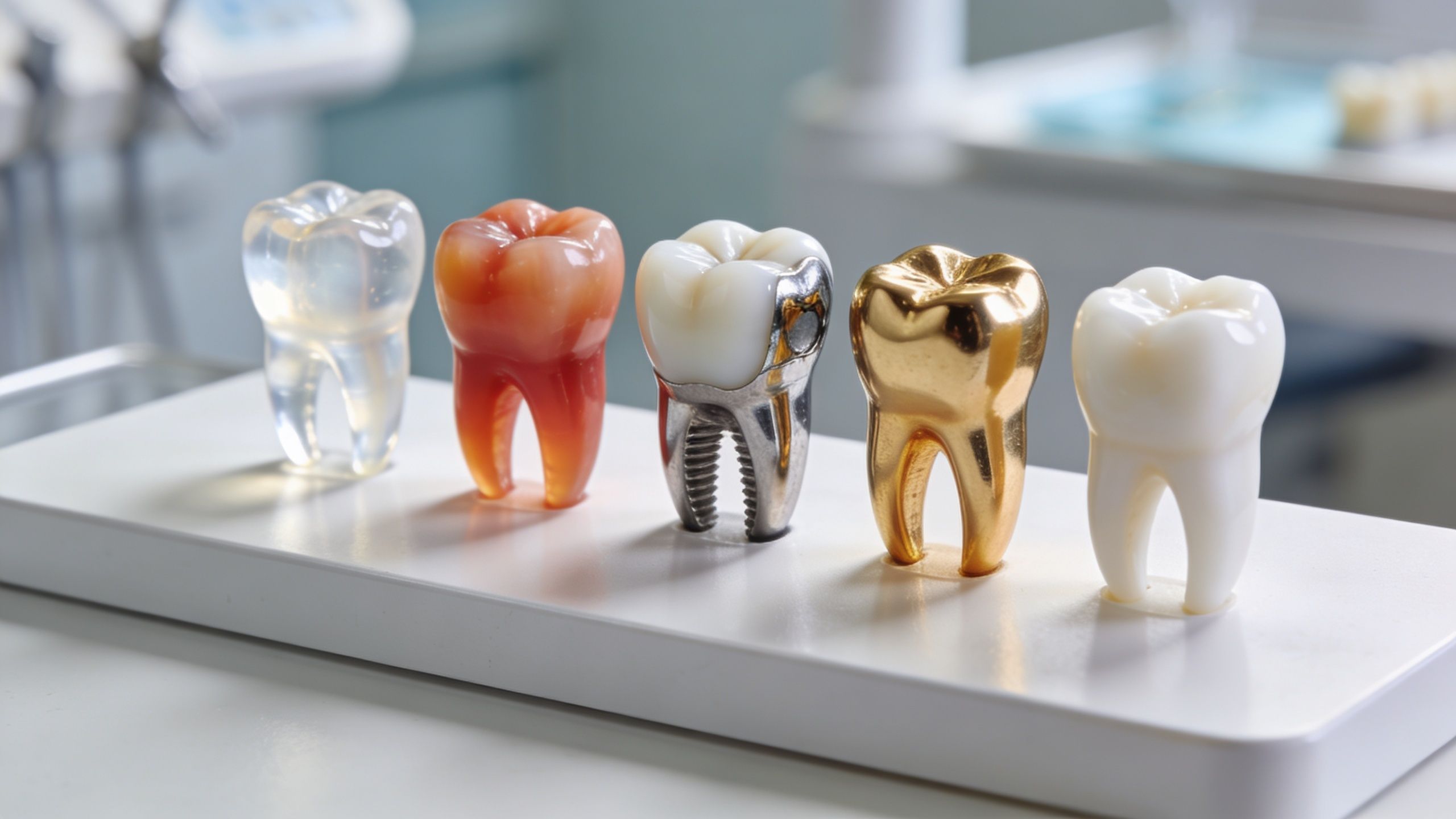
Dental crowns are one of the most reliable ways to restore a tooth that’s been weakened by decay, fracture, root canal treatment, or heavy wear. But once you hear the word “crown,” the next question is usually harder: Which material is right for me? Gold, zirconia, porcelain, porcelain-fused-to-metal, and newer ceramic options all have real strengths and real compromises.
This dental crown materials comparison is written the way I’d explain it to a new patient in Rancho Bernardo. Not as a sales pitch, and not as a chemistry lesson. Just the practical differences that matter when you’re choosing a crown for comfort, appearance, durability, and long-term oral health.
Your Trusted San Diego Dentist for Dental Crowns
If your tooth is cracked, sensitive, or making it hard to chew, waiting usually doesn’t help. Small fractures can grow. Large fillings can fail. A tooth that looked “good enough for now” can suddenly become an emergency dentist visit by the end of the week.
That’s why patients looking for a dentist in San Diego, CA often come in with a mix of urgency and uncertainty. They know something is wrong, but they don’t know whether they need a filling, a crown, a root canal, or a full restorative plan. They also want to know whether the final result will feel natural and look like their smile.
At Dr. Salami & Associates in Rancho Bernardo, crown treatment is approached with that reality in mind. The conversation starts with what’s happening now, what tooth structure remains, how you bite, and what kind of result fits your goals and timeline. Some patients need a straightforward molar crown. Others are balancing cosmetic dentistry concerns, past dental anxiety, or a need for sedation-friendly care.
Local practices also need to be easy to find and easy to trust. If you’re curious how healthcare offices build that visibility online, this guide to effective local SEO for medical clinics gives useful context on how patients connect with care in their community.
A crown shouldn’t just fill space. It should protect the tooth, fit your bite, and make daily life feel normal again.
Understanding Why You Might Need a Dental Crown
A dental crown is a custom-made covering that fits over a damaged tooth. Think of it as a protective outer shell that restores strength, shape, and function when the natural tooth can’t safely handle pressure on its own.
Common situations that call for a crown
A crown is often recommended when a filling won’t do enough. That usually happens in a few familiar scenarios.
- Large decay or a failing filling can leave too little healthy tooth behind.
- Cracks or fractures can weaken the tooth and make chewing risky.
- Root canal treatment often leaves a tooth more fragile, especially in back teeth.
- Cosmetic changes may be appropriate when a tooth is badly worn, misshapen, or discolored.
For many patients searching “dentist near me,” the issue starts with symptoms, not a diagnosis. You may notice sharp pain when biting, temperature sensitivity, food trapping around a damaged filling, or a tooth that looks shorter or chipped. Those signs often mean the tooth needs more coverage and support than a basic filling can provide.
What a crown actually does
A well-made crown has several jobs at once. It protects the remaining tooth structure, redistributes bite pressure, seals the tooth, and restores the shape needed for chewing and speech.
That matters because weakened teeth don’t fail in neat, predictable ways. Sometimes they crack further. Sometimes the fracture reaches below the gumline. Sometimes the tooth becomes too damaged to save and treatment shifts from restorative dentistry to tooth extraction and replacement options such as dental implants near me.
Practical rule: If a tooth has lost enough structure that chewing feels uncertain, the safer choice is often to cover and protect it rather than keep patching it.
Why timing matters
Crowns aren’t only about appearance. They’re often about avoiding a worse problem. A back tooth with a deep crack may still look acceptable in the mirror, but it can be one hard bite away from a much bigger repair.
That’s also why crowns connect with several other services in a full-service office. A patient may need dental x-rays first, emergency dentist care if the tooth breaks suddenly, root canal therapy if the nerve is involved, or cosmetic dentist near me guidance if the crown sits in a visible part of the smile. Good planning brings those pieces together so the restoration supports both health and confidence.
An Overview of Modern Dental Crown Materials
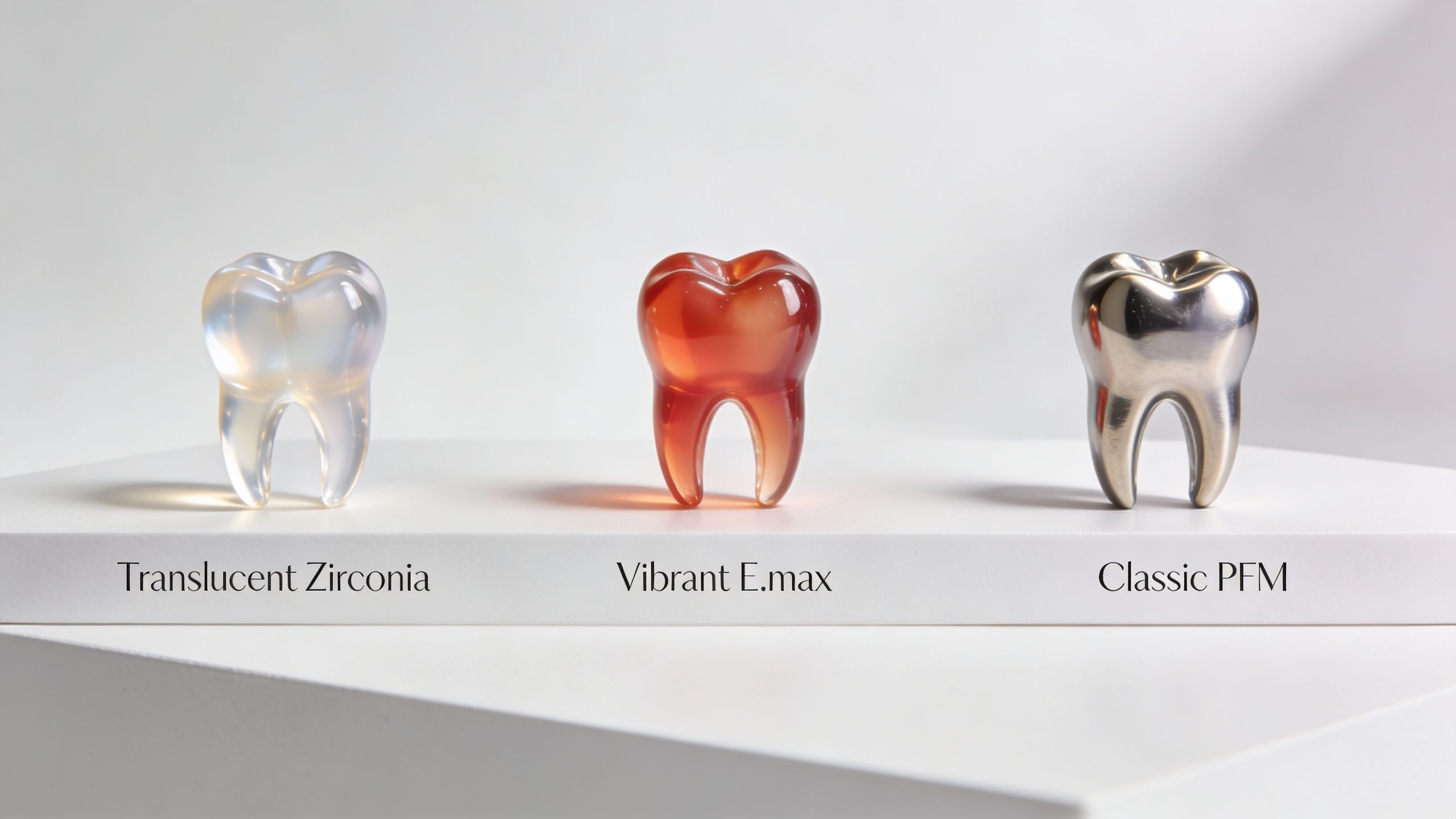
Before comparing details, it helps to sort crown materials into a few broad families. Each one solves the same basic problem, but in a different way.
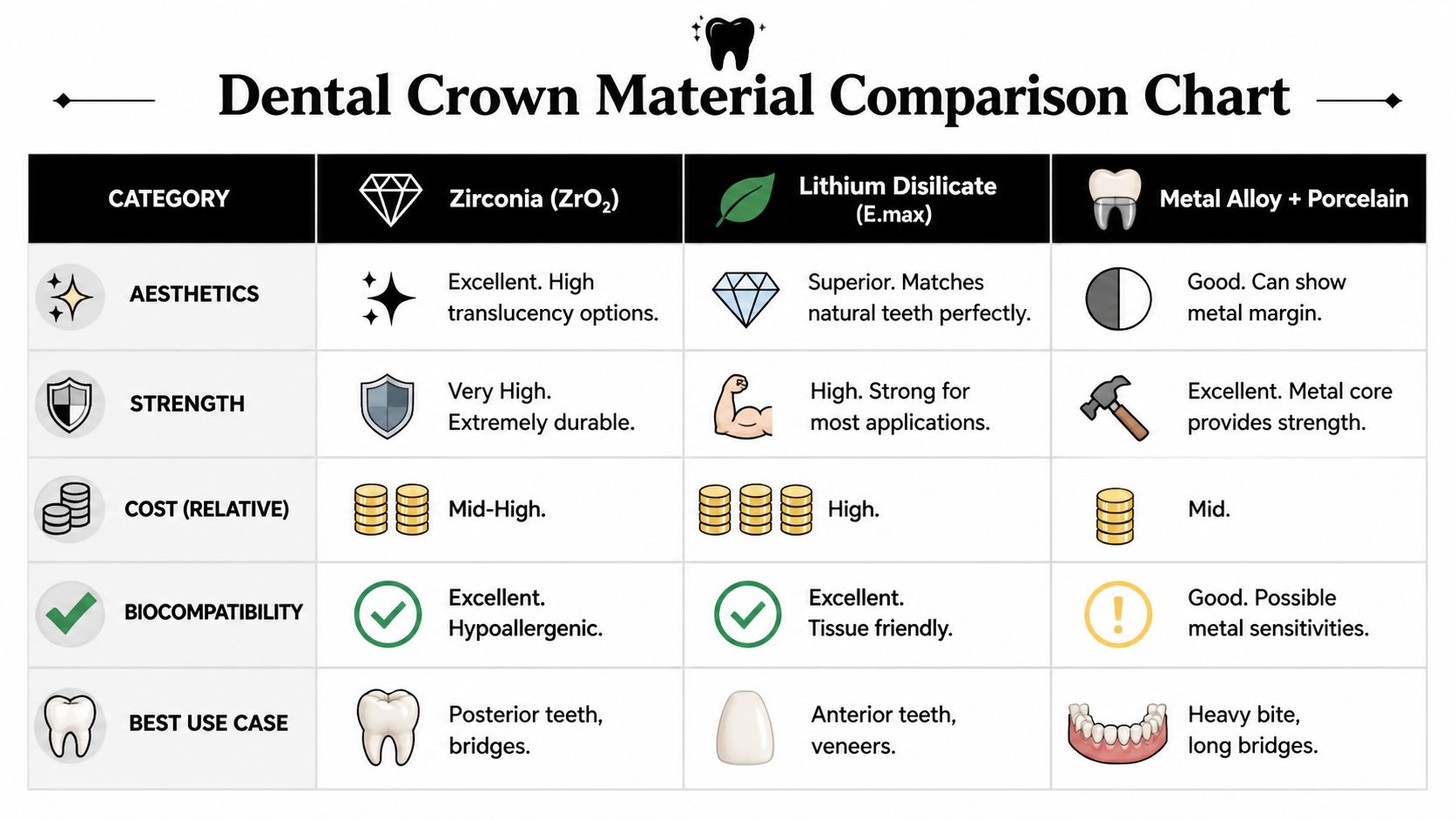
| Material family | Core identity | Typical strengths | Main trade-off |
|---|---|---|---|
| All-ceramic zirconia | Strong modern ceramic | Durable, metal-free, useful for front or back teeth | Can wear opposing teeth if not polished properly |
| All-ceramic porcelain | Natural-looking ceramic | Attractive appearance for visible teeth | More prone to chipping in heavy-load areas |
| Porcelain-fused-to-metal | Ceramic over metal core | Balanced strength and appearance | Metal margin may show if gums recede |
| All-metal gold alloy | Longstanding posterior option | Excellent durability, gentle on opposing teeth | Metallic appearance |
| Composite resin | Lower-cost restorative option | Useful in limited or temporary situations | Shorter service life |
The main categories patients hear about
Zirconia is the material many patients ask about first. It’s a high-strength ceramic used for both front and back teeth, especially when durability matters.
Porcelain and other all-ceramic esthetic materials are chosen when a natural appearance is the priority. They can look beautiful, especially in the smile zone.
PFM, short for porcelain-fused-to-metal, combines a metal substructure with a porcelain outer layer. It has been used for many years because it balances appearance and function fairly well.
Gold alloys remain one of the most durable crown options in dentistry, especially on molars where appearance matters less than strength and long-term reliability.
Composite resin is usually the least durable of the group, but it can still play a role when the clinical goal is more limited.
What matters most in a dental crown materials comparison
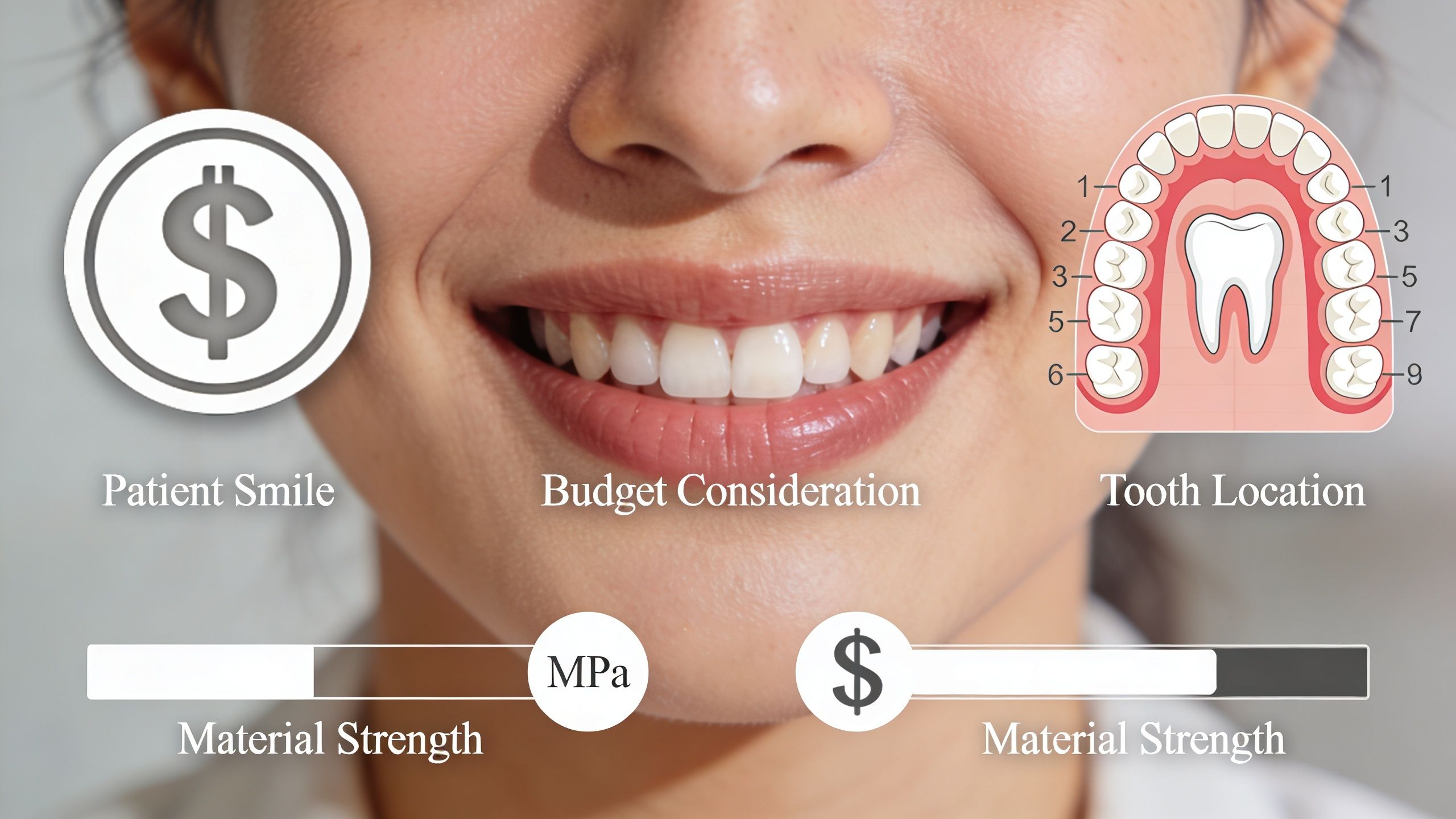
Patients often assume the choice is only about color. It isn’t. In practice, the decision usually comes down to a handful of factors:
- How much force the tooth handles
- How visible the tooth is when you smile
- How much natural tooth can be preserved
- How the material treats the opposing teeth
- How long you want the restoration to last
- What fits your budget and treatment schedule
A front tooth and a molar don’t live under the same conditions. Neither do a patient with a light bite and a patient who clenches at night. The right material depends on that real-world context, not on a one-size-fits-all ranking.
A Detailed Dental Crown Materials Comparison
A crown that looks great on day one can still be the wrong choice if it chips, wears down the opposing tooth, or requires more drilling than necessary. In our office, material selection starts with how the tooth functions in your mouth, then we weigh appearance, conservation of tooth structure, timeline, and comfort during treatment.
For some patients, the deciding factor is strength. For others, it is how naturally the crown blends into the smile. Many need both. That is why this comparison works best as a clinical guide, not a simple ranking.
| Material | What it does well | Main trade-offs | Often a good fit for | Typical cost range |
|---|---|---|---|---|
| Zirconia | Strong, metal-free, suitable for many back teeth and many visible teeth | Can look less translucent than other ceramics in some cases | Molars, premolars, patients who clench, many same-day CEREC cases | Moderate to high |
| Lithium disilicate / E.max | Excellent esthetics, lifelike translucency, conservative in the right case | Not the first pick for every heavy-bite molar | Front teeth, premolars, smile-zone cases | Moderate to high |
| All-porcelain | Natural appearance | Lower fracture resistance than stronger modern ceramics | Front teeth and lighter-load situations | Moderate to high |
| PFM | Long track record, solid support under porcelain | Possible dark line at the gum over time, more tooth reduction in many cases | Some back teeth and selected teeth where strength matters | Moderate |
| Gold alloy | Extremely durable, gentle to opposing teeth | Metallic appearance | Back molars, heavy function, patients with a history of breaking restorations | Moderate to high |
| Composite resin | Lower upfront cost, useful in selected short-term situations | Shorter lifespan, less color stability, less durable | Interim or limited-use cases | Lower |
Zirconia crowns
Zirconia is one of the most practical materials in modern crown dentistry. It offers high strength, no metal, and a cleaner look than older restorative materials. For patients in Rancho Bernardo who want durability without a metallic appearance, zirconia often ends up near the top of the list.
I recommend it often for molars and premolars, and sometimes for visible teeth when the shade and translucency are a good match for the smile. It is also a strong fit for patients who grind or clench, although finishing and polishing still matter. A strong material can still cause problems if it is not adjusted carefully.
Zirconia is also a good match for CEREC treatment planning in many cases. That matters if you want to avoid a temporary crown and complete treatment in one visit.
Lithium disilicate and E.max
E.max is the material many patients ask about when they want the most natural light reflection in a front tooth or premolar. It tends to look more lifelike than stronger, more opaque ceramics, especially in the smile zone.
The trade-off is straightforward. Beauty does not automatically mean it is the best choice for every bite. If the tooth takes heavy chewing force, if there is very little remaining tooth structure, or if night grinding is part of the picture, I may steer a patient toward zirconia instead.
For the right case, though, lithium disilicate is an excellent material. It can give a very natural result while still providing solid function.
Porcelain crowns
Traditional porcelain crowns still serve a purpose, mostly where esthetics lead the decision and bite forces are lighter. They can produce beautiful shade matching, especially in front teeth.
Their limitation is durability under stress. In a patient with a heavy bite, porcelain is more likely to chip than zirconia or metal-based options. That does not make it a poor material. It means case selection has to be disciplined.
Patients who want more background on ceramic restorations can review our guide to the porcelain crown procedure.
Porcelain-fused-to-metal crowns
PFM crowns have been used for many years because they combine a strong inner core with a tooth-colored outer surface. They still work well in selected cases.
The drawbacks are familiar to experienced dentists. The porcelain layer can chip. The metal edge may show if the gumline recedes. PFM crowns also often require more tooth reduction than newer all-ceramic options, which matters in a practice that values minimally invasive treatment.
For some patients, PFM remains a reasonable middle-ground choice. It is just no longer the default answer it once was.
Gold alloy crowns
Gold crowns still perform exceptionally well, especially on back molars. They handle force, resist fracture, and tend to be kinder to the opposing natural teeth than harder ceramics.
From a purely functional standpoint, gold deserves respect. If the tooth is far back in the mouth and cosmetics are not a concern, it remains one of the most dependable materials available.
Most patients pass on gold for one reason. They do not want a visible metallic restoration. That is usually the whole decision.
Composite resin crowns
Composite resin crowns are more limited. They can help in short-term treatment, budget-sensitive situations, or as a provisional solution, but they are not usually the first choice for a long-lasting final crown in a high-pressure bite.
They also tend to lose surface polish and wear faster over time. If a patient wants the most durable result, I usually recommend looking beyond composite unless there is a specific reason to use it.
The best crown material is the one that fits your tooth, bite, smile goals, and treatment plan. At Dr. Salami and Associates, that discussion also includes whether we can use same-day CEREC technology, whether a more conservative preparation is possible, and whether sedation would make the appointment easier for you. Those details affect the decision just as much as the material name.
Critical Factors When Choosing Your Crown
A crown can look good on paper and still be the wrong choice for your mouth. The right decision depends on where the tooth sits, how you bite, how much healthy tooth remains, and whether we can restore it in a conservative way.
Start with the tooth, not the material label
I look at the tooth first. A back molar that absorbs heavy chewing force has different demands than a front tooth in the smile line. A tooth with a crack, a root canal, or very little remaining structure also changes the recommendation.
That is why two patients can need a crown and leave with different material options.
At Dr. Salami and Associates, we also factor in whether a more conservative preparation is realistic and whether a digitally designed CEREC same-day crown is appropriate for the case. Those details affect comfort, efficiency, and how much natural tooth we can preserve.
Preserve as much healthy tooth as possible
Keeping more natural tooth structure usually gives us more to work with long term. Some crown materials and bonding approaches allow a more conservative preparation than others. That matters more than many patients realize, especially for younger patients, smaller teeth, and teeth that have already been restored more than once.
Less reduction is not always the only goal. The crown still needs enough thickness and support to hold up under function. Good planning is the balance between strength, fit, and preservation.
Bite forces matter every day
A crown does not work alone. It has to function against the tooth above or below it every time you chew.
For patients who clench or grind, I pay close attention to how a material wears, how it will be polished, and how it contacts the opposing teeth. A very strong crown can still create problems if the bite is off or the surface finish is rough. In those cases, the material choice and the finishing details matter equally.
Clinical insight: The best crown protects the tooth, fits the bite, and looks natural without creating new wear or sensitivity.
Esthetics, comfort, and biocompatibility all count
Some patients want the most natural appearance possible. Others care more about durability in a heavy bite. Some want a metal-free option. All of those priorities are reasonable.
Comfort matters too. Patients with dental anxiety often postpone treatment until the tooth breaks further or becomes painful. A sedation-friendly approach helps many people get the crown they need earlier, while the tooth is still more predictable to restore. That fits our minimally invasive philosophy. Treat the problem before it becomes a bigger one.
A practical way to narrow the choice
A few priorities usually guide the final decision:
- For a heavy bite or back tooth, strength and wear behavior often lead the discussion.
- For a front tooth or visible area, shade match and translucency usually matter more.
- For a tooth with limited remaining structure, preparation design and support become the deciding factors.
- For anxious patients or busy schedules, treatment efficiency and comfort may make one option more appealing than another.
The goal is not to pick the crown material with the strongest marketing. It is to choose the restoration that gives you the best chance of keeping that tooth healthy, functional, and comfortable for years.
The CEREC Same-Day Crown Advantage in Rancho Bernardo
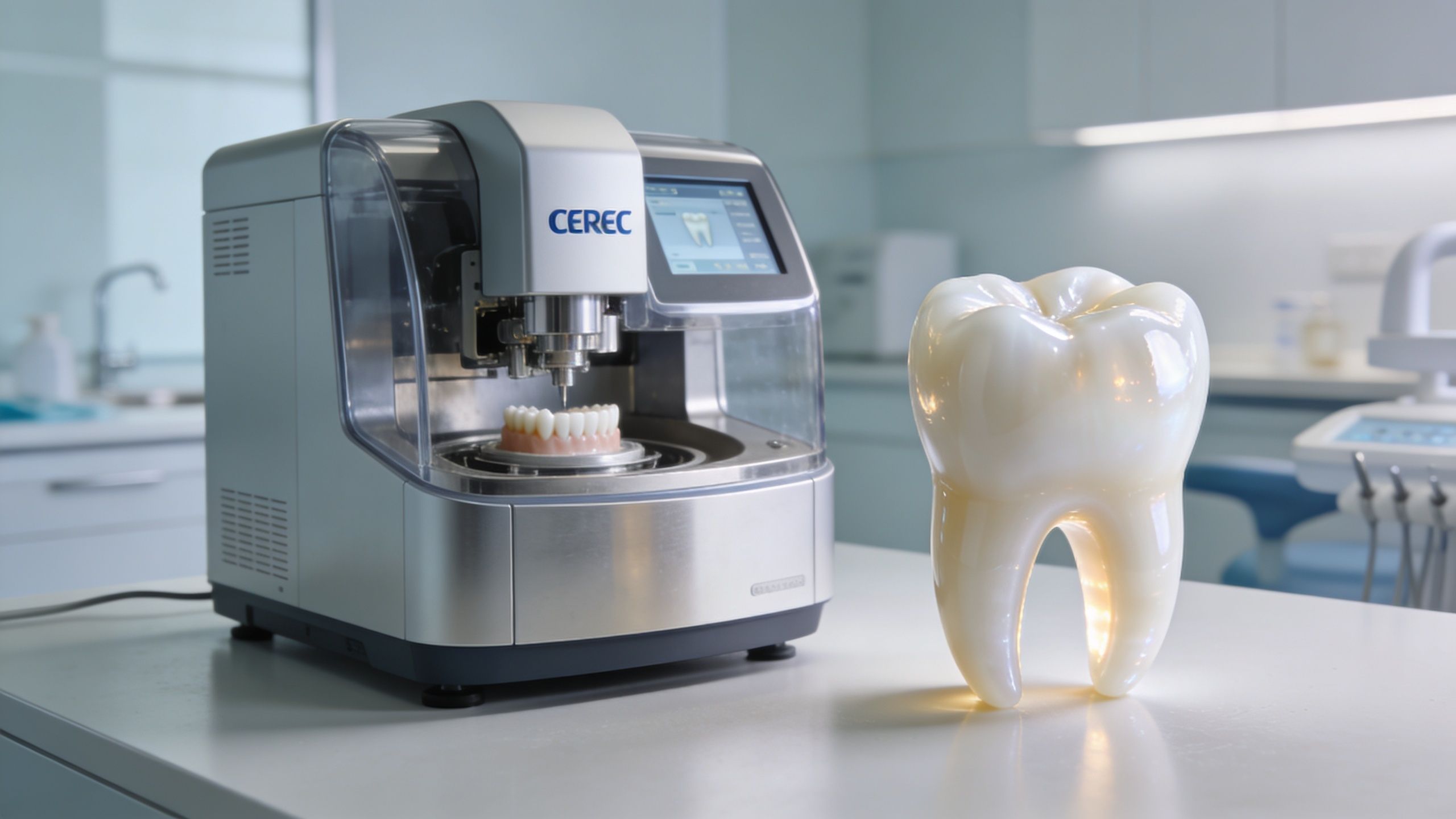
For many patients, the hardest part of crown treatment isn’t the crown. It’s the process. Traditional crowns usually mean multiple visits, physical impressions, a temporary crown, and time spent hoping the temporary holds up until the final appointment.
CEREC changes that workflow for the right case.
What same-day crowns change for patients
CEREC uses digital scanning, computer-aided design, and in-office milling to create a ceramic crown in one visit when the case is appropriate. That means no traditional putty impression, no temporary crown for most same-day cases, and no return trip just to seat the final restoration.
For busy families in Rancho Bernardo, Rancho Peñasquitos, Poway, and Escondido, that convenience matters. It’s easier to commit to needed restorative dentistry when the timeline fits real life.
A same-day approach can also reduce one of the most frustrating parts of crown treatment: living with a temporary. Temporary crowns can feel bulky, come loose, or limit what you want to eat. If the final ceramic crown can be designed, milled, and bonded the same day, the experience is often smoother.
Precision and planning
The value of CEREC isn’t only speed. It’s also precision. Digital scans help evaluate the preparation, contours, and bite in a very detailed way. That supports a better fit and a more predictable finish.
Patients who want to understand the process can review this page on what a CEREC crown is and how the technology fits into modern restorative treatment.
For the right case, CEREC can be especially appealing when a patient is dealing with a cracked tooth, wants to avoid extra time away from work, or prefers fewer appointments.
A quick visual helps show how the workflow comes together in practice.
Why this matters in material selection
Same-day treatment doesn’t eliminate the need for good judgment about materials. It improves the delivery of the treatment plan. In practical terms, it lets the material discussion connect to convenience, comfort, and precision instead of being isolated as a lab-only decision.
That’s one reason CEREC fits well into a modern crown conversation. If a ceramic option suits the tooth and the bite, the patient may be able to leave with the final restoration instead of a temporary. For people who’ve been postponing care because it sounds complicated, that can make treatment feel much more manageable.
Your Crown Experience with Dr. Salami and Associates
Most patients don’t walk in asking for a specific crown material first. They come in saying a tooth hurts, a filling broke, or something doesn’t feel right when they chew.
The appointment starts there. The team evaluates the tooth, reviews symptoms, takes any needed x-rays, and checks whether the problem is isolated or part of a larger wear, decay, or bite pattern. From there, the treatment plan becomes much easier to understand.
What the visit usually feels like
A crown consultation should feel like a decision-making appointment, not a pressure-filled sales conversation. The tooth is examined, the restoration options are explained in plain language, and the discussion includes practical concerns such as appearance, function, timing, and comfort.
For patients with dental anxiety, this matters just as much as the technical side. Sedation-friendly care can make treatment more approachable for people who’ve delayed needed dentistry because they dread the process. That includes patients who need more than a crown, such as cleaning and exams, periodontal care, root canal treatment, or planning around dental implants.
If you’re nervous about treatment, say so early. Comfort options are part of the plan, not an afterthought.
Two common crown paths
The clinical path usually falls into one of two categories.
- Same-day ceramic crown care works when the case fits CEREC treatment. The tooth is prepared, digitally scanned, the crown is milled, adjusted, and placed in the same visit.
- Traditional crown care may still be the better route in some situations. That means preparing the tooth, placing a temporary crown, and returning once the final restoration is ready.
Both approaches can produce a strong result when the case is selected well. What patients often remember most, though, is whether the process felt calm, clear, and respectful of their time.
What patients can expect after placement
Once the crown is placed, the bite is checked carefully. A crown that looks good but feels high when you chew isn’t finished. Final adjustments matter because they affect comfort, chewing confidence, and long-term wear.
Patients also get guidance on what to expect over the next few days, how to keep the area clean, and when to call if something feels off. That follow-through matters. Good restorative care doesn’t stop when the crown is cemented.
Frequently Asked Questions About Dental Crowns
How do I care for my new dental crown
Brush and floss normally unless you’re told otherwise. The crown itself can’t decay, but the tooth underneath and the margin around it still need clean, healthy gums. Avoid chewing ice, opening packages with your teeth, and other habits that stress any restoration.
Will dental insurance cover a crown
Coverage depends on your plan, your annual benefits, and why the crown is being placed. Many plans help when a crown is medically necessary to restore a damaged tooth. Cosmetic-only treatment may be handled differently. The simplest next step is to let the office review your benefits before treatment begins.
How long does a temporary crown last
A temporary crown is meant to get you through the period before your final crown is delivered. It isn’t designed for the same long-term strength as the permanent restoration. While you have it, avoid sticky foods, be cautious with very hard foods, and keep the area clean.
What happens if my crown feels loose or falls off
Call the office as soon as possible. Don’t keep chewing on that side if you can avoid it. If the crown comes off completely, keep it and bring it with you. Sometimes it can be re-cemented, and sometimes the tooth needs a different repair. The key is getting it checked quickly before the tooth shifts or becomes more sensitive.
Will my crown feel different at first
It can. A new crown may feel slightly unfamiliar for a short time because the contours are new and your tongue notices the change. If the bite feels high, sharp, or awkward when you chew, it should be adjusted. Don’t assume you need to “get used to” a crown that feels wrong.
Which crown material is best for me
That depends on the tooth location, your bite, how visible the tooth is, how much healthy structure remains, and whether convenience matters for your schedule. Some teeth do well with highly esthetic ceramics. Others need a stronger, more forgiving material. The right answer comes from the exam, not from the material name alone.
If you’re comparing options and want a clear, honest treatment plan, schedule a consultation with Pegah S. Salami, DMD, FAGD. Dr. Salami & Associates provides personalized crown care for patients in Rancho Bernardo, Poway, Rancho Peñasquitos, Escondido, and nearby San Diego communities, including same-day CEREC treatment, restorative dentistry, cosmetic dental care, and sedation-friendly visits for anxious patients.





