
If you're dealing with missing teeth or a denture that shifts when you talk, eat, or laugh, you're probably not looking for a vague answer. You want to know whether snap-on dentures will make daily life easier, what the trade-offs are, and whether the investment makes sense for your situation in Rancho Bernardo or the greater San Diego area.
That’s the right way to look at it.
Snap on dentures pros and cons aren’t just about a list of features. They affect how comfortably you can order dinner, how confident you feel in conversation, how much maintenance you’re willing to do, and how much long-term treatment matters to you. For some patients, snap-on dentures are a major upgrade from a loose conventional denture. For others, a fixed implant option may be a better fit.
Restoring Your Smile How Snap-On Dentures Work
A lot of patients first ask about snap-on dentures after they’ve had enough of movement. Their denture lifts when they chew. It rubs. They use adhesive and still don’t trust it. Even a simple lunch out in San Diego can feel stressful when you’re worried your teeth may shift.
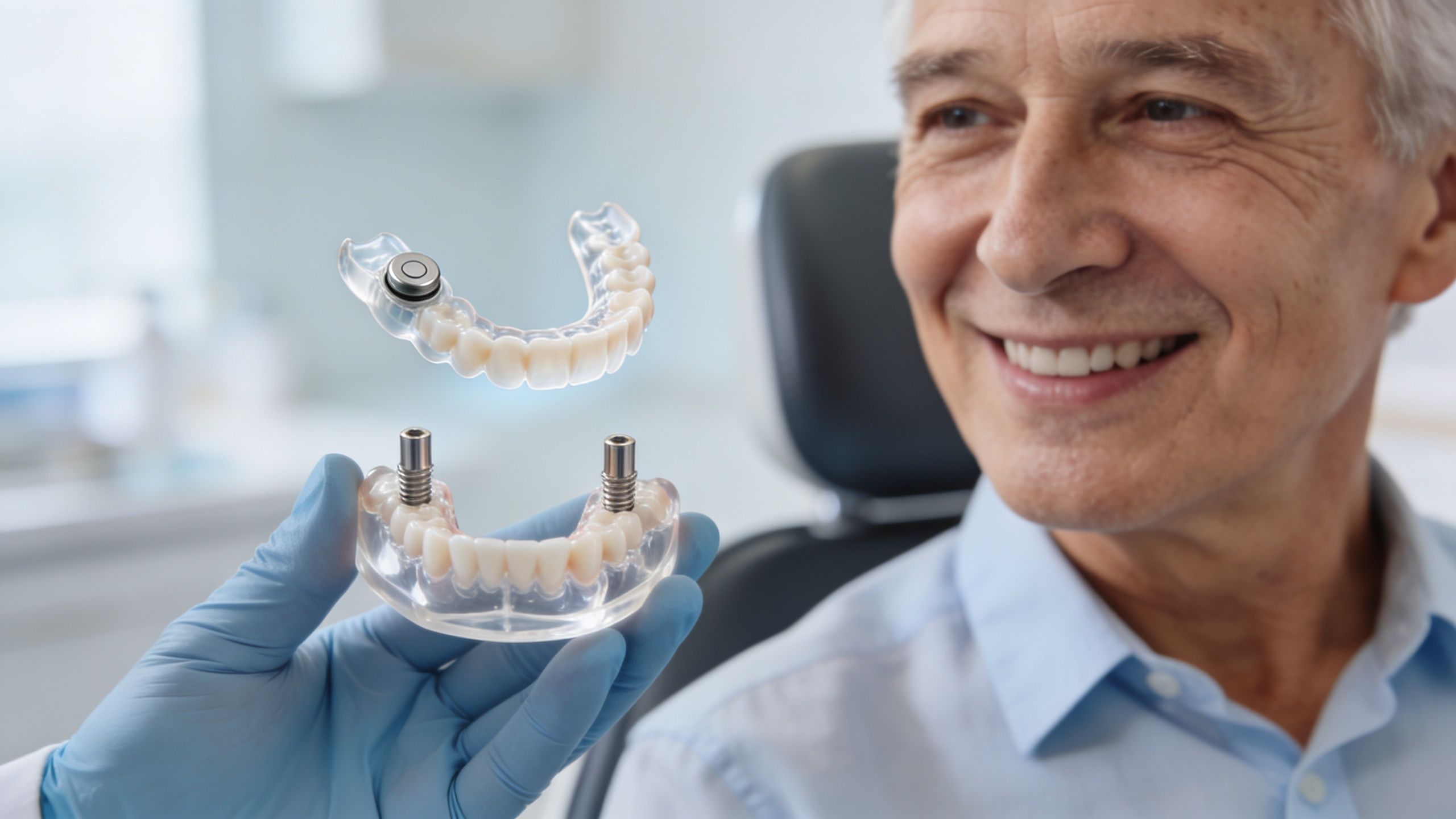
Snap-on dentures solve that problem differently than traditional dentures. Instead of relying mainly on suction or adhesive, the denture attaches to dental implants placed in the jaw. The easiest way to picture it is like fastening a secure button into place. The denture seats onto the attachments and stays much steadier during normal daily use.

What the system includes
There are two main parts:
- Dental implants placed in the jawbone
- A custom denture with special attachments that connect to those implants
The denture is removable, but it doesn’t sit loosely on the gums the way a conventional denture does. That added connection is what gives patients the sense of security they’ve been missing.
If you want a simple overview of how this style of denture stays in place, this guide on how dentures stay in is a helpful starting point.
Why it feels more secure
Traditional dentures can work well for some people, but they often move because they rest on soft tissue. Your gums and jaw shape also change over time, which can make an older denture feel less stable. Snap-on dentures reduce that problem by anchoring to implants.
That doesn’t mean they feel exactly like natural teeth. They don’t. But for the right patient, they can feel far more dependable than a standard removable denture.
Practical rule: If your biggest complaint is denture looseness, a snap-on design is often worth discussing before you assume your only options are “live with it” or jump straight to a fully fixed implant bridge.
You may also hear them called overdentures. If you’ve been comparing terms online, this overview of implant-supported overdentures gives useful general context about the category.
Who tends to ask about them
In everyday practice, the people most interested in snap-on dentures usually fall into a few groups:
- Current denture wearers who are tired of slipping and adhesives
- Adults missing many or all teeth who want more stability
- Patients comparing dental implants near me searches but aren’t sure they want a fully fixed solution
- People balancing cost and function who want more security without choosing the highest-cost implant option
For many Rancho Bernardo patients, that middle ground is exactly what makes snap-on dentures appealing. They aren’t the simplest option, and they aren’t the most permanent option. They sit in the space between those two extremes, which is often where practical dentistry happens.
A Balanced Look at Snap-On Dentures Pros and Cons
The strongest reason to consider snap-on dentures is simple. They can make life easier. The strongest reason to hesitate is just as simple. They still require compromise.
That’s why a balanced view matters.
Where snap-on dentures help most
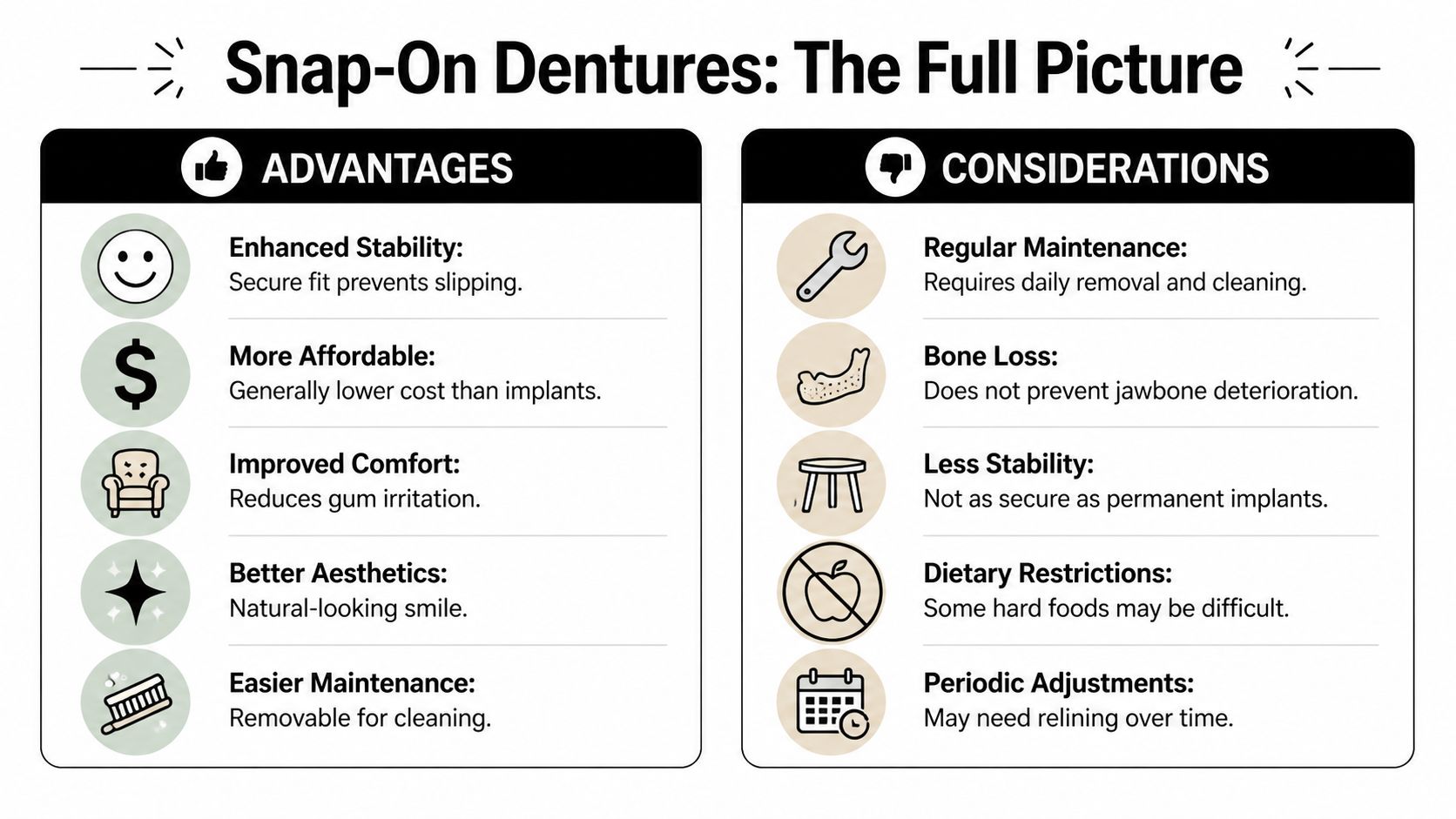
The biggest day-to-day improvement is stability. A denture that attaches to implants usually moves less during meals and conversations, which can reduce embarrassment and help you feel more relaxed socially.
Function improves too. According to WebMD’s snap-in denture overview, people with snap-in dentures can bite with up to 300% more force than those with traditional dentures. In practical terms, that means many patients can handle foods that are often frustrating with regular dentures.
Here’s where the benefits usually show up first:
- Eating becomes less frustrating. Firmer foods are often easier to manage.
- Speech feels more predictable. Less shifting can mean fewer self-conscious moments.
- Gum irritation may decrease. A more stable denture tends to rub less.
- Cleaning is straightforward. Because the denture is removable, many patients like being able to take it out and clean it thoroughly.
Patients usually notice the emotional benefit quickly. When the denture feels more secure, they stop thinking about it every few minutes.
The real limitations
Snap-on dentures are better than traditional dentures in important ways, but they’re not maintenance-free and they’re not the final answer for everyone.
The first issue is that they still come out. Some patients like that because cleaning is easy. Others eventually decide they’d rather have something fixed in place and not remove it at night.
The second issue is maintenance. The attachments wear over time, and removable prosthetics need regular home care and periodic office follow-up. If someone wants a treatment they never remove themselves, snap-on dentures may feel like only a partial solution.
The third issue is surgery. Implants have to be placed in the jaw, so this option isn’t the same as making a denture. Even when the procedure is routine, some patients don’t want surgery, and some aren’t ideal candidates without additional treatment.
Pros and cons in everyday terms
| Everyday concern | Likely experience with snap-on dentures |
|---|---|
| Confidence in public | Usually improved because the denture is more secure |
| Chewing ability | Better than conventional dentures |
| Cleaning routine | Still requires daily removal and cleaning |
| Comfort | Often improved, but fit and design still matter |
| Permanence | More secure than a standard denture, but not fixed |
| Upfront commitment | Higher because implants and surgery are involved |
When they work well
Snap-on dentures tend to work best for patients who want meaningful stability but still value a removable design. They can also make sense for patients focused on restorative dentistry options that balance performance and budget.
When they disappoint people
They usually disappoint patients who expected them to feel exactly like natural teeth, or exactly like a permanently attached implant bridge. That’s not what they are.
What works best: Clear expectations. Snap-on dentures are often an excellent middle-ground treatment. They are not the same thing as a fully fixed full-arch implant restoration.
For anyone searching for the best dentist in Rancho Bernardo, CA or a dentist in San Diego, CA for missing teeth, that distinction matters. The right choice depends less on marketing terms and more on how you live, eat, clean, and what level of permanence you want.
How Snap-On Dentures Compare to Other Tooth Replacements
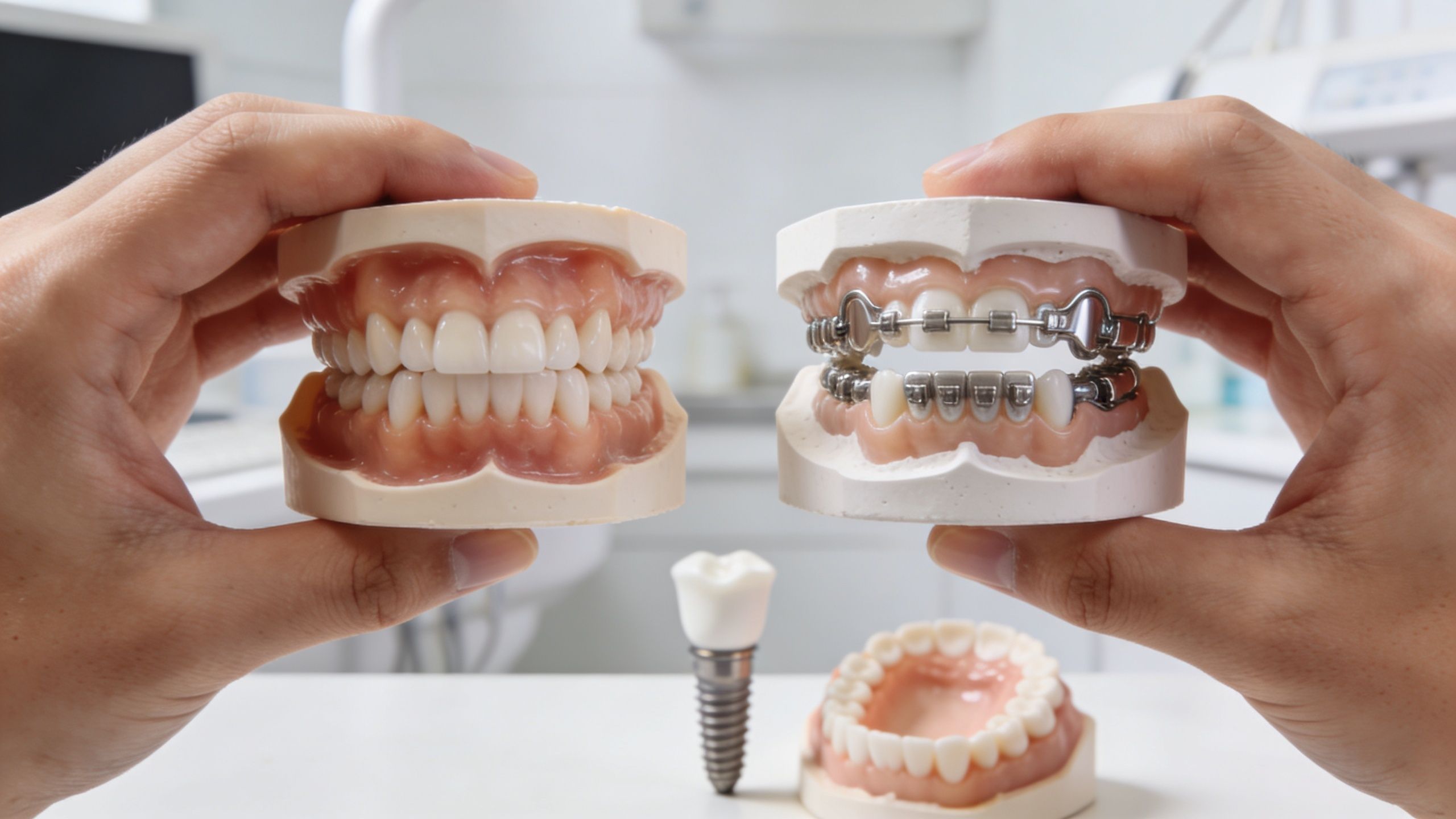
If you’re comparing options seriously, it helps to think of tooth replacement on a spectrum. Traditional dentures sit on one end. Fully fixed implant bridges sit on the other. Snap-on dentures live in the middle.
That middle position is exactly why they’re so useful for some patients.
Compared with traditional dentures
The biggest upgrade over traditional dentures is security. Conventional dentures rely on suction, fit, and sometimes adhesive. Snap-on dentures lock onto implants, so they usually feel steadier.
That change affects daily life more than many people expect. Meals can feel less stressful. Talking can feel more natural. Smiling in photos may stop feeling like a calculated exercise.
Compared with fixed implant teeth
It is essential to have an honest discussion. A snap-on denture is a significant improvement over a regular denture, but it still isn’t the same as a fixed full-arch implant restoration.
A useful comparison from this discussion of fixed dental implants vs. snap-on dentures is chewing function. Snap-on dentures can restore about 60% to 70% of normal chewing function, while fully fixed options can restore up to 90%. For patients who want the most natural-feeling chewing experience and the fewest food limitations, that difference can be decisive.
If you’ve been weighing dental implants vs dentures, that broader comparison can also help clarify where each treatment fits.
Side-by-side view
| Option | Stability | Cleaning | Feel in daily life | Best fit for |
|---|---|---|---|---|
| Traditional dentures | Least stable | Removable | Most movement | Lower-cost removable replacement |
| Snap-on dentures | More stable | Removable | Middle-ground performance | Patients wanting stronger retention without going fully fixed |
| Fixed implant bridge | Most stable | Dentist removes | Closest to permanent teeth | Patients prioritizing maximum function and permanence |
One more point matters here. Better isn’t always better for every person. Some patients in Poway or Rancho Peñasquitos prefer a removable option because it’s easier for them to clean, easier to maintain, or more realistic financially.
Here’s a short visual explanation if you like seeing options compared in a more practical format:
The decision usually comes down to lifestyle
A patient who wants to remove the prosthetic for cleaning may like snap-on dentures. A patient who says, “I want something that feels as close to permanent as possible,” often ends up looking harder at fixed treatment.
If you're exploring the best options for missing teeth, this is the core question to answer: do you want a removable improvement, or do you want the most fixed solution available?
That answer usually matters more than any product label.
Your Journey to a New Smile The Process and Cost
Patients typically don’t walk into a consultation thinking about attachment housings or implant positions. They want to know what the process feels like, how long it takes, and what they’re realistically paying for.
That’s completely reasonable.
What the treatment path usually looks like
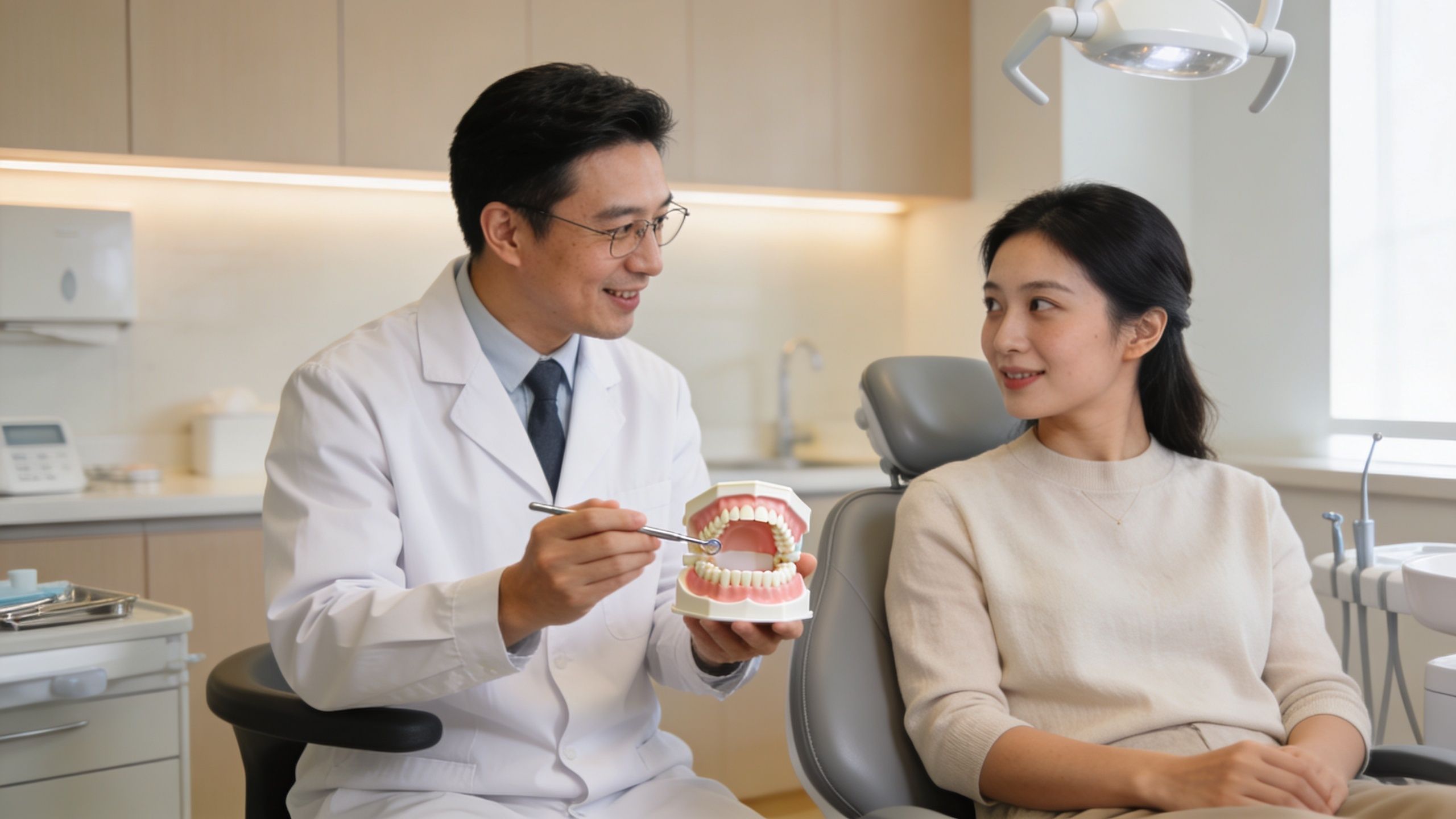
The first step is a consultation and exam. That visit is where the dentist looks at your gums, bone support, current teeth if any remain, and the condition of any existing denture. Dental X-rays or other imaging help determine whether implants are a good option and whether additional treatment may be needed first.
From there, the process often includes:
Planning the case
The dentist decides how many implants are needed and how the denture will be designed.Addressing any preliminary work
Some patients need extractions or other preparatory care before implant placement.Placing the implants
The implants are inserted into the jaw during a surgical visit.Healing and integration
The bone needs time to heal around the implants.Creating and fitting the denture
Once the implants are ready, the custom denture is made and attached to the system.
Most anxiety comes from the unknown, not the procedure itself. Once patients understand the sequence and know what to expect at each visit, the process usually feels much more manageable.
What affects cost
According to Optima Implants’ guide to snap-in dentures, snap-on dentures typically cost between $6,000 and $20,000, while traditional dentures range from $1,500 to $4,000 and fully fixed implant solutions start at $25,000+. The same source notes that snap-on dentures typically use 2 implants for the lower jaw and 4 for the upper jaw.
Those numbers are useful because they show where this treatment sits. It’s a larger investment than a standard denture, but it can be a practical middle ground for patients who want more stability without moving immediately to a fully fixed full-arch restoration.
A final fee depends on details such as:
- How many implants are needed
- Whether a tooth extraction is required
- Whether bone grafting or other pre-treatment is needed
- The design of the final denture
- The complexity of the case
Thinking about value, not just price
The cost conversation shouldn’t stop at the initial number. It should include function, comfort, and longevity. Some patients are happy spending less for a removable solution that’s much more stable than what they have now. Others decide they’d rather invest more for a fixed result.
Insurance can be inconsistent with this type of care, so it’s important to review benefits carefully before treatment begins.
For patients who are also researching removable options more broadly, this article on Florida Special Care Dentistry dentures can help frame how denture choices differ depending on needs and priorities.
What a good consultation should answer
A useful consultation shouldn’t feel rushed. You should leave understanding:
- Whether you’re a candidate
- What type of result is realistic
- What treatment comes first if you’re not ready yet
- What the full financial picture looks like
- How maintenance will fit into your routine
That’s especially important if you’re searching for a dentist near me because online terms can blur together. The right office should make the decision clearer, not more confusing.
Frequently Asked Questions About Snap-On Dentures
Do snap-on dentures hurt?
Most patients are more worried beforehand than they need to be. The surgical part is handled with local anesthesia, and comfort is a major part of treatment planning. After placement, some soreness during healing is normal, but the long-term goal is a denture that feels steadier and less irritating than a loose one.
Can I sleep in them?
In most cases, removable dentures should be taken out at night unless your dentist gives different instructions for a specific reason. Removing them allows cleaning and gives the tissues a break.
Are they hard to clean?
Not usually. In fact, some patients find them easier to live with than fixed options because they can remove them and clean them directly. The key is consistency. You need a routine and you need to follow it every day.
A removable prosthetic only stays healthy if the cleaning routine stays regular.
Will I be able to eat normally?
You’ll usually have a better experience than with a traditional denture, especially once you’ve adapted to the new fit. But “normally” means different things to different people. If your goal is the strongest possible chewing performance with the fewest limits, a fixed implant option may fit better.
How long do they last?
Longevity depends on both the implant foundation and the denture itself. The implant portion is designed for long-term support with proper care, while the removable denture and its attachments may need maintenance or replacement over time.
Are snap-on dentures worth it?
For many patients, yes. They can be worth it when your biggest frustrations are movement, poor chewing confidence, and daily insecurity with a standard denture. They may be less satisfying if you already know you want a fully fixed solution and won’t be happy with a removable appliance.
Who is a good candidate?
A good candidate is usually someone missing many or all teeth who wants greater stability and has enough bone support for implants, or is willing to complete any needed preparatory treatment first. The only reliable way to know is a proper exam.
What if I’m nervous about treatment?
That’s common. Patients looking for a dentist in San Diego, CA often aren’t just looking for technical skill. They want calm communication, a clear plan, and a team that explains things well. Those details matter just as much as the procedure itself.
Take the Next Step Toward a Confident Smile in Rancho Bernardo
If you’ve been living with missing teeth or a denture that doesn’t feel dependable, snap-on dentures may offer a meaningful improvement in comfort, confidence, and function. They can give you much better stability than a conventional denture while staying more accessible than a fully fixed implant restoration.
They also come with real considerations. There’s a surgical step. There’s a financial commitment. There’s daily care. And for some patients, the removable design is a plus, while for others it’s the reason to keep looking.
That’s why the best next step isn’t guessing. It’s getting your mouth evaluated and talking through your goals openly.
For patients in Rancho Bernardo, Poway, Rancho Peñasquitos, Escondido, and nearby San Diego communities, a personalized consultation can help answer the questions that matter most. Are you a strong implant candidate? Would snap-on dentures fit your lifestyle? Would another restorative dentistry option serve you better? Those answers should be based on your health, your priorities, and your budget.
If you’re searching for the best dentist in Rancho Bernardo, CA, cosmetic dentist near me, or dental implants near me, start with a conversation focused on fit, not pressure. Good treatment planning should leave you feeling informed and comfortable about the path ahead.
If you're ready to talk through your options for missing teeth, schedule a consultation with Pegah S. Salami, DMD, FAGD. You’ll get clear guidance, a personalized evaluation, and a treatment plan built around your comfort, goals, and long-term smile health in Rancho Bernardo and the greater San Diego area.





