
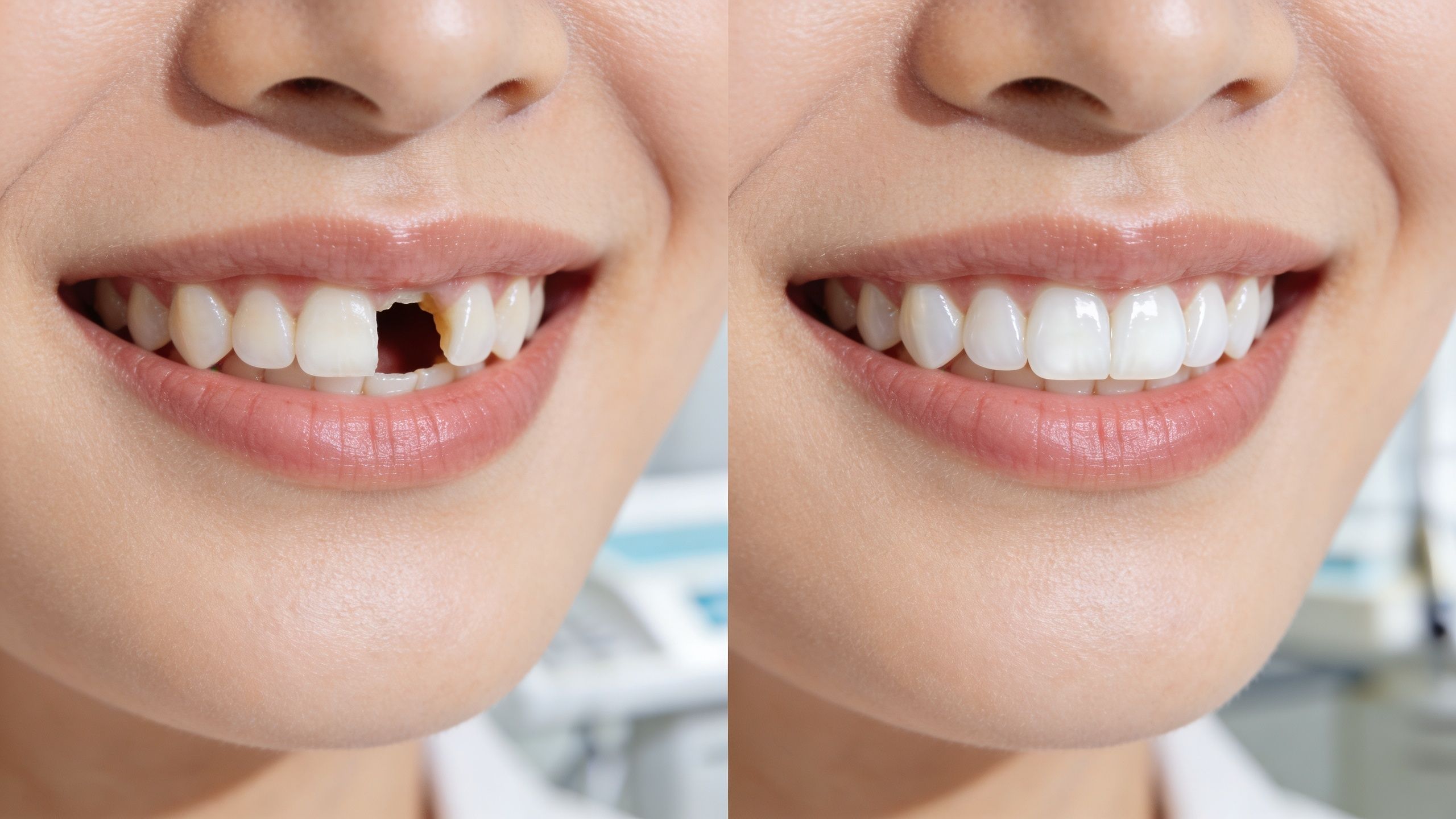
A missing front tooth changes more than your smile. It can make you cover your mouth in photos, talk a little less in meetings, or avoid smiling at dinner with friends because the gap feels like the only thing anyone will notice.
That’s why searches like dentist near me, cosmetic dentist near me, and best dentist in Rancho Bernardo, CA often start with something very personal. People want to feel like themselves again. If you’re in Rancho Bernardo, Rancho Peñasquitos, Poway, or Escondido and you’re looking into dental bridge front teeth before and after results, it helps to understand the full picture. Not just the polished final smile, but the actual process, the healing, and the small adjustments that happen along the way.
Restoring Your Smile in Rancho Bernardo
For many people in Rancho Bernardo, the problem starts with one awkward moment. A family photo. A work presentation. A quick conversation at the grocery store. You catch yourself smiling less because a front tooth is missing, chipped beyond repair, or scheduled for extraction.
That reaction is common, and it’s understandable. Front teeth sit in the center of your smile and shape how you speak, bite, and carry yourself. When one is missing, the change can feel immediate.
You’re not the only one dealing with tooth loss
Tooth loss is far more common than most patients realize. According to the Australian Institute of Health and Welfare summary discussed in this dental bridge overview, Australian adults aged 18 and over have an average of 6.4 missing teeth. That helps explain why restorative treatments like bridges remain such an important part of modern dentistry.
The emotional side matters too. Replacing a front tooth isn’t only about filling space. It’s about helping your smile look balanced again, supporting bite function, and restoring confidence in everyday interactions.
A good front-tooth bridge should do two jobs at once. It should look natural when you smile and feel steady when you talk and eat.
Why front teeth need a different level of attention
A back tooth restoration can hide in the background. A front tooth can’t. That’s why dentists pay close attention to the shade, shape, surface texture, and translucency of a front bridge. The goal isn’t just to “add a tooth.” The goal is to make the restoration blend with the teeth beside it.
In a community like Rancho Bernardo, where patients often want a dentist in San Diego, CA who can combine restorative and cosmetic care, that detail matters. The same is true for nearby neighbors in Poway and Escondido who want a result that feels polished but not artificial.
Understanding How a Dental Bridge Works
A dental bridge is a fixed restoration that fills the space left by one or more missing teeth. For a front tooth, the goal is straightforward. Replace the gap with something that looks natural, stays stable, and lets your smile function comfortably in daily life here in Rancho Bernardo.
The center replacement tooth is called a pontic. The teeth or implants that hold it in place are called abutments. Once those terms are clear, the design becomes much easier to understand.

The three parts patients should know
Patients often feel more comfortable when the bridge is broken into simple pieces:
- The gap is the space created by the missing tooth.
- The pontic is the visible replacement tooth.
- The abutments are the supports that keep the bridge secure.
A front bridge only succeeds when all three parts work together. A beautiful replacement tooth will not last well if the support underneath is weak, and strong support alone is not enough if the shape or bite feels off.
What the supporting teeth do
Support teeth carry the load every time you bite, speak, and bring your teeth together. In a traditional bridge, those neighboring teeth are reshaped so crowns can fit over them and hold the pontic between them. In other cases, an implant can provide that support instead of a natural tooth.
That is why the evaluation matters so much. Your dentist needs to check the nearby teeth, gums, bite, and bone before recommending a bridge. If one of those pieces is not healthy enough, the plan may need to change.
If you want to see how those decisions fit into each appointment, this step by step dental bridge procedure guide walks through the process in patient-friendly language.
Main types of dental bridges
Several bridge designs can replace a front tooth, but they do not all work the same way.
Traditional bridge
This is the design many patients picture first. It usually uses one tooth on each side of the space for support, with crowns covering those teeth and the replacement tooth attached in between.
For many front-tooth cases, this is a dependable option because the pontic is supported from both sides.
Cantilever bridge
A cantilever bridge uses support from only one neighboring tooth. It can be useful in selected cases, but it has to be chosen carefully because front teeth are involved in biting and speech in very noticeable ways.
Maryland bridge
A Maryland bridge attaches with bonded wings on the back of neighboring teeth rather than full crowns on both sides. This can preserve more natural tooth structure, which appeals to some patients, especially in the front of the mouth.
Implant-supported bridge
An implant-supported design relies on implants rather than natural teeth for support. The Cleveland Clinic overview of dental bridges explains the different bridge types and how support can come from teeth or implants depending on the case.
Practical rule: The right bridge depends on the location of the missing tooth, the condition of nearby teeth, your bite, and how you want the result to hold up over time.
Why understanding the mechanics helps with before and after expectations
Patients searching for dental bridge front teeth before and after are usually focused on the final smile. That makes sense. The after photo is the part everyone notices first.
But the design under that photo matters just as much. A bridge needs proper support, a natural shape, and a bite that feels balanced. It also takes a short adjustment period before the new tooth feels familiar in everyday life. Knowing that ahead of time helps Rancho Bernardo patients judge results more realistically and feel more confident about the full process, not just the finished picture.
Your Dental Bridge Journey with Dr Salami
A Rancho Bernardo patient often arrives with the same question: “Will it look good right away, or is there a stage in the middle where things still feel a little unfinished?” That is a smart question. The full bridge process includes both the polished final result and a short adjustment period that deserves an honest explanation.
Knowing the sequence helps people feel calmer. A front dental bridge is built in steps, much like tailoring a jacket. The final fit depends on careful measurements, temporary materials, and small refinements before everything feels natural.
Your first visit and exam
Your first appointment starts with listening. Dr. Salami looks at the missing tooth area, the teeth next to it, your gum health, and the way your upper and lower teeth meet when you bite and speak.
X-rays are often part of that visit because they show support under the surface. A front bridge may look simple from the outside, but the nearby teeth and bone have to be healthy enough to carry the work comfortably over time.
If you are weighing a bridge against another option, this is the appointment where the decision usually becomes clearer. The goal is not only to close a gap. The goal is to choose a replacement that fits your bite, appearance, and long-term comfort.
Planning the bridge carefully
Front teeth sit in the center of attention. Even small differences in length, shape, or color can stand out, so planning matters.
Dr. Salami studies details patients may not realize affect the final result, including how much tooth shows when you smile, how your lip moves when you talk, and how the bridge should meet the neighboring teeth without looking bulky. That planning is what helps the bridge blend in instead of announcing itself.
Patients who want a more detailed appointment-by-appointment overview can review this step-by-step dental bridge procedure guide.
Preparing the support teeth
If a traditional bridge is the right choice, the teeth beside the gap are shaped so the new crowns can fit over them properly. This part can sound intimidating at first, especially for patients replacing a front tooth, but it is done with local anesthesia and with close attention to comfort.
The supporting teeth act like the anchors on each side of a small span. They need the right shape so the final bridge can sit securely, look balanced from the front, and feel stable when you bite.
A lot of the success happens here. Careful preparation usually leads to a bridge that fits better and needs fewer adjustments later.
Impressions and your temporary bridge
After the teeth are prepared, Dr. Salami takes impressions or digital scans so your permanent bridge can be made to match your smile. Then a temporary bridge is usually placed while the lab creates the final one.
This stage is often skipped in online guides, but patients in Rancho Bernardo usually appreciate hearing the truth about it. The temporary bridge protects the prepared teeth, reduces sensitivity, helps you chew more comfortably, and holds the space so nearby teeth do not drift while you wait for the final restoration.
It also gives you a preview of the process. You may like the fact that the gap is no longer visible, while still noticing that the temporary does not feel as polished as the finished bridge will.
Living with the temporary
Temporary bridges do their job well, but they are not meant to feel perfect. They can feel slightly thicker, a bit less smooth, or more noticeable to your tongue. Speech can sound a little different for a few days, especially with front teeth, because the tongue uses that area like a reference point when forming certain sounds.
That adjustment period is normal.
A few simple habits make this stage easier:
- Choose softer foods at first if the area feels tender
- Avoid sticky and very hard foods that could loosen the temporary
- Brush gently and keep the gumline clean so the tissue stays healthy for the final fit
- Notice any pressure spots or speech changes so you can mention them at the next visit
Patients often feel reassured when they hear this: the temporary phase is part of the journey, not a sign that something is off. It is the in-between stage where your mouth and the restoration are getting ready for the final version.
Final placement and adjustment
The final visit is rewarding because you get to see the bridge that was designed specifically for your smile. Dr. Salami checks the fit, the shade, the contour, and how the bridge meets the surrounding teeth before it is bonded or cemented into place.
Small bite adjustments are common and helpful. Front teeth are involved in speech, appearance, and the way your teeth come together, so even a minor high spot can feel obvious. Refining those details helps the bridge feel less like a dental appliance and more like part of your own smile.
What patients usually feel afterward
The first reaction is often relief. The gap is gone, the smile looks more complete, and many patients feel ready to smile in photos again.
At the same time, a new bridge can feel unfamiliar for a short period. Your lips, tongue, and bite need time to adapt, much like breaking in a new pair of shoes that fits well but still feels new on day one. That early awareness usually fades as everyday talking, eating, and smiling become routine again.
The best before-and-after result is not only a pretty photo. It is a bridge that looks natural, feels comfortable, and comes with clear expectations about the short healing and adjustment period in between.
What changes in a strong before and after result
A successful front bridge usually improves several details at once:
- The gap disappears, which is the most obvious change
- The smile line looks more balanced
- Speech often feels more natural again
- The patient stops guarding their smile in photos
Those changes sound simple, but together they can be life changing.
A few local-style examples patients relate to
A Poway teacher might come in embarrassed by a visible front gap after a failing tooth has to be removed. What matters to her isn’t just the mirror. It’s being able to stand in front of a classroom, speak clearly, and smile in school pictures without feeling distracted by her teeth.
An Escondido professional may care most about close-up conversations and presentations. He doesn’t want a replacement tooth that looks “done.” He wants one that disappears into the smile, so colleagues notice his expression, not his dentistry.
A parent in Rancho Peñasquitos may say something even simpler: “I just want to smile like I used to.”
The best after photo is the one that no longer looks like dental work. It just looks like your smile came back.
The artistry behind a natural-looking front bridge
Cosmetic detail matters for front teeth. Front teeth don’t all look the same, even within the same mouth. Some have softer edges. Some are slightly brighter. Some reflect light differently because of their shape and enamel texture.
A custom bridge for the front teeth has to respect that. Dentists and labs work together to match:
| Detail | Why it matters |
|---|---|
| Shade | A bridge that’s too white stands out immediately |
| Shape | The replacement tooth has to suit the neighboring teeth |
| Length | Small size differences are easier to notice in the front |
| Contour | The bridge should support a natural look at the gumline |
When patients search for dental bridge front teeth before and after, they’re usually looking for reassurance that the final result won’t look bulky or fake. Modern porcelain and careful design can create a result that blends smoothly with the surrounding smile.
Comparing Your Tooth Replacement Options
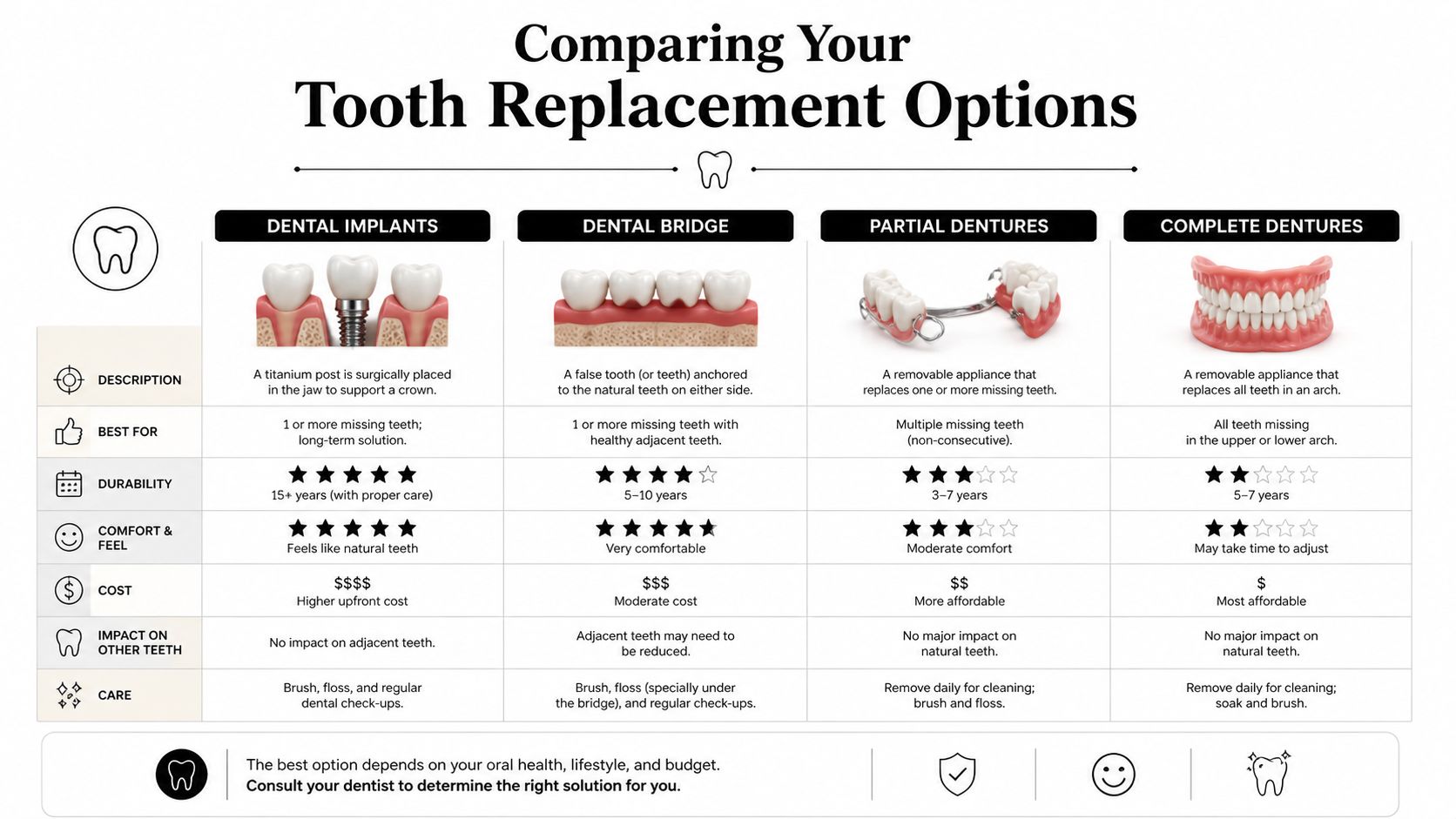
A dental bridge is a strong option for many people, but it isn’t the only way to replace or improve a front tooth. Patients often compare dental bridges, dental implants, and porcelain veneers, and the confusion usually starts because these treatments solve different problems.
First, clear up the veneer question
A veneer does not replace a missing tooth. It covers the front surface of an existing tooth to improve shape, color, or minor cosmetic flaws. If the tooth is gone, a veneer isn’t the answer.
That’s an important distinction because patients searching for a cosmetic dentist near me often see veneers in smile makeover content and assume they can fill a gap. They can’t.
Bridge, implant, or veneer
Here’s the practical difference.
Dental bridge
A bridge replaces a missing tooth by using support from neighboring teeth or, in some designs, implants. It’s often appealing when the adjacent teeth already need crowns or when a patient wants a fixed solution without implant surgery.
Dental implant
An implant replaces the missing tooth root as well as the visible crown. It stands on its own and doesn’t depend on neighboring natural teeth for support.
Porcelain veneer
A veneer improves an existing tooth that’s present but cosmetically compromised. It’s best for discoloration, chips, or shape concerns, not for missing teeth.
Patients comparing a bridge and implant can review this dental bridge vs implant guide.
Dental Bridge vs Implant vs Veneer at a Glance
| Feature | Dental Bridge | Dental Implant | Porcelain Veneer |
|---|---|---|---|
| Best use | Replace a missing tooth | Replace a missing tooth and root | Improve the look of an existing tooth |
| Effect on nearby teeth | May involve preparing adjacent teeth | Neighboring teeth usually remain untouched | Usually affects only the treated tooth |
| Treatment style | Fixed restoration spanning a gap | Surgical placement followed by final crown | Cosmetic covering bonded to front of tooth |
| Timeline feel | Often shorter than implant treatment | Usually longer because healing is involved | Often completed in fewer visits than full tooth replacement |
| Ideal patient | Missing tooth with suitable support nearby | Missing tooth with good candidate for implant care | Existing tooth present but needs cosmetic improvement |
How patients in Rancho Bernardo usually decide
The right choice depends on what you value most.
- Choose a bridge if you want a fixed replacement and the nearby teeth are appropriate support.
- Choose an implant if preserving adjacent natural teeth is a priority and you’re comfortable with a longer process.
- Choose a veneer only if the tooth is still there and the main goal is cosmetic improvement.
For people searching dental implants near me or dentist in San Diego, CA, the best next step is a personalized exam. The right answer depends on your bite, bone support, gum health, cosmetic goals, and budget.
Beyond the After Photo Healing and Long Term Care
The after photo is important, but it’s not the whole story. What many articles skip is the adjustment period. Patients deserve to know that even a beautiful bridge can take a little time to feel fully normal.
What can feel different at first
A new front bridge changes the contours your lips and tongue interact with. That can make speech feel slightly off for a short time, especially with certain sounds. You may also be more aware of the bridge than anyone else is.
This is one reason honest conversations matter. If patients only expect an instant movie-scene reveal, they may worry over normal early sensations.
Changes that can happen as tissues settle
The healing phase can include changes in the way the gums sit around the restoration. Research discussed in this overview of space under an implant bridge notes that gaps or spaces frequently develop under implant bridges within 2-8 weeks as gum swelling subsides, and that can affect speech clarity, especially with “S” and “H” sounds.
That doesn’t mean every bridge will have that issue, and implant bridges are not the same as every traditional front bridge. But it’s a useful example of a larger truth. Soft tissues change as they heal, and what you notice in the first days may not be the final settled result.
If speaking feels a little different early on, that’s often an adjustment issue, not a sign that treatment failed.
How to protect your bridge long term
Once the bridge is in place, long-term success depends heavily on home care and routine dental visits. The bridge itself can look solid while the supporting teeth and gums gradually develop problems underneath if cleaning is neglected.
Good habits include:
- Brush thoroughly along the gumline where plaque tends to collect
- Clean under the pontic because food and bacteria can gather in that space
- Use floss threaders or a water flosser if standard floss feels awkward
- Keep regular checkups so small issues are caught before they become larger repairs
What many patients underestimate
Patients sometimes think, “It’s not a natural tooth, so it can’t get into trouble.” The bridge material itself won’t decay like enamel, but the teeth holding it and the gums around it still need consistent care.
That’s especially true in the front of the mouth, where even a small gum change or edge discoloration is more noticeable. Long-term success comes from good design plus good maintenance. You need both.
Frequently Asked Questions About Dental Bridges
Patients usually ask the same few questions once they start seriously considering treatment. Here are the answers I’d want any new patient in Rancho Bernardo to hear clearly.
Will a front dental bridge look natural
Yes, it can look very natural when the bridge is designed carefully. Front teeth require close attention to color, shape, and how the restoration reflects light next to natural enamel. The strongest results don’t draw attention to themselves.
Is getting a bridge painful
Most patients do well with local anesthesia during treatment. You may feel pressure or vibration during the appointment, but pain control is part of the plan. Afterward, some tenderness or awareness is possible, especially around the prepared teeth or gums, but many patients describe it as manageable.
How long does a dental bridge last
The American Academy of Implant Dentistry data summarized here reports that 15 million Americans have a dental bridge to replace missing teeth. That same summary notes that, with proper care, bridges can often last ten to fifteen years, while the healthy teeth used as anchors have approximately a 30 percent failure rate within five to seven years if not maintained.
That’s why hygiene matters so much. The bridge doesn’t succeed on looks alone. It succeeds when the supporting teeth stay healthy.
How much does a front bridge cost in the San Diego area
The exact fee depends on several factors, including the bridge design, the material used, how many teeth are involved, and whether other treatment is needed first. Because there isn’t one universal fee, the best approach is a consultation with exam records and a written treatment plan.
If cost is a concern, ask about financing, phased care, and whether alternative treatments may fit your priorities better.
Is a bridge better than an implant
Sometimes yes, sometimes no. A bridge can be an excellent choice when the neighboring teeth already need crowns or when an implant isn’t the right fit. An implant can be attractive when preserving nearby natural teeth is the main goal. The answer depends on your mouth, not on a one-size-fits-all rule.
Can I eat normally with a bridge
Most patients return to normal eating once they’ve adjusted. Early on, it helps to ease back in with softer foods and avoid biting directly into very hard items with the new bridge until the area feels comfortable.
Schedule Your Consultation with Rancho Bernardos Trusted Dentist
A front-tooth bridge can do more than close a gap. It can help you smile in photos again, speak with less self-consciousness, and feel more like yourself in everyday moments.
Patients in Rancho Bernardo, Rancho Peñasquitos, Poway, and Escondido often start with one question: “What would my smile look like after treatment?” That’s the right place to start, but it’s even better to pair that question with a real exam, clear options, and honest guidance about healing, maintenance, and long-term care.
If you’re ready to talk through your options for a front-tooth bridge, implant, cosmetic dentistry, or a new patient exam, contact Pegah S. Salami, DMD, FAGD. You can schedule a consultation, ask about the New Patient Exam + X-Ray and Cleaning offer, or call the office directly to speak with a friendly team member about the next step.





