
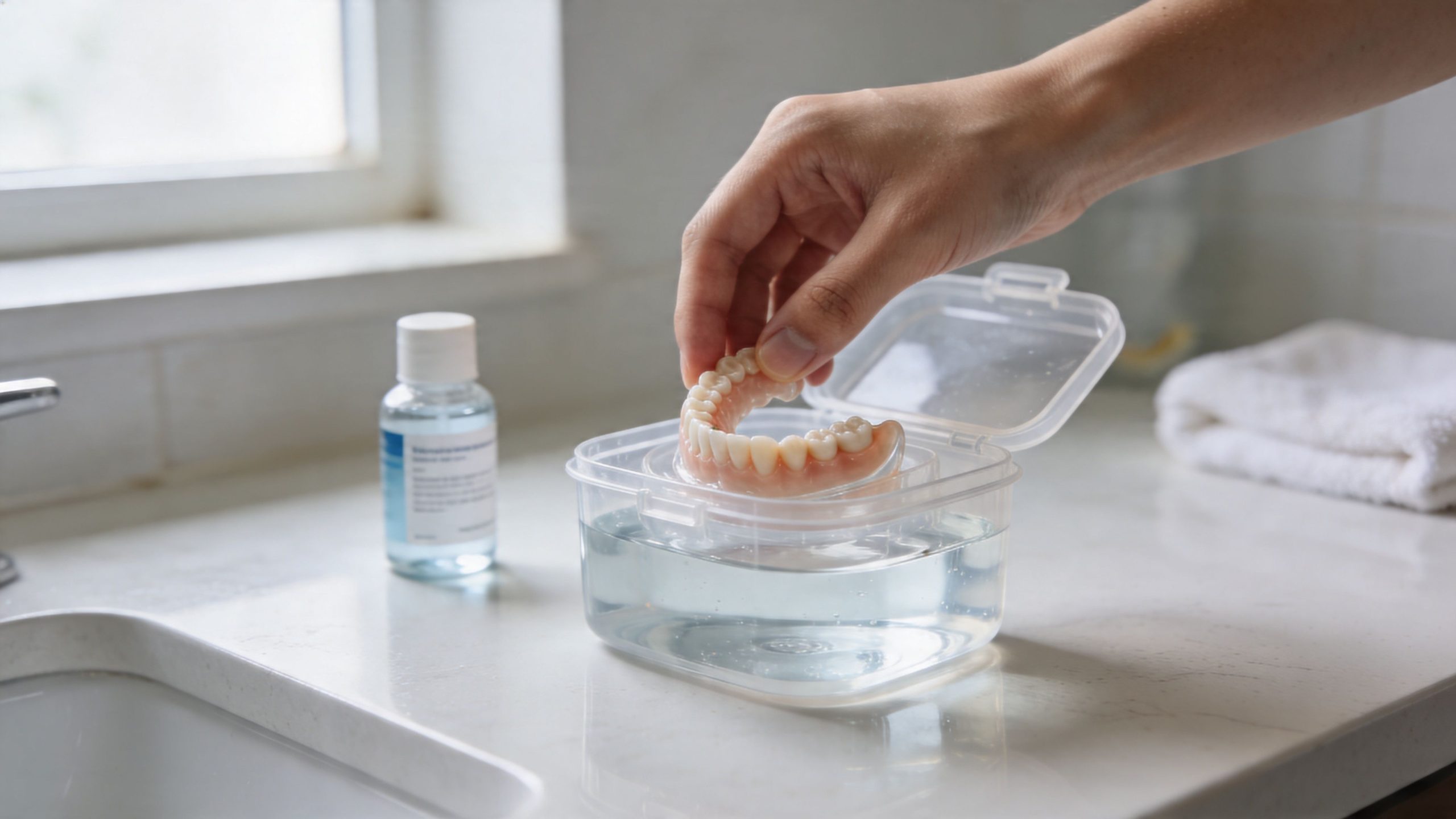
You get home after dinner in Rancho Bernardo, take out your partial denture, and pause for a second. Should it go in water? A cleanser? A dry case? If it has metal clasps, is soaking still the right move?
Those questions are common, and they matter more than commonly understood. A partial denture isn’t just a replacement for missing teeth. It also sits around natural teeth, rests against gum tissue, and often includes metal components that need different care than a full denture.
For many patients in Rancho Bernardo, Poway, Rancho Peñasquitos, and Escondido, the nightly routine is where uncertainty starts. Some people were told to “just leave it in water.” Others have heard to “always keep dentures dry.” Both can be partly right or very wrong depending on the material and design of your appliance.
Your Guide to Denture Care in Rancho Bernardo
A lot of San Diego patients end the day the same way. They finish brushing, look at the bathroom counter, and wonder if they’re about to store their partial the right way or accidentally damage it.
That uncertainty is understandable. Partial dentures are more nuanced than full dentures because they often combine acrylic, metal clasps, and contact points around your remaining natural teeth. A routine that works for one patient may not be ideal for another.
Why partials need their own instructions
A partial denture has two jobs at once. It replaces missing teeth and it has to coexist with the teeth you still have. That means storage advice should protect the acrylic base, preserve the fit, and avoid damaging the clasps that help hold the appliance in place.
Patients often assume all dentures are cared for the same way. In practice, that shortcut causes problems. A partial can trap plaque around clasps, irritate the gums if worn too long, or lose its fit if it dries out or gets exposed to heat.
Good denture care should feel routine, not confusing. If your nightly storage instructions feel vague, they probably need to be personalized.
People looking for a dentist near me, a dentist in San Diego, CA, or the best dentist in Rancho Bernardo, CA often start with cosmetic dentistry, dental implants, or cleaning and exams. Just as often, they stay because they want practical guidance they can trust at home.
Why Proper Overnight Storage is Essential for Your Health
Leaving a partial denture in overnight may seem harmless. It isn’t.
Your gum tissue needs time without pressure from the appliance. Public health guidance also supports removing partial dentures for at least 8 hours daily, ideally overnight, so the tissues can recover and stay healthier over time, according to the Illinois Department of Public Health:
What happens when a partial stays in too long
When a partial stays in all night, the tissues underneath remain covered, warm, and moist. That environment makes irritation more likely and gives bacteria more opportunity to build up.
A clinical study found that storing dentures overnight in water with an effervescent cleansing tablet after brushing significantly reduces total bacterial count, which matters because denture stomatitis affects up to 70% of denture wearers:
That doesn’t mean every patient needs the same cleanser every night. It means the mouth does better when dentures are cleaned properly and not merely left in place around the clock.
Why this matters beyond comfort
Poor overnight habits often show up first as sore spots, odor, redness, or a denture that starts feeling “off.” Patients sometimes blame age, dry mouth, or the appliance itself when the actual issue is the nightly routine.
Here’s the trade-off:
| Habit | Likely result |
|---|---|
| Removing and cleaning your partial nightly | Healthier tissues and a cleaner appliance |
| Sleeping in your partial regularly | More irritation and more bacterial buildup |
| Storing it incorrectly | Higher risk of odor, fit changes, and damage |
Practical rule: Nighttime denture care is part of oral health care, not just appliance care.
This is one reason routine dental care matters. Whether you’re coming in for cleaning and exams, restorative dentistry, tooth extraction, or asking about dental implants near me, protecting the tissues under and around a partial helps preserve long-term function.
A Step-by-Step Guide to Storing Partials Safely
The best nightly routine is simple, repeatable, and gentle on the appliance.
Start by setting up your space. Remove your partial over a folded towel or a sink with some water in it. Partials can break if they slip from your hand onto a hard counter.

Clean first, store second
Rinse the appliance under cool or lukewarm water to remove loose food particles. Then brush it gently with a soft denture brush and a non-abrasive cleanser.
Skip regular toothpaste. It’s a common habit, but it’s too abrasive for denture materials and can roughen the surface over time.
What usually works best:
- Use a soft brush so you clean the acrylic and around the clasps without scratching.
- Choose a non-abrasive cleanser made for dentures, or use the product your dentist recommended.
- Pay attention to clasp areas because debris often collects where the partial wraps around natural teeth.
- Rinse thoroughly before the appliance goes into its container.
A short visual can help if you prefer to follow along with a routine:
Soak the right way
For many acrylic partial dentures, overnight soaking helps maintain shape. According to Dentallab Direct, soaking for 6 to 8 hours in a commercial solution or distilled water helps maintain hydration, reducing shape distortion by 95% compared to dry storage and killing 99.9% of plaque bacteria. The same guidance warns that water above 60°C (140°F) can warp the acrylic.
That’s the key answer to how to store partial dentures overnight for many patients. Clean it, then keep it in a dentist-approved soaking environment for the night.
The container matters too
A proper denture case isn’t just for convenience. It protects the appliance from being knocked off the counter, wrapped in a tissue and thrown away, or reached by a child or pet.
Look for a container that is:
- Dedicated to your denture rather than a random cup
- Cleaned regularly so yesterday’s residue doesn’t become tonight’s contamination
- Ventilated when appropriate for the kind of partial you wear
- Stored away from heat and direct sunlight
What works and what doesn’t
A simple comparison helps:
| Works well | Usually causes problems |
|---|---|
| Cool or room-temperature water | Hot water |
| Soft denture brush | Hard-bristled brush |
| Non-abrasive cleanser | Toothpaste |
| Denture case | Napkin, pocket, countertop |
If your partial has metal clasps, don’t assume every cleansing tablet is automatically safe for daily use. Material and design matter.
Patients searching for a dentist in San Diego, CA, a cosmetic dentist near me, or help with restorative dentistry often focus on how a partial looks. Fit and storage matter just as much. A denture that’s stored properly is usually more comfortable, easier to wear, and less likely to create avoidable problems.
Common Mistakes That Can Damage Your Partial Dentures
Most partial denture damage doesn’t happen during meals. It happens at night, in the sink, or in the wrong container.
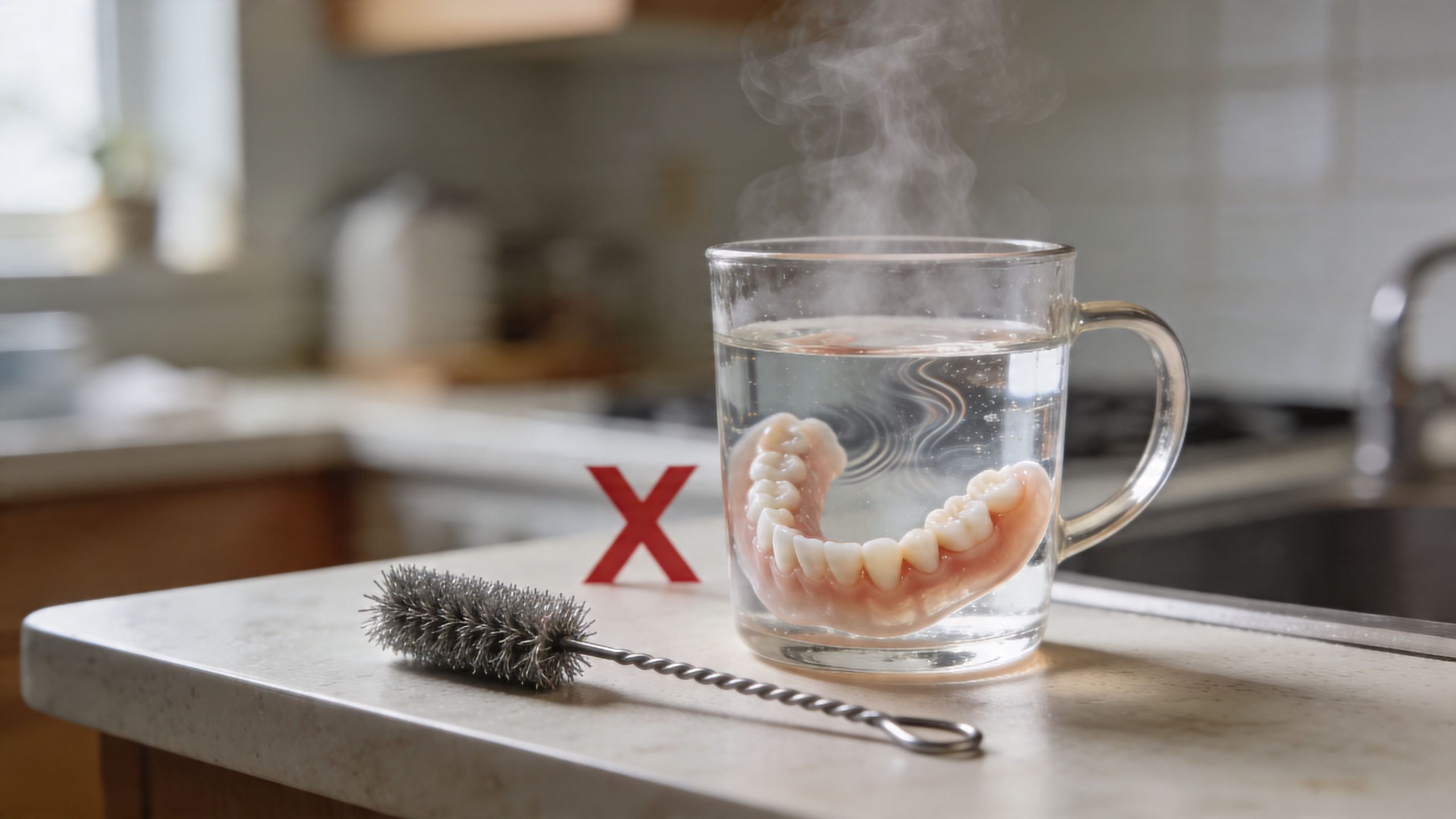
The first mistake is hot water. People often think hotter means cleaner. With denture materials, hotter often means warped. Acrylic can change shape, and once that fit changes, the appliance may start rubbing or rocking.
The partial denture mistakes I see most often
Some habits sound reasonable until you look at what they do to the appliance.
- Using bleach on a partial with metal clasps. This is a bad idea for metal-containing appliances and can damage components.
- Brushing with regular toothpaste. Abrasive pastes can scratch the surface and make buildup harder to control.
- Leaving the partial on a dry nightstand. Dry storage can affect shape and fit in appliances that need hydration.
- Dropping it into any cup nearby. A drinking glass is easy to tip over and offers little protection.
- Treating a partial like a full denture. The metal framework changes the storage decision.
Why metal clasps need special attention
This is where partial dentures really differ from full dentures. A reported 2025 dental materials study stated that 28% of partial denture failures in the first two years are due to clasp corrosion from improper overnight storage. The same source advises using ventilated containers and avoiding certain effervescent cleansers that may damage the alloy over time.
That doesn’t mean all metal partials should be kept the same way. It means clasp material and cleanser compatibility need to be considered together.
Some of the worst denture habits come from good intentions. Patients are trying to disinfect the appliance, but the wrong product ends up shortening its life.
If your partial starts feeling tighter, looser, rougher, or harder to seat, don’t force it. A forced fit can stress the clasps and your natural teeth. That’s when professional evaluation matters more than another night of “seeing if it settles.”
Troubleshooting and Special Care Considerations
When a partial starts to smell, feel loose, or leave sore spots, storage may be part of the problem, but it’s not always the whole story. The appliance material, clasp design, fit, and the condition of the supporting teeth all matter.
If your partial has odor or buildup
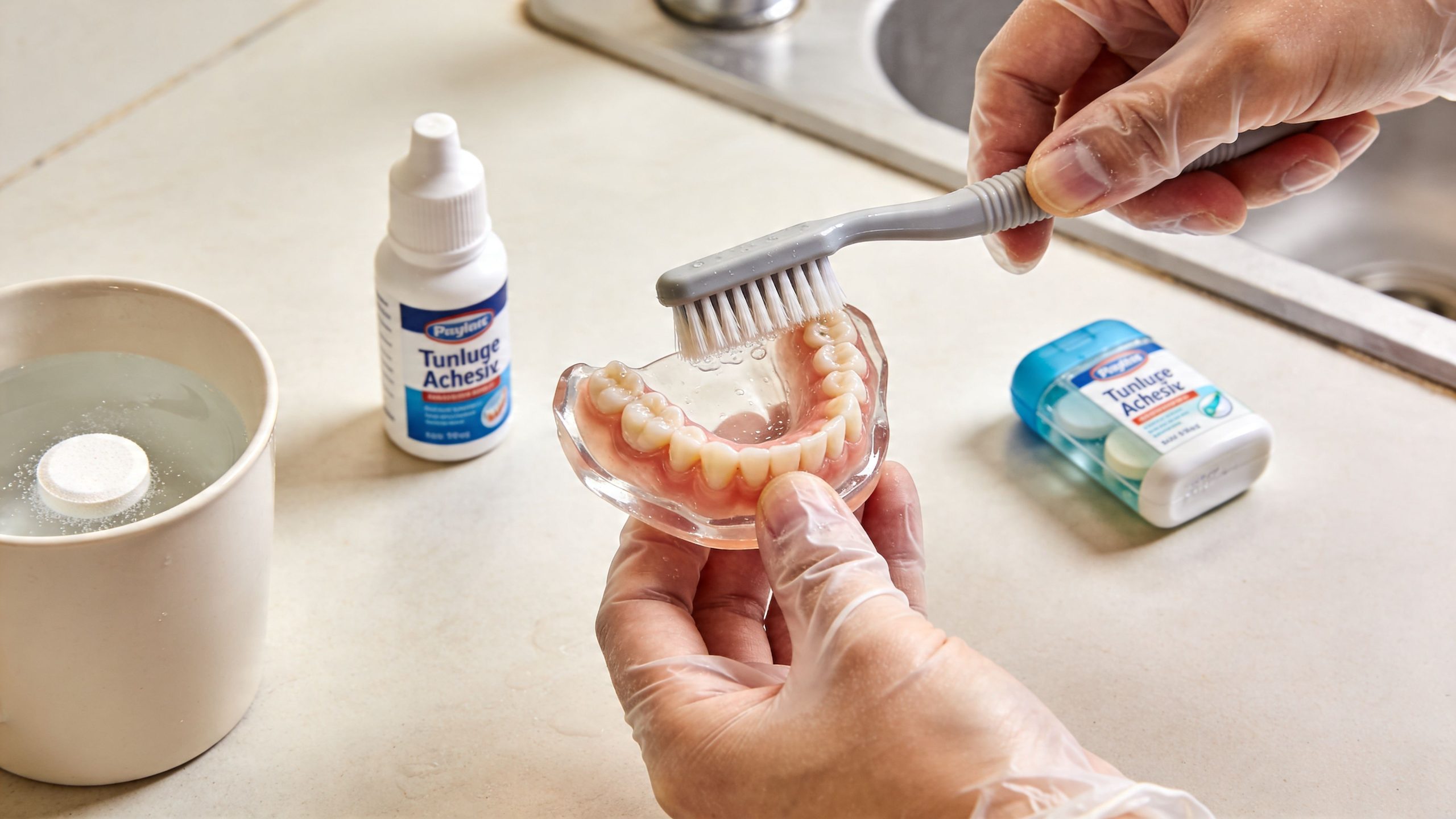
Persistent odor usually points to incomplete cleaning, residue in the case, or an appliance that needs professional attention. Clean the case itself, brush the partial more carefully around the clasp areas, and have the appliance checked if the smell keeps returning.
A partial that suddenly feels loose after storage may have a fit issue rather than a cleaning issue. Don’t bend clasps at home.
If you have TMJ or dental anxiety
This is one of the most overlooked parts of overnight denture advice. Standard instructions are often correct, but not every patient fits the standard pattern.
That matters for patients with jaw tension, bite instability, or anxiety around sleeping without the appliance. If removing your partial at night makes sleep worse or increases jaw discomfort, that deserves an individualized conversation instead of a generic handout.
When to call for an adjustment
Use this checklist if you’re unsure whether the problem is routine or something that needs care:
- Call soon if the partial rocks, pinches, clicks, or leaves sore spots.
- Call soon if a clasp feels bent, loose, or hard to engage.
- Call soon if the appliance smells despite careful cleaning.
- Call promptly if you’ve had a recent tooth change, extraction, or dental work and the fit changed afterward.
For patients who think their appliance may need professional modification, this page on denture adjustments is a helpful next step: https://salamidds.com/how-to-adjust-dentures/
A partial denture should feel secure, clean, and predictable. If your nightly routine still leaves you with soreness or uncertainty, the routine may need to change.
This is also the point where a broader treatment discussion can make sense. Some patients do best with a reline or repair. Others may want to ask about bridges, restorative dentistry, TMJ care, or whether dental implants near me would offer a more stable long-term option.
Schedule Your Dental Exam in San Diego Today
How to store partial dentures overnight comes down to a few essentials. Clean the appliance gently, protect the metal clasps, avoid heat, and follow instructions that match your specific partial, not someone else’s. If you’re dealing with soreness, odor, a poor fit, or questions about sleeping with your appliance because of TMJ or anxiety, it’s worth having it checked.
If you’ve been searching for a dentist near me, a best dentist in Rancho Bernardo, CA, help with dentures, restorative dentistry, cosmetic dentistry, dental x-rays, new patient exams, or an emergency dentist, getting clear answers in person can save you time and frustration.
If you need personalized guidance for partial dentures, TMJ-related night wear questions, or a comfortable dental exam in Rancho Bernardo, Pegah S. Salami, DMD, FAGD offers patient-focused care for families across Rancho Bernardo, Poway, Rancho Peñasquitos, Escondido, and nearby San Diego communities. Reach out to schedule a visit and get clear, practical recommendations that fit your smile, your routine, and your long-term oral health.





