
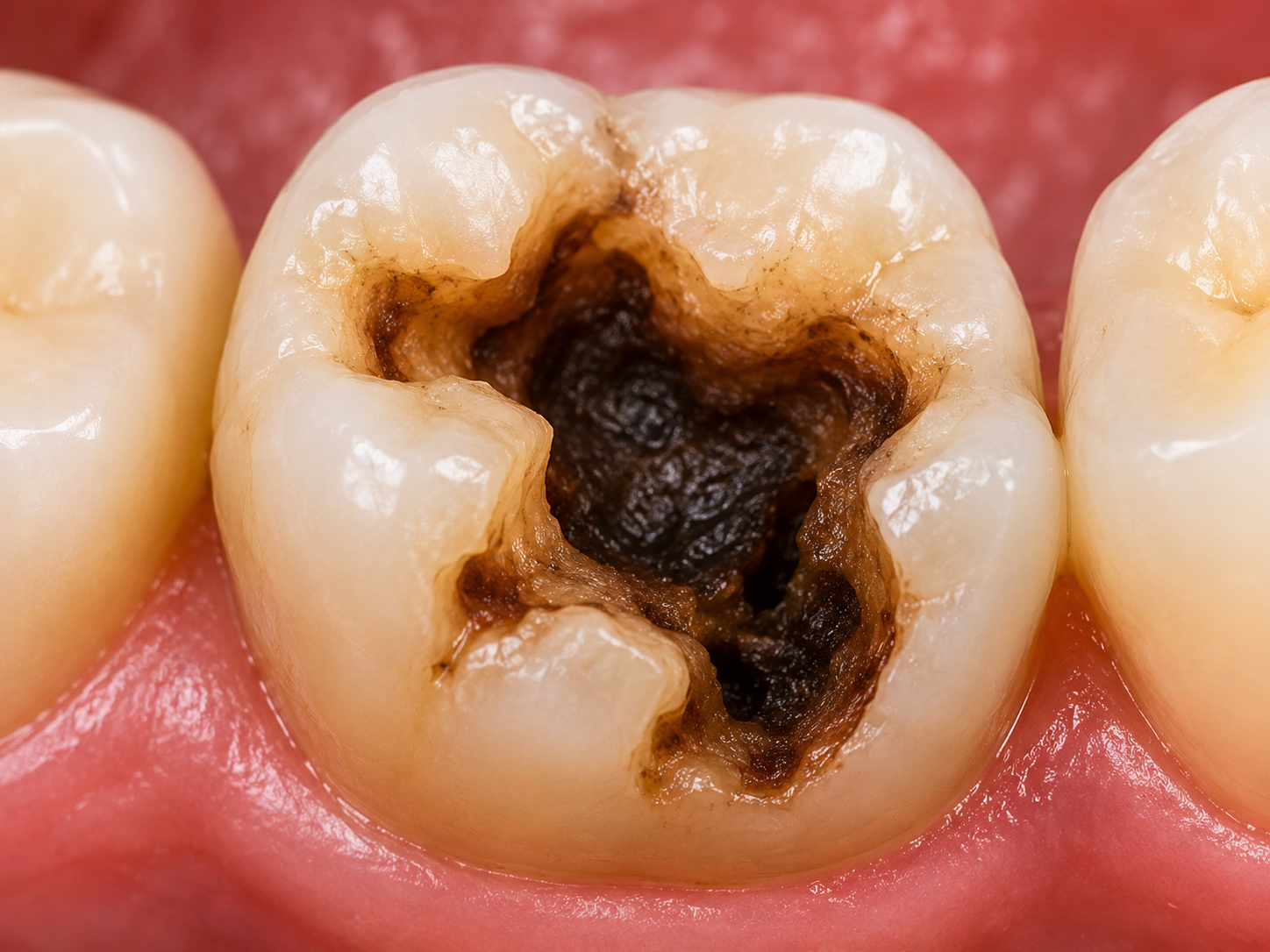
A large cavity is more than just a small hole in a tooth—it’s a sign that decay has progressed deep into the tooth structure. If left untreated, a severe cavity can lead to tooth fractures, infections, nerve pain, and even tooth loss. The good news is that modern dentistry offers several effective ways to save and restore damaged teeth before the problem becomes more serious.
At Dr. Pegah Salami DDS dentist in Rancho Bernardo, we help patients restore teeth affected by extensive decay with customized treatment options designed to protect both oral health and appearance.
Signs You May Have a Large Cavity
Some large cavities develop slowly without obvious pain at first. However, common warning signs include:
- Tooth sensitivity to hot, cold, or sweets
- Visible dark spots or holes in the tooth
- Pain when chewing
- Sharp toothaches
- Food constantly getting stuck in one area
- Swelling or gum irritation around the tooth
- A cracked or weakened tooth
If you notice any of these symptoms, it’s important to schedule a dental exam before the damage worsens.
What Happens If You Ignore a Large Cavity?
When decay continues to spread, it weakens the internal structure of the tooth. Over time, the tooth may crack under normal chewing pressure or develop an infection inside the pulp (the nerve chamber).
Treatment Options for a Large Cavity
The best treatment for a large cavity depends on several factors, including how much healthy tooth structure is still intact and whether the decay has reached the inner nerve of the tooth. After a thorough examination, your dentist may recommend a tooth filling, dental crown, root canal treatment, or another restorative solution to protect the tooth and prevent further damage.
Dental Fillings for Moderate Decay
If the cavity is caught before significant structural damage occurs, a tooth-colored filling may still be enough to restore the tooth. Composite fillings blend naturally with your smile and help stop the spread of decay.
However, very large cavities often require stronger protection than a filling alone can provide.
When a Filling Isn’t Enough
One of the most important things to understand about large cavities is that fillings are not always strong enough for severely damaged teeth.
If too much of the natural tooth has been lost, a filling may fail under the pressure of everyday chewing. In these situations, a dental crown is usually recommended to fully cover and protect the tooth from cracking or breaking.
A crown acts like a protective cap that restores:
- Tooth strength
- Function
- Appearance
- Long-term durability
Porcelain crowns are especially popular because they closely match the look of natural teeth.
You May Need a Root Canal
If the cavity has reached the inner pulp of the tooth and caused infection or inflammation, a root canal may be necessary before placing a filling or crown.
During a root canal treatment:
- The infected tissue inside the tooth is removed
- The canals are cleaned and disinfected
- The tooth is sealed to prevent reinfection
- A crown is often placed afterward for protection
Many patients are surprised to learn that modern root canals are far more comfortable than their reputation suggests and can effectively save a tooth that might otherwise need extraction.
Can a Severely Decayed Tooth Still Be Saved?
In many cases, yes. Even teeth with extensive decay can often be restored if treatment is performed early enough. Our dentist Dr.Salami will evaluate:
- The amount of remaining healthy tooth structure
- Whether the root is healthy
- The extent of infection
- Bone support around the tooth
If the tooth cannot be saved, replacement options such as dental implants or bridges may be recommended.
When Should You See a Dentist for a toothache?
You should schedule a dental visit as soon as possible if you experience:
- Persistent tooth pain
- Swelling
- Tooth sensitivity that doesn’t go away
- A visible cavity or broken tooth
- Pain when biting down
The sooner a large cavity is treated, the better the chances of preserving your natural tooth and avoiding more invasive procedures.
Restore Your Tooth Before the Damage Gets Worse
If you think you may have a large cavity, early treatment can make a major difference in protecting your smile and preventing future complications. At Dr. Pegah Salami DDS, we provide personalized restorative dental care to help patients regain comfort, function, and confidence in their smile. Contact us today for a free evaluation
Frequently Asked Questions About Large Cavities
What if a cavity is too big to fill?
If a cavity is too large, a regular filling may not provide enough strength to protect the tooth. In these cases, a dental crown is often recommended to fully restore and protect the tooth from cracking. If the decay has reached the nerve, a root canal may also be needed before placing the crown.
What does a Stage 2 cavity look like?
A Stage 2 cavity usually means the decay has moved beyond the enamel and into the dentin layer of the tooth. It may appear as a small brown, dark, or visible hole in the tooth and often causes sensitivity to sweets, cold drinks, or hot foods. At this stage, a filling is commonly used to stop the decay before it spreads deeper.
Can I wait 2 years to fill a cavity?
Waiting 2 years to treat a cavity is generally not recommended. Cavities do not heal on their own and typically continue to grow over time. A small cavity that only requires a filling today could eventually turn into a painful infection requiring a root canal, crown, or even tooth extraction.
How long will a tooth hurt before the nerve dies?
A tooth can hurt for days, weeks, or even months before the nerve dies, depending on the severity of the decay or infection. Sometimes the pain suddenly stops when the nerve dies, but this does not mean the problem is gone. In many cases, the infection continues spreading silently and may lead to swelling, abscesses, or bone damage if left untreated.





