
Losing a single tooth—whether from an injury, decay, or an extraction—does more than just leave a gap in your smile. Over time, even one missing tooth can cause surrounding teeth to shift, lead to jawbone deterioration, and alter your bite.
While bridges and removable partial dentures were once the standard solutions, a single-tooth dental implant is now widely considered the gold standard for tooth replacement. It looks, feels, and functions just like a natural tooth.
What Is a Single-Tooth Dental Implant?
Unlike options that sit on top of the gums or rely on adjacent teeth for support, a single-tooth implant replaces both the visible tooth and its root beneath the gum line.
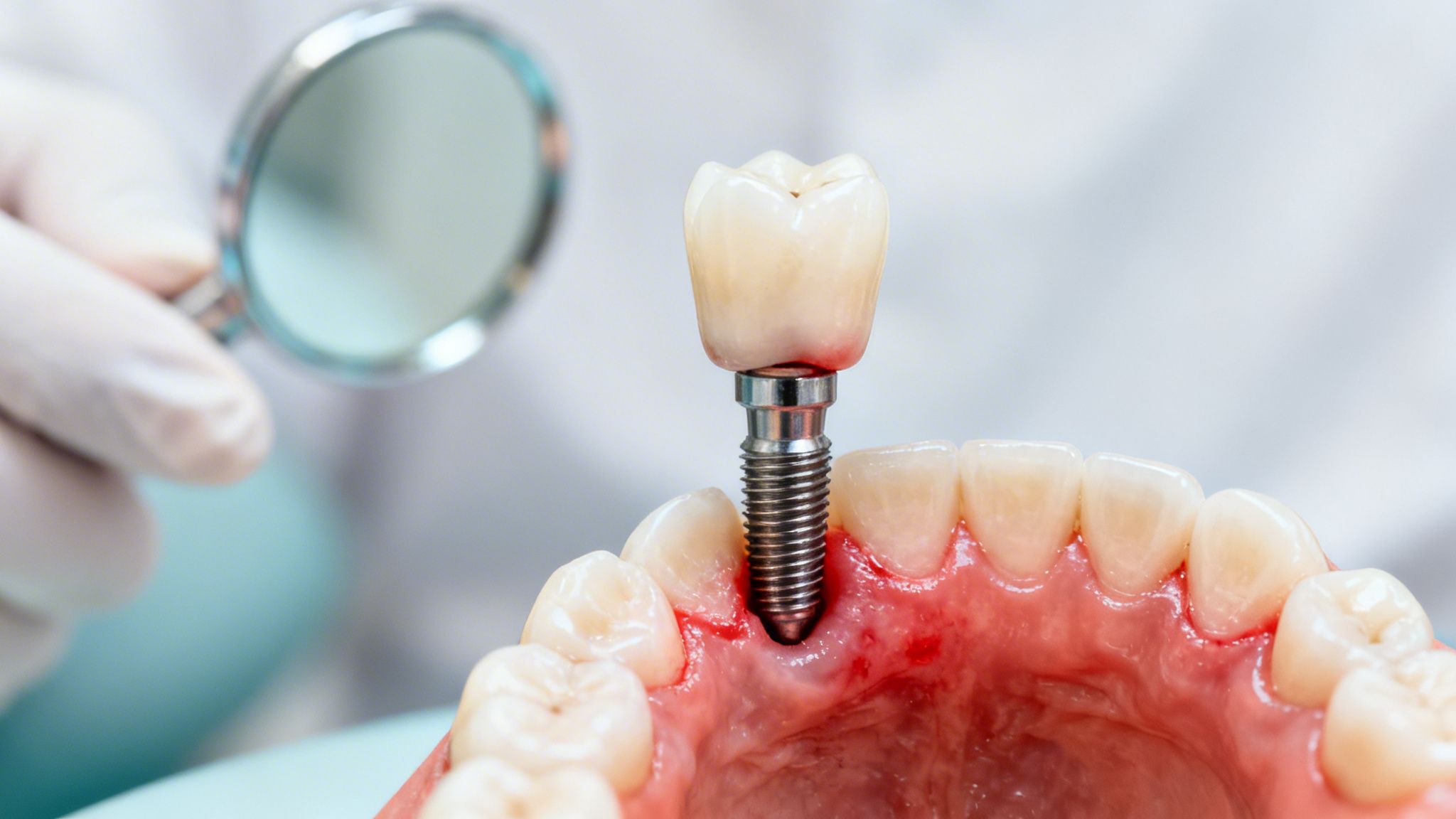
A complete single-tooth restoration consists of three main parts:
-
The Implant Post: A small, biocompatible titanium screw that is surgically placed into the jawbone to act as an artificial root.
-
The Abutment: A connector piece attached to the top of the post that holds the final tooth securely in place.
-
The Custom Crown: The visible, tooth-colored prosthetic meticulously shaped and shaded to blend seamlessly with your natural teeth.
Why Choose an Implant Over a Dental Bridge?
When replacing a single missing tooth, patients often choose between a traditional bridge and a dental implant.
| Feature | Single-Tooth Implant | Traditional Dental Bridge |
| Impact on Nearby Teeth | None. Neighboring teeth remain completely untouched. | Requires filing down adjacent healthy teeth for support. |
| Jawbone Preservation | Stimulates the jawbone to prevent bone loss over time. | Does not preserve bone underneath the missing tooth gap. |
| Lifespan | Can last a lifetime with proper care (20+ years). | Typically needs replacement every 10–15 years. |
| Maintenance | Brushes and flosses just like a normal tooth. | Requires special floss threaders to clean underneath. |
What to Expect During the Step-by-Step Procedure
1.Comprehensive Consultation & 3D Imaging:
Phase 1.
Your dentist takes detailed 3D CBCT scans to evaluate your bone density, mapping out precise placement relative to surrounding nerves and sinus cavities.
2.Implant Post Placement:
Phase 2.
Under local anesthesia or sedation, the titanium post is inserted into the jawbone. A protective healing cap is placed over the site.
3.Osseointegration (Bone Fusion):
Phase 3: 3 to 6 months.
During this healing phase, your jawbone naturally fuses with the titanium post in a process called osseointegration, building a solid base for your new tooth.
4.Abutment & Crown Attachment:
Phase 4.
Once fused, the abutment is attached to the post, followed by your custom-crafted porcelain crown. You leave with a fully restored tooth.
Are You a Good Candidate?
Most adults in good general health are candidates for a single-tooth dental implant. Ideal candidates typically have:
-
Healthy Gums: Free from active periodontal (gum) disease.
-
Adequate Bone Density: Enough bone depth to support the implant post (if bone volume is low, a quick bone graft procedure can rebuild the foundation).
-
Good Oral Health Habits: A commitment to daily brushing, flossing, and attending regular dental checkups.
How to Care for Your Single-Tooth Implant
Caring for an implant is simple because it mirrors how you care for natural teeth:
-
Brush twice daily with a soft-bristled toothbrush.
-
Floss daily around the implant crown to keep surrounding gum tissue healthy.
-
Visit your dentist every 6 months for professional cleanings and examinations.
-
Avoid using teeth as tools to open packaging or bite down on hard objects like ice.
Schedule Your Consultation in Rancho Bernardo Today
A missing tooth doesn’t have to compromise your confidence or long-term oral health. Single-tooth implants offer a durable, natural-looking solution that protects your jawbone and preserves adjacent teeth.
Ready to restore your smile? Contact Dr. Pegah Salami in Rancho Bernardo today to schedule your single-tooth implant consultation!





