
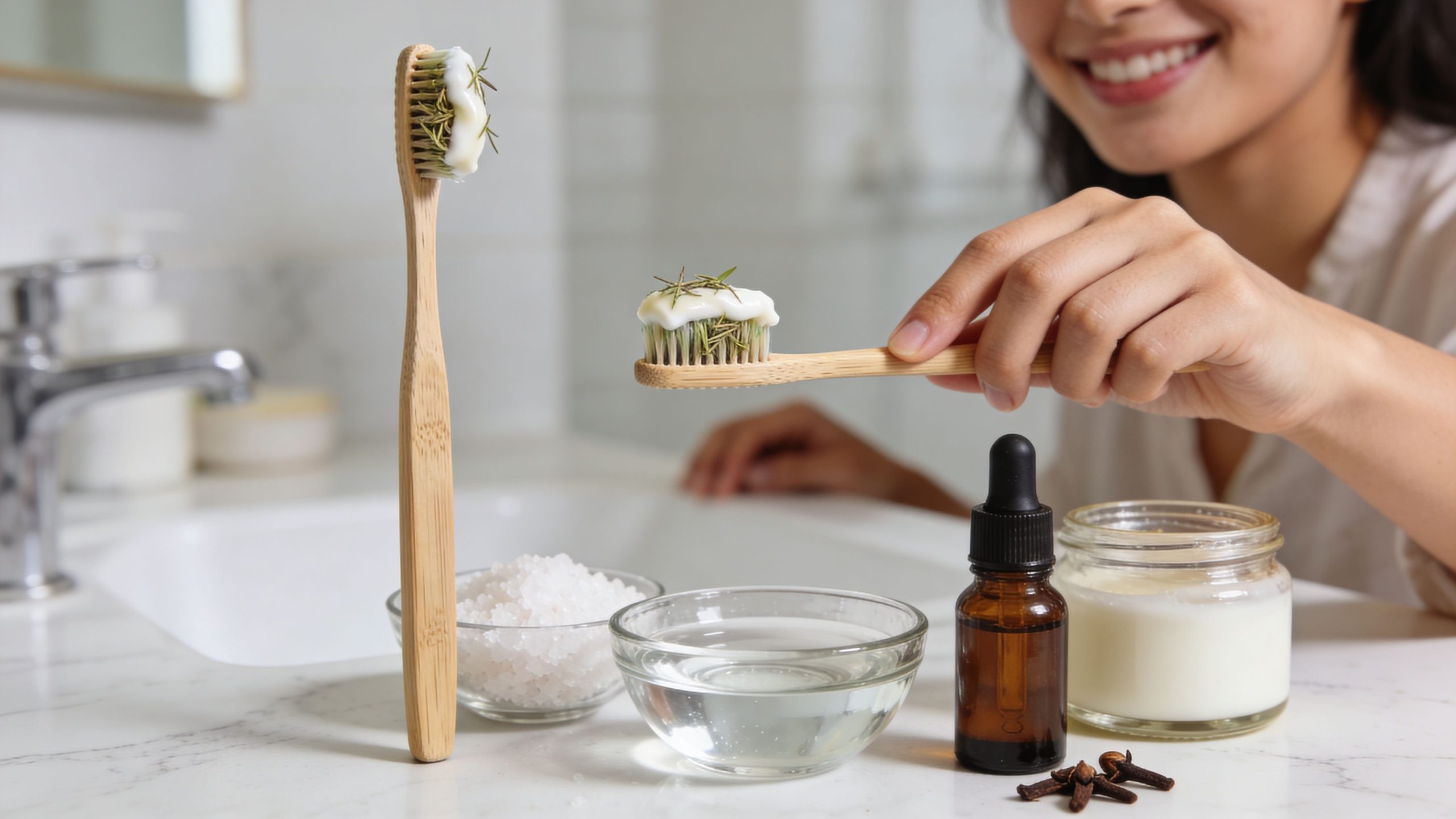
Cold water hits one tooth and the whole moment changes. What should feel refreshing turns into a sharp zing, and suddenly you’re chewing on one side, avoiding ice, or skipping hot coffee because you don’t want that jolt again.
That reaction is common, but it isn’t something you should just put up with. Many patients in Rancho Bernardo, Poway, Rancho Peñasquitos, and nearby San Diego communities want to know how to treat sensitive teeth naturally without jumping straight to invasive treatment. That’s a reasonable goal. In many cases, gentle home care can calm symptoms and support enamel. The important part is knowing which remedies are worthwhile, which ones can backfire, and when sensitivity points to a problem that needs professional care.
That Sudden Zing Why San Diego Patients Seek Tooth Sensitivity Relief
A lot of people first notice sensitivity during ordinary moments. A cold smoothie. A spoonful of ice cream. A sip of tea. Something sweet. The discomfort is fast, specific, and hard to ignore.
Patients often describe it the same way. The tooth feels normal most of the day, then suddenly reacts to temperature or pressure. That pattern can make the problem feel minor, but it’s usually your mouth’s way of signaling that a protective layer has changed.
Why natural relief appeals to so many people
When dental sensitivity arises, a preference for simple solutions is common. Individuals often want to know whether a rinse, a toothpaste, or a simple change at home can help before they schedule treatment. That makes sense, especially if the pain is occasional and you’re hoping to avoid a bigger dental procedure.
Natural care has a real place in dentistry. Some home strategies can soothe irritated teeth, support enamel, and reduce triggers. The best results happen when those remedies are used with good judgment, not as a substitute for diagnosis.
Sensitive teeth aren’t a condition by themselves. They’re a symptom. The question isn’t only how to stop the pain, but why the pain started.
What I want Rancho Bernardo patients to know
Tooth sensitivity can come from something simple, like brushing too hard, or something that needs prompt care, like a crack, cavity, or gum recession. That’s why I encourage patients to think about relief in two tracks.
- Short-term comfort: calm the tooth so eating and drinking feel normal again.
- Long-term protection: stop the source of the sensitivity from getting worse.
- Professional guidance when needed: confirm whether the problem is enamel loss, grinding, gum issues, or damage inside one tooth.
If you’ve been searching for a dentist near me, an emergency dentist, or the best dentist in Rancho Bernardo, CA because one tooth suddenly started reacting, you’re not overreacting. Even mild sensitivity deserves attention if it’s becoming a pattern.
Natural care works best when it’s part of a complete plan. That’s how we help patients in San Diego feel better without guessing.
Understanding the Root Causes of Tooth Sensitivity
To understand sensitivity, it helps to picture the tooth in layers. The outside layer is enamel, which is the hard shell that protects the tooth crown. Underneath that is dentin, and deeper still is the nerve center, called the pulp.
Dentin matters most when we talk about sensitivity. It contains tiny channels that act a bit like small straws. When enamel wears down or gums pull back, those channels become exposed. Cold, heat, sweets, or even air can travel through them and irritate the nerve inside the tooth.
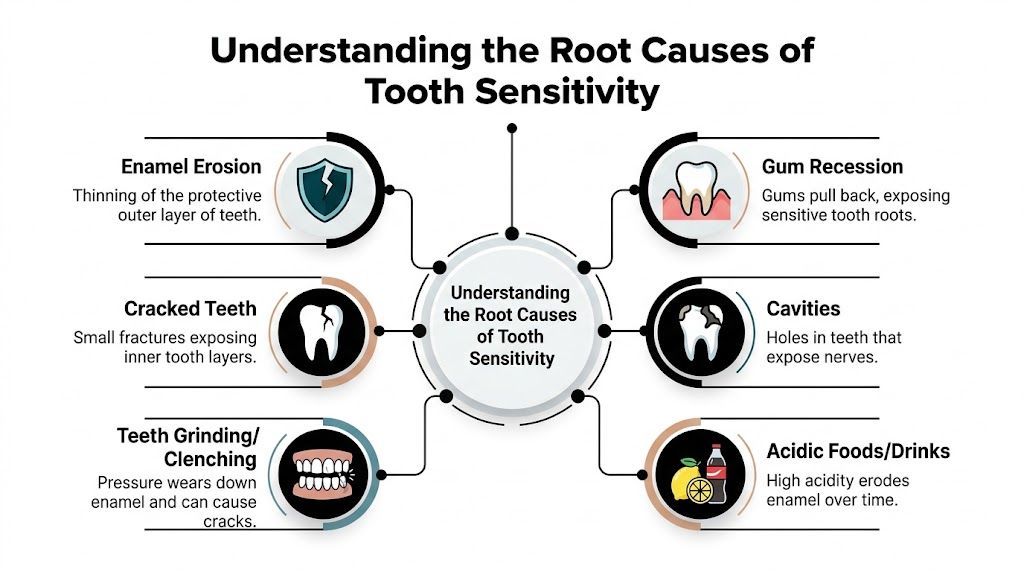
The most common reasons teeth become sensitive
Sensitivity usually starts when protection is lost. That can happen gradually or all at once.
Here are the causes I see most often:
- Enamel erosion: Acids from drinks, foods, or stomach acid can slowly thin the outer surface of teeth.
- Gum recession: When gum tissue pulls away, the root surface becomes exposed. Roots are much more sensitive than enamel-covered areas.
- Teeth grinding and clenching: Bruxism can wear enamel down and strain individual teeth over time.
- Cracked or chipped teeth: Even a small crack can create a pathway for pain.
- Cavities or failing dental work: Decay and worn fillings can expose deeper tooth structure.
- Aggressive brushing: A hard grip and stiff brushing motion can wear away both enamel and gum tissue.
A key point often gets missed. Much of the online advice about natural remedies focuses on temporary relief, while the root causes, especially enamel erosion and gum recession, are often what keep the problem going. Hopkins notes that these issues affect 57 million US adults and also points out that stopping teeth grinding can help by preventing ongoing enamel wear, according to Hopkins Medicine on sensitive teeth.
Why one person’s remedy may fail for another
Two people can both say, “My teeth are sensitive,” and have completely different problems. One may have widespread enamel thinning from acidic drinks. Another may have one cracked molar that hurts only when biting. The same rinse or toothpaste won’t solve both situations.
That’s why the first real step is matching the symptom to the cause. If the pain is broad and triggered by cold foods, home care may help. If the pain is isolated to one tooth or came on suddenly, I think more carefully about a crack, cavity, or bite issue.
Clinical perspective: If sensitivity is tied to clenching, addressing stress patterns can help protect enamel over time. Patients who deal with jaw tension may also find broader support through resources on managing anxiety, since stress and nighttime grinding often show up together.
Gum recession deserves special attention
Gum recession is one of the clearest examples of why symptom relief and diagnosis need to work together. If the root surface is exposed, almost any cold stimulus can trigger discomfort. A sensitive toothpaste may reduce pain, but it won’t tell you why the gum moved in the first place.
That’s why I encourage patients with visible root exposure, longer-looking teeth, or tenderness near the gumline to learn more about what causes receding gums. Understanding that pattern early can prevent a mild annoyance from turning into a larger periodontal problem.
Actionable At-Home Strategies to Soothe Sensitive Teeth Naturally
If you want to know how to treat sensitive teeth naturally, start with the methods that are gentle, repeatable, and least likely to irritate the tooth further. A good home plan should lower triggers without causing new damage.
Some remedies are useful. Some are overhyped. Some help only if you use them correctly.

Start with the lowest-risk habits
Before reaching for specialty remedies, improve the basics for several days and see whether the tooth settles down.
- Use a soft-bristled toothbrush: This reduces friction at the gumline and helps avoid further wear.
- Brush with light pressure: If the bristles splay outward, you’re brushing too hard.
- Choose lukewarm water: Very cold rinsing can keep the tooth irritated.
- Avoid known triggers for a few days: Ice, citrus, soda, and very sweet snacks can make a flaring tooth more reactive.
- Chew on the opposite side if needed: This can keep an irritated area from being repeatedly stressed.
These steps sound simple because they are. They also work better than many trendy remedies that circulate online.
Saltwater can calm irritated tissues
A warm saltwater rinse doesn’t rebuild enamel, but it can be soothing when gums are irritated or when a tooth feels inflamed after brushing or flossing. It’s one of the gentlest things you can do at home.
Use it as supportive care, not a cure. If saltwater is the only thing that lets you function, the tooth probably needs a closer look.
Fluoride is still one of the best natural-support options
Some patients are surprised to hear this in an article about natural care, but fluoride is a naturally occurring mineral. For sensitivity prevention, it remains one of the most reliable options. Daily fluoride toothpaste or mouthwash can remineralize weakened enamel and reduce the risk of cavities by up to 25%, while also helping block the dentin tubules that trigger pain, based on Medical News Today’s review of fluoride for sensitivity.
If you’re dealing with generalized sensitivity, I usually tell patients to think of fluoride as foundational, not optional. It supports the tooth surface directly. That’s different from a remedy that only masks discomfort for an hour or two.
A natural approach doesn’t have to mean avoiding proven minerals. It should mean choosing treatments that support the tooth without unnecessary harm.
Desensitizing toothpaste is often worth it
Even if you prefer natural care, a desensitizing toothpaste can be a smart bridge between home relief and professional diagnosis. These products are designed to reduce the tooth’s response to triggers. They tend to work best when used consistently, not just once in a while.
When shopping, I’d prioritize a formula made for sensitivity over a highly abrasive whitening paste. Whitening products can make an already reactive tooth feel worse.
Clove oil can help during a flare-up
Clove oil is one of the few natural remedies that patients recognize right away, and it does have a useful role. Its active compound, eugenol, acts as a natural analgesic. For acute flare-ups, 2 to 3 drops of clove oil in a teaspoon of carrier oil can be applied to the sensitive area with a cotton pellet, and the source notes immediate relief for over 90% of users in these situations, according to this guidance on clove oil for sensitivity relief.
The safety part matters just as much. Undiluted clove oil can irritate soft tissue and contribute to chemical gingivitis. It also isn’t something to use continuously for many days while hoping the problem disappears.
A safe approach looks like this:
- Mix the clove oil with a carrier oil.
- Dab it precisely onto the painful area with a clean cotton pellet.
- Use it only for a short stretch during an active flare-up.
- Stop and call your dentist if the pain keeps returning.
Oil pulling has limits
Coconut oil pulling is often discussed as a natural oral care method. Some people like it because it feels gentle and fits into a wellness routine. I don’t consider it a primary treatment for tooth sensitivity.
If you do it, treat it as an optional add-on, not as the center of your plan. It doesn’t replace brushing, flossing, or a proper diagnosis. If grinding is part of the problem, it also won’t protect the tooth from nighttime forces. Patients who wake with sore teeth or jaw tension should look into how to stop grinding teeth at night because that underlying habit can keep sensitivity active.
Here’s a practical visual overview of home sensitivity care and comfort strategies:
What usually doesn’t work well
The remedies that disappoint patients most tend to have one thing in common. They’re used as substitutes for diagnosis.
A few examples:
| Approach | Where it can help | Where it falls short |
|---|---|---|
| Warm saltwater | Mild gum irritation | Doesn’t repair enamel or treat cracks |
| Clove oil | Short-term pain relief | Doesn’t fix the source of sensitivity |
| Oil pulling | Supplemental routine for some people | Doesn’t replace brushing or targeted treatment |
| Desensitizing toothpaste | Broad daily sensitivity | May not help a single cracked tooth |
| Fluoride rinse | Enamel support and prevention | Won’t solve deep decay or major recession |
If a remedy helps for a day but the same tooth keeps flaring up, don’t keep escalating home care. Repeating the same temporary fix can delay the treatment that actually solves it.
The Role of Diet and Hygiene in Long-Term Prevention
Relief matters, but prevention is what changes daily life. If you want lasting improvement, the most powerful natural treatment is usually a set of habits that protects enamel and keeps gums stable.
That starts with what touches your teeth every day. Acidic drinks, frequent snacking, and rough brushing create a pattern that many patients don’t notice until sensitivity becomes obvious. Once you recognize that pattern, you can interrupt it.

Food and drink can either protect or provoke
Soda, citrus, sports drinks, energy drinks, and frequent acidic snacks can soften enamel over time. The issue often isn’t one exposure. It’s repeated contact across the day.
A few simple changes make a real difference:
- Choose water between meals: It helps rinse the mouth without feeding acid cycles.
- Keep acidic drinks with meals instead of sipping for hours: Less contact time is better for enamel.
- Use a straw when appropriate: This may reduce how much liquid bathes the front teeth.
- Rinse with water after acidic foods or drinks: That gives your mouth a cleaner starting point.
- Be selective with “healthy” habits: Lemon water and vinegar-heavy drinks can still be tough on enamel.
Hygiene technique matters as much as product choice
A patient can buy excellent toothpaste and still keep teeth sensitive by brushing too aggressively. Technique matters. So does brush texture.
I recommend a soft brush, gentle circular motions, and patience at the gumline. Scrubbing back and forth may feel thorough, but it often creates more wear. If your toothbrush looks frayed quickly, the pressure is probably too high.
Some patients who want a more plant-forward oral care routine also ask about alternatives to conventional pastes. If you’re exploring options, this overview of aloe vera toothpaste for natural oral care can help you compare product style and ingredients. The key is still choosing something non-abrasive and using it gently.
Fluoride belongs in prevention, not just treatment
For long-term enamel support, fluoride deserves a place in the prevention conversation. As noted earlier in this article’s evidence base, daily fluoride toothpaste or mouthwash can help remineralize weakened enamel and reduce cavity risk by up to 25%, while also helping block the pathways that trigger sensitivity pain. For many San Diego families, a daily fluoride rinse is a practical part of home care.
That doesn’t mean every sensitive tooth can be handled with rinse alone. It means prevention works best when the tooth surface gets regular support instead of waiting for symptoms to intensify.
Daily rule: The best natural plan is the one you can repeat without harming your enamel, gums, or bite.
Don’t overlook clenching and grinding
Prevention also includes force, not just food. If you clench during stress or grind while you sleep, your teeth may never get a break. That repeated pressure can wear enamel, create small fractures, and make one side of the mouth more reactive than the other.
Long-term comfort and professional dental care often overlap. Patients who need a nightguard, TMJ support, or a bite evaluation aren’t failing at home care. They’re addressing a cause that no rinse can solve.
When to See Your Rancho Bernardo Dentist for Lasting Relief
Natural remedies are useful when they reduce irritation and buy the tooth time to recover. They stop being useful when they hide a worsening problem. That line matters.
Sensitivity that comes and goes across several teeth may respond to better brushing habits, fluoride support, and temporary trigger control. A single tooth that suddenly reacts, hurts when you bite, or keeps waking you up is different. That tooth needs an exam.
Signs home care isn’t enough
I recommend scheduling a visit if you notice any of these:
- Pain focused on one tooth: Localized sensitivity raises concern for a crack, cavity, or failing filling.
- Sensitivity lasting longer than a week: Temporary irritation should begin settling, not intensifying.
- Pain during biting or chewing: That pattern often points to structural damage.
- Visible chips, dark spots, or gum changes: Those are clues that the problem isn’t just surface-level irritation.
- Constant or throbbing discomfort: Sensitivity should not feel like a steady toothache.
The risk of waiting is not only discomfort. Some popular remedies carry downsides when they’re overused or misused. Healthline’s summary notes that undiluted hydrogen peroxide can cause chemical burns, turmeric can stain enamel, and clove oil’s eugenol can irritate 10 to 15% of users, while a pilot study also found that daily oil pulling could increase plaque in some people if brushing didn’t follow, according to Healthline’s review of sensitive teeth home remedies.
What professional care can uncover
A dental exam does more than confirm that a tooth is sensitive. It identifies why.
That matters because the solution depends on the diagnosis:
| If the cause is | A dentist may recommend |
|---|---|
| Gum recession | Periodontal therapy, targeted home care, or laser-assisted cleaning support |
| A crack or fracture | Bonding or a CEREC same-day crown |
| Decay | A white composite filling or other restorative treatment |
| Nerve involvement | Root canal therapy when the inside of the tooth is affected |
| Grinding-related wear | Bite adjustment, nightguard guidance, or TMJ-focused treatment |
Natural care and professional care should work together
Patients sometimes worry that seeing a dentist means abandoning natural care. It doesn’t. Good dentistry should respect the fact that many people want the least invasive solution that’s still effective.
That’s how I approach sensitivity. If home care can safely calm the issue, great. If a filling, crown, periodontal treatment, or emergency exam is the right next step, that should be explained clearly.
A good exam doesn’t take control away from you. It gives you a clearer choice between watchful home care and treatment that fixes the source.
If you’ve been searching for a dentist in San Diego, CA, an emergency dentist, or even help related to a possible tooth extraction, sensitivity may be the symptom that led you there. In many cases, the best outcome is achieved well before anything that extensive becomes necessary.
Your First Visit What to Expect at Our San Diego Dental Practice
If dental visits make you uneasy, the first appointment matters as much as the treatment itself. Patients with sensitive teeth are often already on edge because they expect every touch, sip, or breath of air to hurt. A calm, clear visit changes that experience quickly.
When you arrive at our Rancho Bernardo office, the pace is designed to feel welcoming rather than rushed. You won’t be expected to figure everything out before you walk in. We start by listening. When did the sensitivity begin? Is it one tooth or several? Is it worse with cold, sweets, brushing, or chewing?

A closer look without guesswork
A new patient exam is thorough because sensitivity can have several causes that feel similar at home. We evaluate the teeth, gums, bite, and any signs of grinding or recession. If needed, we take digital dental x-rays to check for decay, cracks, bone support, and changes that aren’t visible on the surface.
Many patients also benefit from a professional cleaning and exam because plaque buildup, inflamed gums, and missed home care patterns can all contribute to discomfort. If your mouth is too sensitive for a full cleaning on the same day, we talk through that and adjust the plan.
Clear explanations and realistic options
What patients usually appreciate most is straightforward guidance. If the answer is a home-care adjustment, that’s what we’ll say. If the tooth needs restorative dentistry, periodontal care, or follow-up imaging, we explain why in plain language.
You might hear options such as:
- Monitoring with targeted home care if the issue appears mild and generalized
- A white composite filling if early decay or an old restoration is involved
- A CEREC same-day crown if a cracked tooth needs stronger protection
- Periodontal therapy if recession or gum inflammation is driving the pain
- TMJ or nightguard support if grinding is wearing teeth down
- Cosmetic dentistry planning if sensitivity is connected to worn surfaces or future smile goals
Patients looking for a dentist near me, a cosmetic dentist near me, or help with broader restorative needs like dental implants near me often start with a pain concern such as sensitivity. That first visit helps sort urgent needs from elective improvements so treatment feels manageable.
If you’re anxious, say so early. Dental anxiety is common, and the appointment can be paced around comfort, not rushed through it.
Making the next step easy
Our office also offers an affordable new patient exam, x-ray, and cleaning special, which helps many families and individuals get answers without delaying care. We serve Rancho Bernardo, Poway, Rancho Peñasquitos, Escondido, and surrounding San Diego communities, and we aim to make the process feel personal from the first phone call onward.
If your sensitivity has started to change what you eat, how you brush, or which side you chew on, that’s enough reason to come in. You don’t need to wait until it becomes severe.
Frequently Asked Questions About Tooth Sensitivity
Can teeth whitening cause permanent sensitivity
Whitening can temporarily increase sensitivity for some patients, especially if enamel is already thin or the teeth are prone to irritation. It usually isn’t permanent, but the approach matters. If you’re interested in a brighter smile, professional teeth whitening gives you more control than trial-and-error with over-the-counter products.
Are natural remedies safe for children with sensitive teeth
Some are, but children shouldn’t be treated with adult assumptions. A child with tooth sensitivity may have enamel issues, a cavity, grinding, or brushing habits that need evaluation. Before using concentrated remedies such as essential oils, it’s best to speak with a family dentist.
My tooth became sensitive after a filling. Is that normal
Mild short-term sensitivity can happen after restorative treatment, especially with cold or pressure. It should improve as the tooth settles. If the discomfort is getting worse, lasts longer than expected, or feels sharp when biting, the bite may need adjustment or the tooth may need a closer look.
If you’re dealing with sensitive teeth and want a thoughtful, practical plan, schedule a visit with Pegah S. Salami, DMD, FAGD. Our Rancho Bernardo dental practice helps patients across San Diego find the cause of sensitivity, use home care safely, and choose treatment that protects long-term oral health. Whether you need a new patient exam, cleaning and exams, dental x-rays, restorative dentistry, cosmetic dentistry, or urgent help from an emergency dentist, we’re here to make the next step clear and comfortable.





