
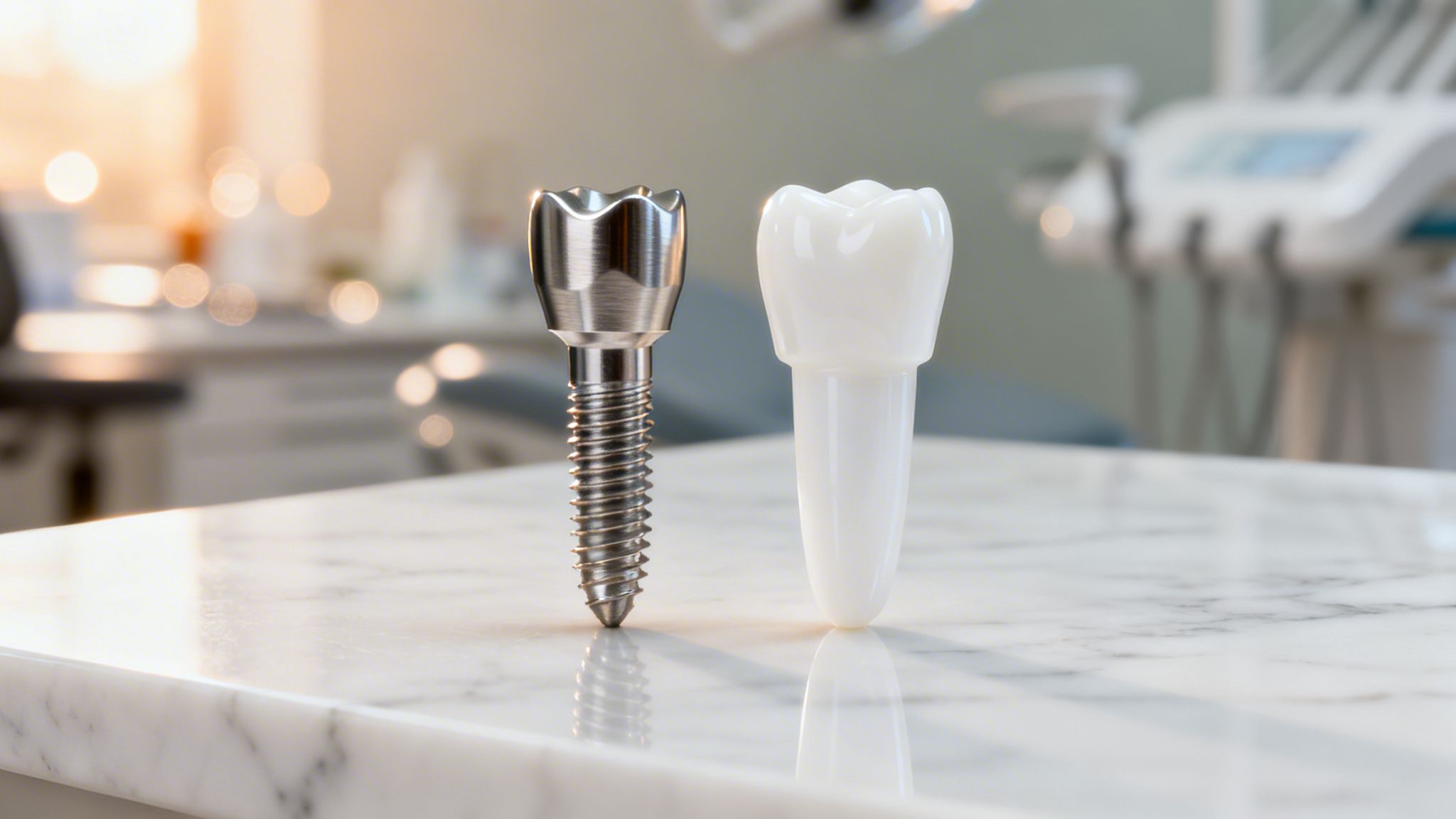
Single tooth implant or a dental bridge.
Both methods have a long history of success and can bring back the function and appearance of your natural teeth. However, they use very different approaches to fill the gap. Understanding how each procedure works is the first step toward reclaiming your confident smile.
This guide breaks down the pros, cons, and procedures of both single tooth implants and dental bridges. By exploring the details of each treatment, you will be better equipped to make an informed decision that suits your health, budget, and lifestyle.
Single Tooth Implants: A Comprehensive Overview
A dental implant is an artificial tooth root placed directly into your jawbone. It serves as a strong, permanent foundation for a replacement tooth. The system consists of three main parts: the titanium post (the implant itself), the abutment (a connector piece), and the custom-made crown (the visible artificial tooth).
The surgical process relies on a biological phenomenon called osseointegration. After the dentist places the titanium post into your jaw, the surrounding bone gradually grows and fuses to the metal over several months. Once the implant is securely anchored, the abutment and crown are attached to complete the restoration.
Ideal candidates for this procedure have healthy gums and sufficient bone density to support the titanium post. If you have experienced bone loss, you might require a bone graft before the implant surgery can take place.
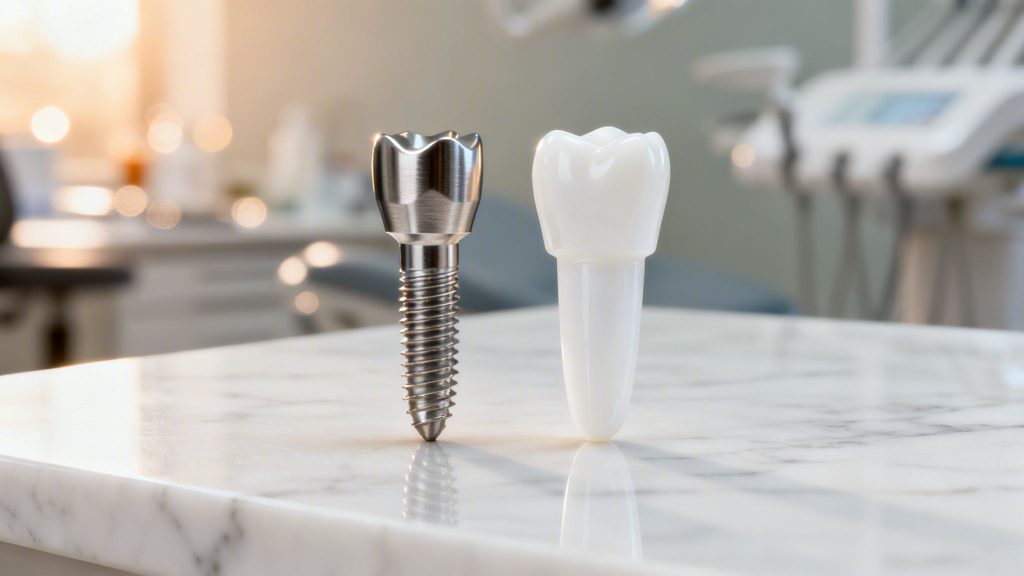
Single Tooth Implant
Pros of Single Tooth Implants
Longevity and Durability
One of the most significant advantages of a dental implant is its lifespan. With proper brushing, flossing, and regular dental checkups, the titanium implant post can last a lifetime. The ceramic crown attached to the implant may eventually need replacement due to normal wear and tear, but the foundation itself is incredibly durable.
Preserves Natural Tooth Structure
Unlike other replacement methods, an implant stands entirely on its own. This means your dentist does not need to alter, file down, or damage the healthy teeth adjacent to the empty space. Preserving your natural tooth enamel is a major benefit for your long-term dental health.
Prevents Jawbone Loss
Your jawbone requires constant stimulation from chewing to maintain its density and volume. When a tooth is lost, the bone in that specific area begins to resorb or melt away. Because the titanium post acts as an artificial root, it provides the necessary stimulation to keep your jawbone strong and healthy, preventing the sunken facial appearance associated with tooth loss.
Feels and Functions Like a Natural Tooth
Because an implant is securely anchored into your jaw, it functions exactly like a natural tooth. You can eat your favorite hard or crunchy foods without worrying about the restoration slipping or shifting out of place. Aesthetically, the custom crown is color-matched to your surrounding teeth, making the implant virtually indistinguishable from the rest of your smile.
Easy to Clean and Maintain
Caring for a single tooth implant requires no special routines. You simply brush it and floss around it just as you do with your natural teeth. There are no special tools or complex flossing techniques required to keep the gum tissue around the implant healthy.
High Success Rate
Dental implants are one of the most predictable and successful procedures in modern dentistry. When performed by a skilled professional on a healthy candidate, the success rate for single tooth implants generally exceeds 95 percent.
Cons of Single Tooth Implants
Higher Initial Cost
The advanced materials and surgical expertise required for an implant make it a more expensive upfront investment compared to other options. While the long-term durability often makes it highly cost-effective over time, the initial out-of-pocket expense can be a hurdle for some patients.
Requires Surgery and Longer Treatment Time
Getting an implant is a multi-step process that requires minor oral surgery and a significant healing period. Waiting for osseointegration to occur can take anywhere from three to six months. If you require a bone graft or tooth extraction first, the entire timeline can stretch even longer before you receive your final crown.
Not Suitable for Everyone
Patients with certain underlying health conditions, such as uncontrolled diabetes or autoimmune disorders, may have a harder time healing after surgery. Additionally, individuals who lack adequate jawbone density and cannot undergo bone grafting may not be viable candidates for this procedure.
Potential for Complications
While exceedingly rare, complications can occur with any surgical procedure. Risks include infection at the implant site, nerve damage causing numbness in the lips or chin, and sinus issues if an implant placed in the upper jaw protrudes into the sinus cavity.
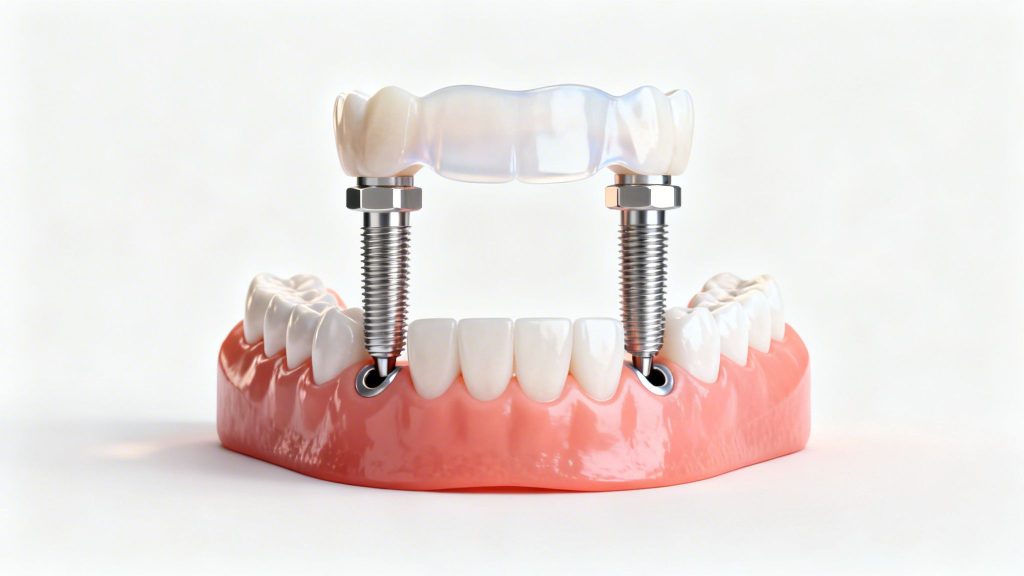
Dental Bridge
Dental Bridges: A Detailed Explanation
A dental bridge literally bridges the gap created by one or more missing teeth. It consists of two or more crowns for the teeth on either side of the gap (called abutment teeth) and a false tooth (pontic) in between.
There are several types of bridges. A traditional bridge is the most common, using crowns on adjacent natural teeth to hold the pontic in place. A cantilever bridge requires only one adjacent tooth for support, while a Maryland bridge uses a metal or porcelain framework bonded to the backs of adjacent teeth. Finally, implant-supported bridges use dental implants instead of natural teeth to anchor the bridge.
Getting a traditional bridge usually requires two visits. During the first visit, the dentist reshapes the abutment teeth to make room for the crowns, takes impressions, and places a temporary bridge. On the second visit, the permanent bridge is adjusted and cemented into place.
Ideal candidates for a dental bridge have strong, healthy teeth on either side of the missing tooth gap, capable of supporting the restoration.
Pros of Dental Bridges
Faster Treatment Timeline
If you want to restore your smile quickly, a dental bridge is an excellent choice. Because there is no surgery or lengthy bone-healing process required, a custom bridge can usually be completed and permanently placed in just a few weeks over the course of two dental visits.
Lower Initial Cost
Compared to the surgical placement of a dental implant, a bridge generally comes with a lower upfront price tag. Furthermore, many dental insurance plans cover a significant percentage of the cost of a dental bridge, making it a highly accessible option for many patients.
Non-Surgical Procedure
For patients who are anxious about oral surgery, have medical conditions that complicate surgical healing, or lack the bone density for an implant, a bridge offers a safe, non-invasive alternative.
Beneficial for Damaged Adjacent Teeth
If the teeth sitting next to your missing tooth are heavily decayed, have large fillings, or are structurally weak, they might need dental crowns anyway. A traditional bridge covers and protects these weakened adjacent teeth while simultaneously replacing the missing one, effectively solving two dental problems at once.
Effective Aesthetic and Functional Restoration
Modern dental bridges are crafted from high-quality porcelain or ceramic materials that reflect light just like natural tooth enamel. They effectively restore your ability to chew food properly, maintain the shape of your face, and allow you to speak clearly and confidently.
Cons of Dental Bridges
Alteration of Healthy Teeth
The biggest drawback of a traditional dental bridge is the need to permanently alter the adjacent abutment teeth. To fit the crowns over these anchor teeth, your dentist must shave down healthy tooth enamel. This alteration is irreversible and compromises the natural structure of those teeth forever.
Does Not Prevent Bone Loss
Because a bridge sits above the gum line and does not interact with the underlying jawbone, it cannot stimulate the bone tissue. Over time, the jawbone directly beneath the missing tooth will begin to shrink. This can eventually lead to a visible gap between the gums and the bridge, altering the fit and appearance of the restoration.
Shorter Lifespan
While durable, dental bridges do not typically last as long as implants. With good oral hygiene and regular checkups, a bridge usually lasts anywhere from five to fifteen years. Eventually, the cement can wash out, or the bridge may suffer wear and tear, requiring a replacement.
Cleaning Challenges
A bridge requires a bit more effort to keep clean. Because the pontic is fused to the adjacent crowns, you cannot simply floss down between the teeth. You must use specialized tools like floss threaders or water flossers to clean underneath the artificial tooth. Failing to maintain excellent hygiene can lead to plaque buildup and decay on the vital anchor teeth.
Potential Damage to Abutment Teeth
The abutment teeth bear the extra chewing forces of the missing tooth. Over time, this added stress can increase the risk of these anchor teeth fracturing or failing, potentially leading to the need for root canals or further extractions.
Dental Bridge or Single Tooth Implant
Making the Right Choice: Factors to Consider
Choosing between a single tooth implant and a dental bridge is a highly personal decision. You need to weigh several factors:
Oral Health and Bone Density: Do you have enough bone to support an implant, or are your adjacent teeth in need of crowns?
Budget and Insurance: What does your insurance cover, and what is your budget for upfront versus long-term costs?
Treatment Timeline: Are you willing to wait months for an implant to heal, or do you need your smile restored quickly?
Long-Term Goals: Are you looking for a permanent fix that preserves bone, or a faster, non-surgical solution?
The best way to navigate these factors is by speaking with an expert. Dr. Pegah Salami and her team specialize in restorative dentistry. They provide personalized consultations to evaluate your oral health, discuss your goals, and recommend the best treatment path for your unique smile.
Restoring Your Smile with Confidence
Both single tooth implants and dental bridges are excellent, viable options for replacing a missing tooth. The right choice ultimately depends on a careful, personalized assessment of your dental anatomy, overall health, and personal preferences.
You do not have to make this decision alone. Dr. Pegah Salami and her team provide expert guidance and state-of-the-art solutions for both single tooth implants and dental bridges. They are dedicated to ensuring the best possible outcome for each patient’s unique needs, blending advanced technology with compassionate care.
Ready to restore your smile and your confidence? Schedule a missing-tooth consultation with Dr. Salami in Rancho Bernardo today to get a personalized digital scan and custom treatment plan.





