

Invisalign Dentist vs. Orthodontist: Who Should Straighten Your Smile?
Clear aligners have quietly transformed modern orthodontics. Millions of people worldwide now straighten their teeth without metal brackets, tightening wires, or the self-consciousness that often came with traditional braces. Invisalign, the most recognized name in the space, has been at the center of that shift—and its popularity shows no sign of slowing down.
But here’s where many patients hit a wall: once you decide to pursue Invisalign, who do you actually see? Your general dentist might offer it. So might an orthodontist down the street. Both are licensed professionals. Both can prescribe aligners. So what’s the difference, and does it actually matter?
The short answer is yes—it can matter quite a bit, depending on your specific needs. The right provider for a minor cosmetic fix may not be the right choice for a complex bite issue. Understanding the distinction between an Invisalign dentist and an orthodontist helps you make a more confident, informed decision about your smile and your long-term oral health.
General Dentists vs. Orthodontists: Understanding the Difference
Before comparing their approaches to Invisalign, it helps to understand what each professional actually does.
A general dentist is your primary dental care provider. They handle routine checkups, cleanings, fillings, crowns, and a wide range of preventive and restorative treatments. Many general dentists have expanded their services over the years to include cosmetic procedures—teeth whitening, veneers, and yes, clear aligner therapy.
An orthodontist, on the other hand, is a dental specialist who has completed additional training specifically focused on diagnosing and treating misaligned teeth and jaws. After completing dental school, orthodontists go on to complete a separate two- to three-year residency program dedicated exclusively to orthodontics. That specialization is significant.
Think of it this way: all orthodontists are dentists, but not all dentists are orthodontists.

Invisalign Provider
The Training Gap: Why It Matters More Than You Think
Both professionals can legally offer Invisalign treatment. The difference lies in depth of expertise.
General Dentist Training
General dentists receive foundational training in dental school that covers some aspects of tooth movement and bite alignment. To offer Invisalign, they complete a certification program through Align Technology (the company behind Invisalign), which provides training on the aligner system itself. Ongoing education and case volume then build their practical experience over time.
Some general dentists become highly skilled Invisalign providers through years of consistent practice. Others may only treat a handful of cases per year. The variation in experience is wide.
Orthodontist Training
Orthodontists spend an additional two to three years in a specialty residency after dental school, studying the mechanics of tooth movement, craniofacial development, and bite correction in depth. They treat misalignment every single day—it is the entirety of their practice. When they offer Invisalign, they bring that specialized foundation with them.
For straightforward cases, this distinction may not change your outcome much. For anything more complex, it often does.
When a General Dentist Is the Right Choice for Invisalign
Not every smile correction requires a specialist. There are clear situations where seeing an experienced Invisalign-trained dentist makes complete sense.
Minor crowding or spacing issues
If your teeth are slightly crowded or have small gaps, and your bite is otherwise healthy, a skilled general dentist can typically manage your treatment effectively. These are considered “mild” cases in aligner terms, and many dentists handle them routinely.
Cosmetic alignment goals
Some patients aren’t dealing with a functional bite problem. They simply want their front teeth to look more even for aesthetic reasons. For these limited-scope treatments, a dentist offering Invisalign Lite or similar short-term aligner options may be a practical and cost-effective fit.
Existing relationship and convenience
If your general dentist already knows your dental history, has strong Invisalign experience, and your case is straightforward, there may be no compelling reason to seek out a specialist.
The key question to ask: how many Invisalign cases does your dentist treat per year, and have they managed cases similar to yours?
When You Should See an Orthodontist Instead
There are situations where an orthodontist’s specialized training becomes genuinely important—not just a nice-to-have.
Complex Bite Problems
Conditions like overbite, underbite, crossbite, and open bite are more than just cosmetic issues—they involve the intricate relationship between the upper and lower jaws. These problems affect how your teeth align when you chew, speak, and even rest. Correcting them requires a deep understanding of jaw mechanics and the precise movement of teeth. Orthodontists are specifically trained to handle such cases, ensuring that treatment not only corrects the bite but also promotes long-term stability. Attempting to treat these issues with aligners alone can sometimes worsen the situation, leading to instability or unresolved functional problems.
Significant Crowding
Moderate to severe crowding isn’t simply about moving teeth into available space. It often requires a strategic approach to ensure each tooth is positioned correctly for a functional and aesthetically pleasing smile. This can include carefully planned sequencing of tooth movements, the use of attachments, interproximal reduction (reshaping the space between teeth), or even collaboration with other dental specialists. Orthodontists are uniquely equipped to create and execute these complex treatment plans with precision, ensuring optimal results and minimizing the risk of complications.
Growing Patients
Treating teenagers or younger patients comes with its own set of challenges, as their jaws and facial structures are still growing and developing. Timing is everything when it comes to interventions for younger patients. Orthodontists are extensively trained in craniofacial growth and development, allowing them to monitor changes and determine the best moment to begin treatment. This expertise is critical to achieving stable, long-lasting outcomes that align with the patient’s natural development.
Cases That Have Already Gone Wrong
If you’ve experienced complications from previous orthodontic treatment—such as a relapse after inconsistent retainer use—or if past treatment didn’t fully address the problem, an orthodontist is your best bet for a solution. They specialize in identifying underlying issues and designing corrective plans tailored to your specific needs. Their expertise ensures that the mistakes of the past are resolved effectively, giving you a smile that is both functional and reliable over time.

Invisalign Implant Provider
Key Factors to Weigh When Choosing Your Provider
Beyond credentials, a few practical considerations should shape your decision.
Case complexity assessment
Before committing to any provider, ask for a thorough evaluation. A reputable professional will tell you honestly whether your case falls within their scope of expertise or whether a referral would better serve you. Be cautious of anyone who assures you treatment will be simple before fully reviewing your records, X-rays, and bite analysis.
Invisalign tier and volume
Align Technology ranks providers based on the number of cases they complete annually. Tiers range from Provider to Diamond Plus. Higher-tier providers have treated more cases and typically have more hands-on experience troubleshooting challenges. It’s worth asking where your prospective provider sits.
Technology and diagnostic tools
Quality Invisalign treatment begins with quality diagnostics. Look for providers who use digital scanning (rather than traditional impressions), 3D imaging, and treatment simulation software. These tools improve accuracy and give you a clearer picture of your expected outcome before treatment even starts.
Before and after results
Ask to see examples of actual cases the provider has treated, particularly ones that resemble your own. Most experienced Invisalign providers are happy to share this.
Communication and follow-through
Invisalign isn’t a passive process. It requires regular check-ins, adjustments, and monitoring. Choose a provider who is attentive and accessible, not one who hands you a set of aligners and sends you home for months at a time.
Why Dr. Pegah Salami Is a Trusted Choice for Your Smile Journey
For patients navigating this exact decision, finding a provider who combines clinical depth with a patient-centered approach makes all the difference. Dr. Pegah Salami brings both to her practice.
With a commitment to staying at the forefront of clear aligner therapy, Dr. Salami offers comprehensive smile assessments that take into account not just the aesthetics of your teeth, but the function of your bite and the long-term stability of your results. Her approach is thorough—beginning with detailed diagnostics and a transparent conversation about what treatment can realistically achieve for your individual case.
Patients consistently highlight her ability to explain treatment options clearly, without pressure or unnecessary complexity. Whether your case is a minor cosmetic refinement or something that warrants a closer look at your overall bite, Dr. Salami will guide you toward the right path—even if that means coordinating care with another specialist.
That kind of honesty is what builds lasting trust between a provider and their patients.
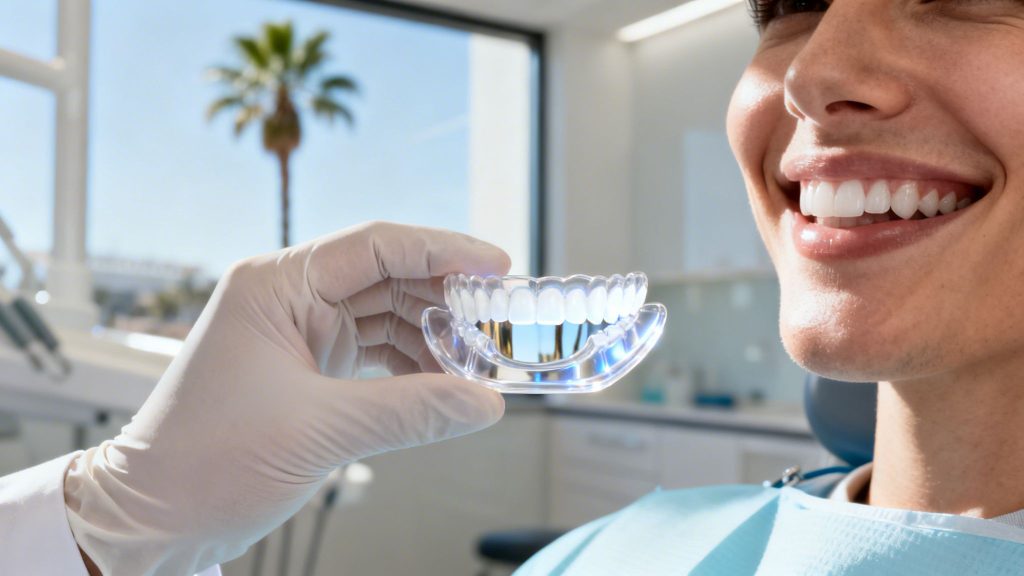
Invisalign Implant Specialist
Making the Right Decision for Your Long-Term Oral Health
Deciding between an Invisalign dentist and an orthodontist isn’t about choosing which professional is better—it’s about finding the right fit for your unique needs. Both bring valuable expertise to the table, but the best choice depends on the complexity of your case, the provider’s experience, and whether their skills align with your treatment goals.
For simpler cases, an Invisalign-trained dentist may offer the convenience and care you need. However, for more complex orthodontic issues, an orthodontist, who specializes in aligning teeth and jaws, might be the better option.
The key is to do your research. Ask plenty of questions, review their credentials, and make sure your provider takes the time to understand your case from that very first consultation. A good provider should not only have the technical skills but also a genuine commitment to your long-term results.
Remember, your smile is an investment in yourself, one that impacts your confidence and well-being for years to come. Choose a professional who sees its importance and is dedicated to helping you achieve the best possible outcome.
Pegah S. Salami, DMD, FAGD
https://www.google.com/maps?cid=16004739670706848570
12395 World Trade Dr Suite 150, San Diego, CA 92128, United States
(858) 451-3311
https://www.ranchobernardodentistry.com/





