
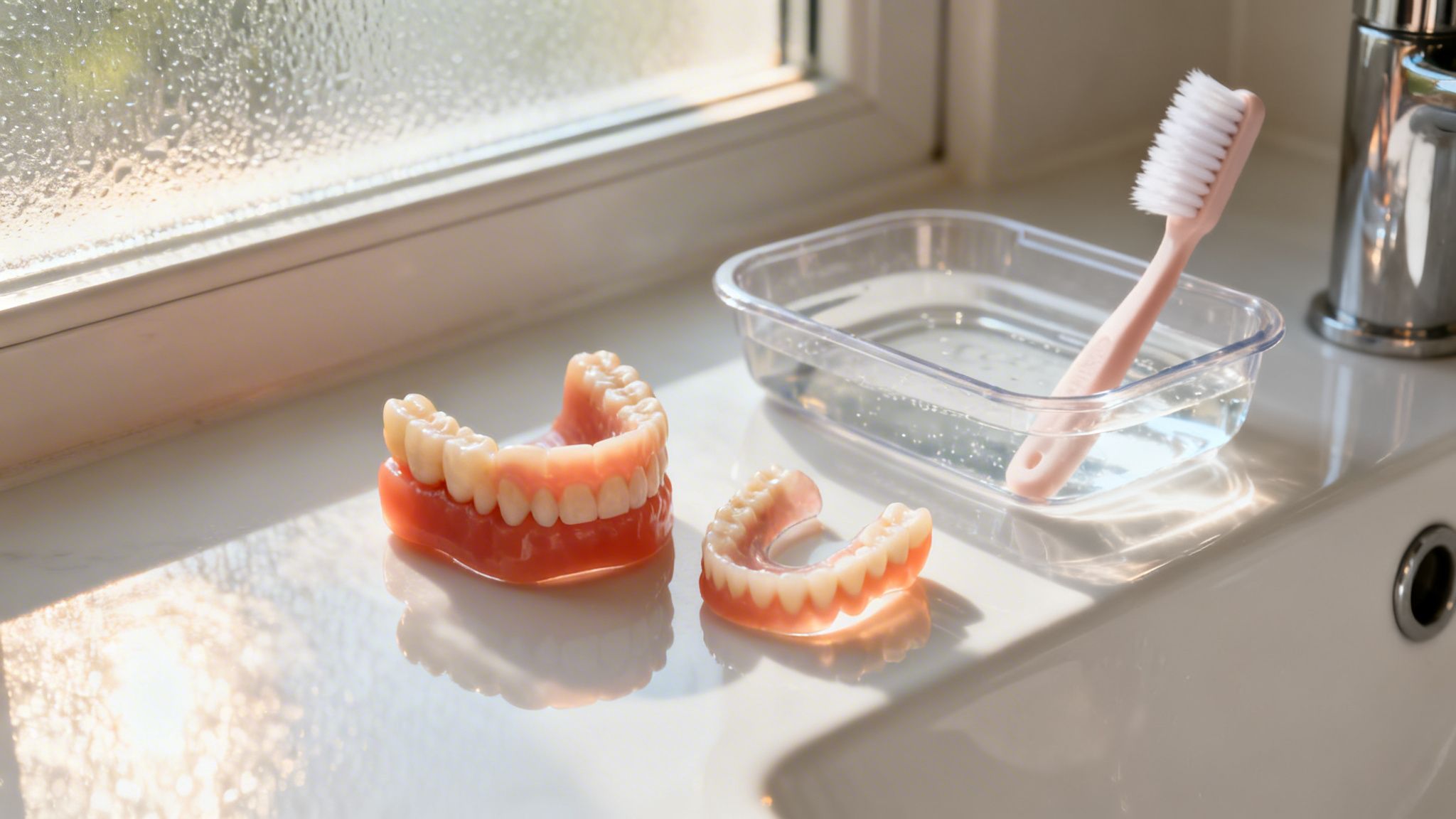
Getting new dentures in San Diego or partials is an exciting step toward reclaiming your smile, but the real key to long-lasting comfort is proper care. For our patients in Rancho Bernardo and across San Diego, the proven method is simple: handle them gently, clean them daily with non-abrasive products, and give your gums a rest every night. This simple routine is what prevents damage, stains, and discomfort, ensuring your new smile enhances your life for years to come.
Your Guide to Lasting Denture Comfort in San Diego
Adjusting to new dentures or partials is a huge step in restoring your smile and confidence. For our patients here in Rancho Bernardo and across greater San Diego, the biggest question is often, “How do I keep them comfortable and looking great?” If you’re searching for a “dentist near me” who can help you with your new appliance, you’ve come to the right place. This guide answers your concerns about everything from daily cleaning to preventing soreness and what to do when your denture just doesn’t feel right.
At our San Diego practice, led by Dr. Pegah S. Salami, we see ourselves as your local partners on this journey. We want to show you that with a simple routine and our professional support, your dentures can feel like a natural part of your life. This isn’t just about appearances; it’s about boosting your oral health and overall well-being. Think of this as your practical roadmap, whether you’re a neighbor in Rancho Peñasquitos, Poway, or Escondido looking for the best dentist to support your restorative care needs.
The Path to Comfortable Denture Wear
The journey to feeling completely comfortable with your dentures really comes down to three key stages, which you can see in the guide below.
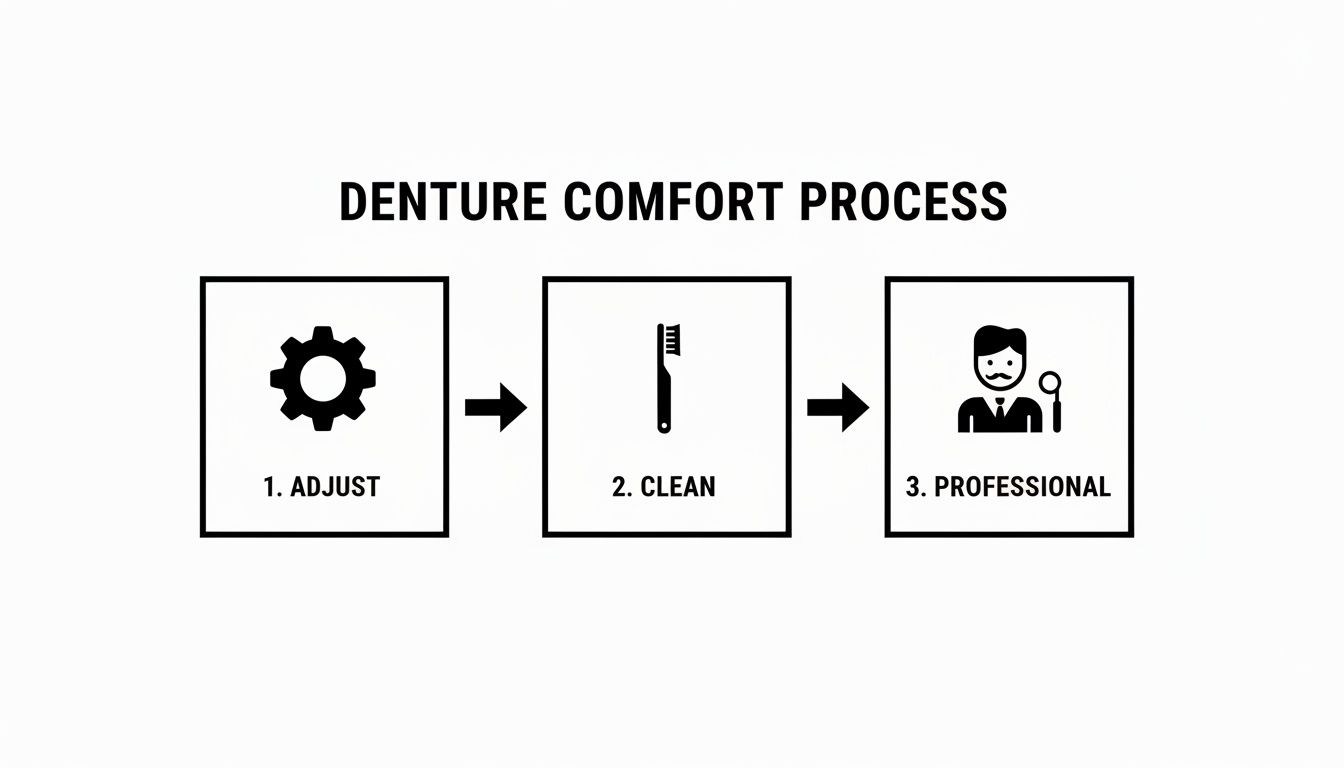
This process shows that success starts with the initial adjustment period, is built upon consistent daily cleaning, and is maintained through regular professional care at your local dental office.
This balanced approach is essential for any patient with a removable appliance. It’s not just about the cleaning; it’s a cycle of personal care and professional oversight that ensures your dentures fit well and your mouth stays healthy. If you have partials, this routine is even more critical for protecting your remaining natural teeth. For those still exploring their options, you can learn more about the different types of upper dentures in our detailed article.
At our San Diego dental practice, we see firsthand how a small commitment to daily care dramatically improves a patient’s experience. It’s the difference between a denture that feels foreign and one that lets you eat, speak, and smile with total confidence.
Your dentures were custom-made to fit the unique contours of your mouth. But your mouth will naturally change over time—that’s completely normal. This is why partnering with a local dentist in San Diego, CA you trust is so important. We’re here to help you navigate those changes, from minor adjustments to eventual relines or replacements, making sure you always have the best possible fit and function.
Building Your Daily Denture Care Habits
Getting your new full or partial dentures is a big step, and the secret to keeping them comfortable and looking great for years is all about creating a simple daily routine. This isn’t about adding a long list of chores to your day. It’s about building a few easy habits that protect your investment and keep your smile healthy and bright.
Think of it this way: your dentures need the same consistent care as natural teeth. Without it, you’ll start to notice plaque buildup, which can lead to bad breath, staining, and even gum irritation. A great habit to start right away is rinsing your appliance under cool water after every meal to wash away any loose food particles.
The Right Tools for a Gentle Clean
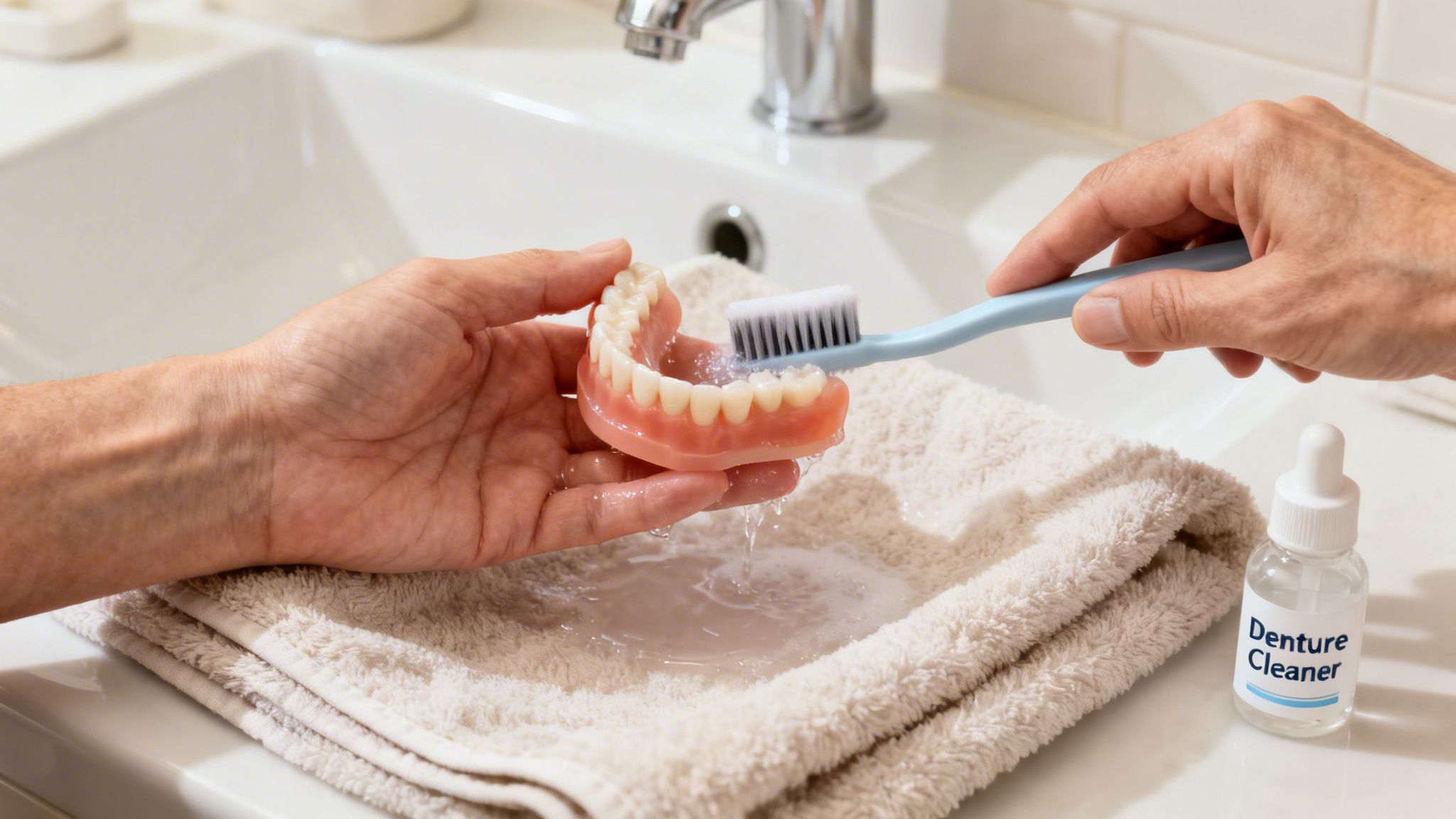
Using the right products is absolutely non-negotiable. You’ll need two key items: a soft-bristled denture brush and a non-abrasive denture cleaner. Never use regular toothpaste. It’s far too harsh and will create tiny, microscopic scratches on the surface of your dentures, which unfortunately become a perfect breeding ground for bacteria.
When it’s time to clean, here’s how to do it safely and effectively:
- First, wet your dedicated denture brush with cool water. Hot water is a major no-go, as it can actually warp the denture material and permanently ruin the fit.
- Next, apply a small amount of non-abrasive denture paste or even a mild liquid soap to the brush.
- Gently brush every surface, inside and out. Pay special attention to the little crevices and the surfaces that rest against your gums—that’s where plaque loves to hide.
- Once you’re done, give the denture a thorough rinse under cool, running water until all the cleaner and debris are gone.
This simple process is your best defense against plaque and is critical for keeping your gum tissues healthy. This is a core part of your oral hygiene and a key component of your general dental care.
Handle with Care to Avoid Accidents
A dropped denture is one of the most common—and costly—accidents we see. To prevent a crack or break, always handle your appliance with care. The easiest trick is to clean your dentures over a sink filled with water or over a folded towel on the counter. This creates a soft landing just in case it slips through your fingers.
The data backs this up. Gently brushing twice a day with a non-abrasive cleaner can slash odor-causing bacteria by an incredible 90%. And since drops are responsible for cracks in about 25% of cases, taking a moment to pad the sink is a truly smart move. For those with partials—which make up a huge 76.2% of the removable denture market—remember to be extra gentle when cleaning around the metal clasps to prevent damage. You can find more on this in the latest market research on denture care products.
A simple rule I tell all my patients in Rancho Bernardo and Poway is this: if the denture is in your hands, there should always be water or a towel underneath it. This one little habit has saved countless people from an emergency repair visit.
By turning these small actions into consistent daily habits, you’ll ensure your dentures stay clean, comfortable, and fully functional for a long, long time.
The Importance of Nightly Soaking and Storage
What you do with your dentures while you sleep is just as important as your daily cleaning routine. Think of it as giving your gums a much-needed break. Taking your dentures out for at least six to eight hours each night lets the tissues in your mouth recover, breathe, and get healthy blood flow.
This simple habit makes a world of difference, dramatically cutting down your risk of developing painful sore spots, irritation, and even stubborn fungal infections.
But where you keep your appliance overnight is a huge part of its care. Just setting it on the nightstand isn’t enough—it’s a missed chance for deep cleaning and can even cause your dentures to dry out, which could warp their custom fit over time. The goal is to keep them both clean and moist.
Why Soaking Beats Plain Water
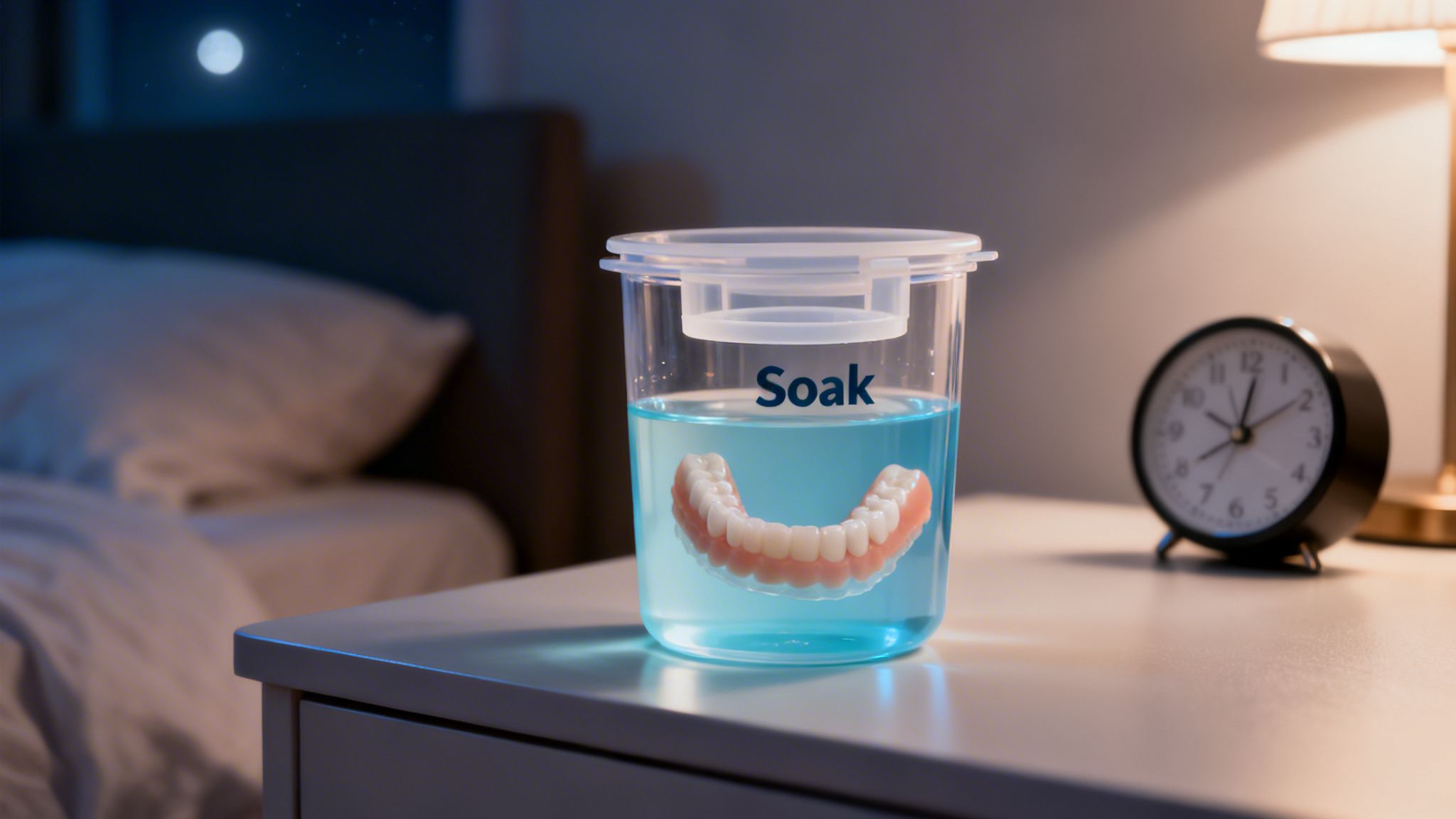
After you’ve given your dentures a good brush, the next step is to submerge them in a soaking solution. While cool water is certainly better than nothing, using a specialized denture cleanser is far more effective. These products are formulated to tackle the things brushing alone can’t.
A proper denture soak goes to work overnight to:
- Disinfect: It kills the microorganisms that lead to bad breath and oral infections like denture stomatitis.
- Remove Stains: The solution gently lifts stubborn stains from coffee, tea, and other foods, keeping your smile bright.
- Loosen Debris: It breaks down any residual plaque and food particles hiding in those tiny, hard-to-reach crevices.
This nightly bath ensures your dentures are fresh, sanitized, and ready for the day ahead. It’s a non-negotiable part of knowing how to care for dentures and partials correctly.
A critical tip for our patients in Rancho Bernardo: Never use hot or boiling water to soak or rinse your dentures. High temperatures can permanently warp the acrylic, causing a poor fit that often requires a costly repair or a completely new appliance.
The Right Way to Store Your Denture
Proper storage is really straightforward. Once your denture is clean, just place it in a dedicated denture bath or a clean container filled with either cool water or a soaking solution.
The key is to make sure the appliance is completely submerged. This prevents any part of it from drying out, which helps maintain its precise shape for a comfortable, secure fit every time you put it in.
For our patients from Rancho Peñasquitos to Escondido, this simple nightly ritual is one of the most powerful habits you can build. It not only protects your investment in your smile but also safeguards your long-term oral health. If you ever have questions about the best products to use, our team is always here to give you personalized recommendations at your next new patient exam.
Protecting Partials and Your Natural Teeth
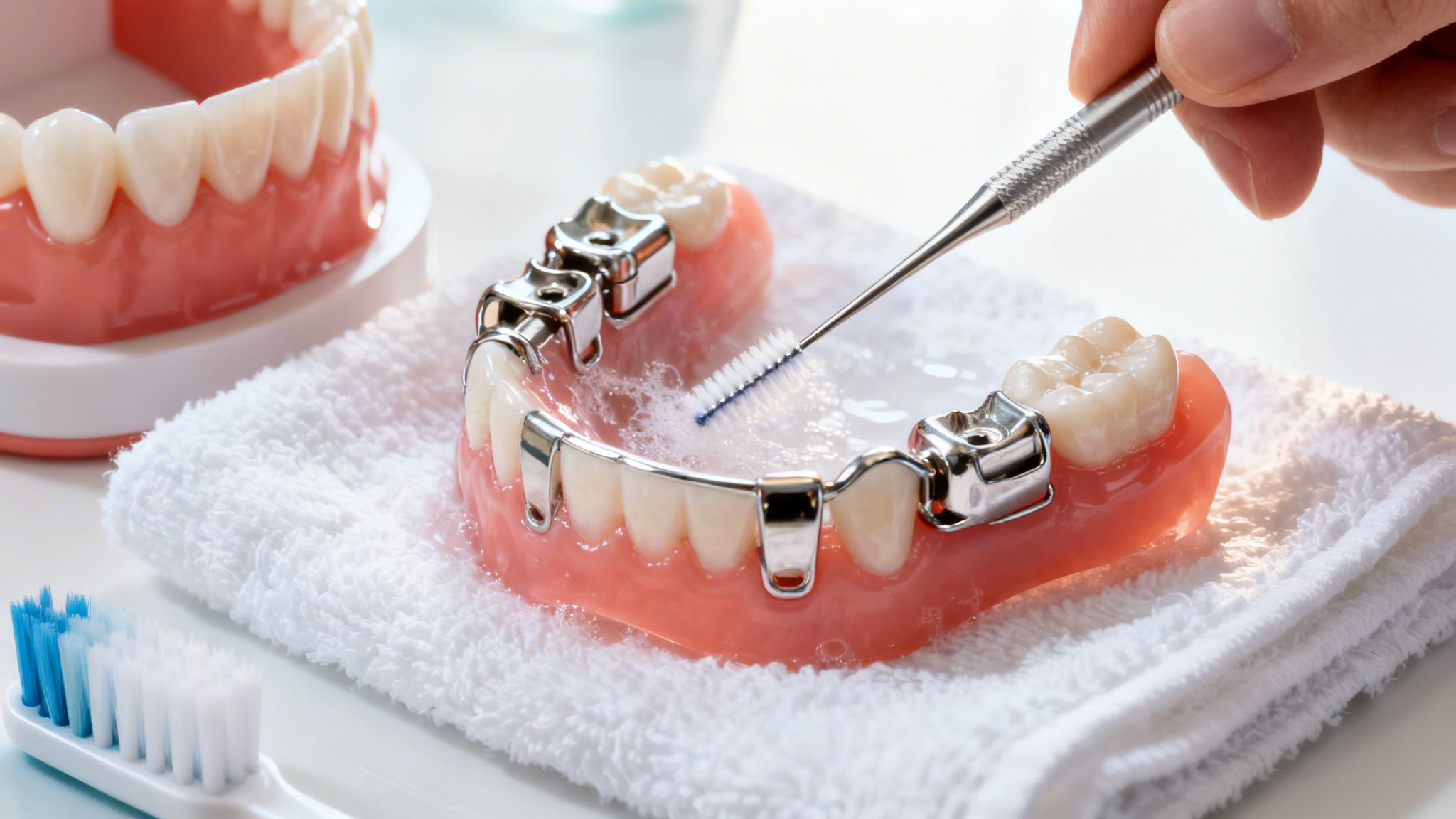
When you have a removable partial denture, you’re caring for more than just a single appliance—you’re managing a delicate ecosystem. It’s a shared space where the health of your partial and your remaining natural teeth are completely intertwined.
While the pink acrylic and artificial teeth are important, the real trouble spots are often the small metal clasps and framework that grip your natural teeth. Plaque absolutely loves to hide in these tight, hard-to-reach areas.
If that plaque isn’t cleaned away meticulously every day, it can quickly cause cavities and gum disease right where the partial connects. These supporting teeth are the foundation holding everything in place, and if they become compromised, it can ruin the fit of your partial or even lead to needing a tooth extraction.
A Two-Part Cleaning Process
The best way to tackle this is to think of your cleaning routine in two separate, equally important parts. First, let’s focus on the partial itself.
After you take it out, use a small, specialized brush—like a clasp brush or an interdental brush—to get into every nook and cranny of that metal framework. This is a critical detail in how to care for dentures and partials that many people miss, but it makes all the difference.
Once your partial is sparkling clean and set aside to soak, your work isn’t finished. Now it’s time to give your natural teeth the focused attention they need.
- Brush Thoroughly: Spend a full two minutes brushing your remaining teeth. Pay extra attention to the surfaces that your partial’s clasps touch all day.
- Floss Every Day: This is non-negotiable. Flossing is the only way to remove plaque from between your teeth and just under the gumline—areas that are especially vulnerable when you wear a partial.
This complete approach is what we teach all our patients across Rancho Peñasquitos, Poway, and the surrounding communities. Your partial denture can only succeed if the rest of your mouth is healthy. To learn more about how these appliances are designed, you might find our article on the differences between partials vs dentures helpful.
We often remind our Rancho Bernardo patients that a healthy mouth is the only foundation upon which a partial denture can succeed. Neglecting your natural teeth is the quickest way to jeopardize the fit and function of your appliance.
At our San Diego practice, we see your daily home care as a partnership with our professional services. During your regular dental cleaning and exams, we’ll professionally clean both your natural teeth and your partial, making sure every surface is free from stubborn plaque and tartar. This combination of your efforts at home and our expert oversight is the best formula for a healthy smile and a comfortable partial that lasts for years.
Solving Common Denture Frustrations with Your Local Dentist
Even with a perfect care routine, hitting a few bumps in the road is a normal part of adjusting to life with dentures. You might deal with a little soreness as your mouth adapts, or maybe you notice your appliance doesn’t fit quite as snugly as it once did.
Knowing how to handle these common frustrations is all part of the learning curve. The great news is that most of these issues are simple to manage with a few at-home tricks and a little help from our team. As the trusted dentist in Rancho Bernardo, CA for many of your neighbors, we’re here to make sure you feel comfortable and confident, and that means helping you navigate any challenges that come up.
When Sore Spots Appear
It’s completely normal for new denture wearers to get a few sore spots on their gums. This is usually just part of the break-in period while your mouth gets accustomed to the new appliance.
If you feel a tender area developing, the first thing to do is take your denture out and give your mouth a gentle rinse with warm salt water. This simple step can soothe the irritation and helps keep the area clean. Before putting it back in, give your denture a quick check for any trapped food particles that might be creating a pressure point.
Whatever you do, never try to file down or adjust the denture yourself. Using household tools can cause permanent damage and often makes the problem much worse. If the soreness doesn’t go away after a day or two, it’s time to call our Rancho Bernardo dental office. A quick, professional adjustment is usually all it takes to get you comfortable again.
Addressing Stains and Odor
Have you noticed your smile looking a little less bright lately? Stains from things like coffee, tea, and red wine can gradually accumulate on your dentures over time. If you see this happening, it’s a sign to be more diligent with your daily brushing and to ensure you’re using a quality soaking solution every night. For more significant discoloration, professional teeth whitening for your natural teeth and a professional cleaning for your denture can make a world of difference.
Consistent cleaning is your number one defense against both discoloration and stubborn odors.
Pro tip: Massaging your gums daily with a clean finger or a soft, wet washcloth can boost circulation and may reduce soreness by as much as 60%. It’s a simple habit that helps keep your gum tissue healthy and resilient.
When Your Denture Feels Loose
If your denture starts to feel loose, it’s not something you did wrong. It’s a natural result of your jawbone and gums changing shape over the years—a process called resorption. This can cause a once-perfect fit to become unstable.
This isn’t just a minor annoyance; an ill-fitting denture can lead to bigger problems like sores, difficulty eating, and even accelerated bone loss. Neglecting a loose fit can cause an improper seal in 30% of wearers within just a single year, leading to sores and potential infections.
What’s more, studies show that ill-fitting dentures are a primary cause of accelerated bone loss, which can affect up to 25% of wearers annually. This is why we can’t stress enough the importance of annual check-ups. You can find more information about how fit impacts oral health in research on the digital denture market.
For a loose denture, the solution is often a simple procedure called a reline. We add material to the inside of your appliance to match the new contours of your gums, restoring that secure, comfortable fit. For this or any other issue, your best move is always to call our office, whether you need restorative dentistry or even an emergency dentist visit.
What to Expect at Your Denture Check-up in Rancho Bernardo
Excellent daily care is your first line of defense, but a partnership with your local dentist is what truly guarantees long-term success. Even if you have full dentures and no natural teeth left, regular professional check-ups are absolutely vital. This isn’t just about the appliance itself; it’s about safeguarding your overall oral health.
Think of our practice as your dedicated denture support team. When you come in for a check-up at our San Diego office, we do so much more than just glance at your denture. We perform a thorough oral cancer screening, carefully examine your gums and all the soft tissues for any hint of irritation, and expertly assess how your jaw and bite have changed over time.
Why Professional Visits Matter
These visits are our chance to spot and handle small issues before they ever become significant problems. A professional cleaning can remove stubborn, calcified tartar that your daily brushing simply can’t, and we can inspect your denture’s fit with an expert eye. A new patient exam will also include dental x-rays to check the health of your underlying bone structure.
We often tell our patients that a professional check-up is the best way to protect both your health and your investment. An annual visit allows us to catch fit issues early, preventing the bone loss and chronic soreness that can result from a poorly fitting appliance.
Your comfort and confidence are our top priorities. We want to make it easy for our neighbors in Rancho Bernardo, Poway, and Escondido to get the world-class care they deserve. We invite you to schedule a consultation with Dr. Pegah S. Salami or Dr. Pelin Smith to ensure your smile remains healthy and completely secure. We’re ready to become your partners in health.
Frequently Asked Questions About Denture Care
Getting used to new dentures or partials comes with a learning curve, and it’s completely normal for a few questions to pop up along the way. We hear many of the same great questions from our patients in our San Diego practice, so we wanted to address some of the most common ones right here.
Our goal is to help you feel completely confident and comfortable with your new smile.
How Often Should I Have My Dentures Checked?
Even if you don’t have any natural teeth left, seeing your dentist for a check-up at least once a year is essential. Your mouth is a dynamic environment—your jawbone and gums naturally change over time, which can directly impact how your denture fits and feels.
During your annual visit at our Rancho Bernardo office, this is what we’ll focus on:
- A comprehensive oral cancer screening to ensure your tissues are healthy.
- A close look at your gums and other soft tissues for any signs of irritation or pressure sores.
- An assessment of your denture’s fit, function, and overall condition.
- A professional cleaning to remove any stubborn, calcified tartar that regular brushing can’t handle.
These yearly check-ins allow us to catch small issues before they become big problems. We can make minor adjustments or relines to keep your appliance fitting snugly, which helps prevent chronic soreness and protects the health of your jawbone.
Can I Use Regular Toothpaste on My Dentures?
This is a big one, and the answer is a firm no. You should never use regular toothpaste to clean your dentures. Most toothpastes get their cleaning power from abrasive particles designed to polish hard tooth enamel. Your denture, however, is made from a much softer acrylic material.
Using an abrasive toothpaste on your denture will create thousands of microscopic scratches across its surface. These tiny grooves become a perfect hiding place for bacteria and plaque, leading to stubborn stains, persistent bad breath, and even potential oral infections.
Always stick with a non-abrasive denture cleaner and a soft-bristled denture brush. It’s the only way to clean them effectively without causing damage.
What Should I Do If My Denture Breaks?
If your denture cracks, a tooth pops off, or a piece chips away, please don’t try to fix it yourself. We’ve seen patients attempt home repairs, and it almost never ends well. Specifically, never use superglue or any other household adhesive.
These glues contain toxic chemicals that are harmful if ingested and can permanently damage the denture material. A botched home repair often makes it impossible for us to perform a proper, professional fix, which can be heartbreaking.
Instead, carefully gather all the broken pieces, store them safely, and call our San Diego dental office right away. We can evaluate the damage and figure out the best and safest way to get your smile back in working order, whether it’s a simple repair or something more. This would be considered a dental emergency, and we are here to help.
Your long-term comfort and oral health are our highest priorities. At Pegah S. Salami, DMD, FAGD, we are committed to being your trusted partners in dental care. If you have any other questions or need an adjustment, don’t hesitate to reach out. Schedule your appointment today 858 673-1000





