
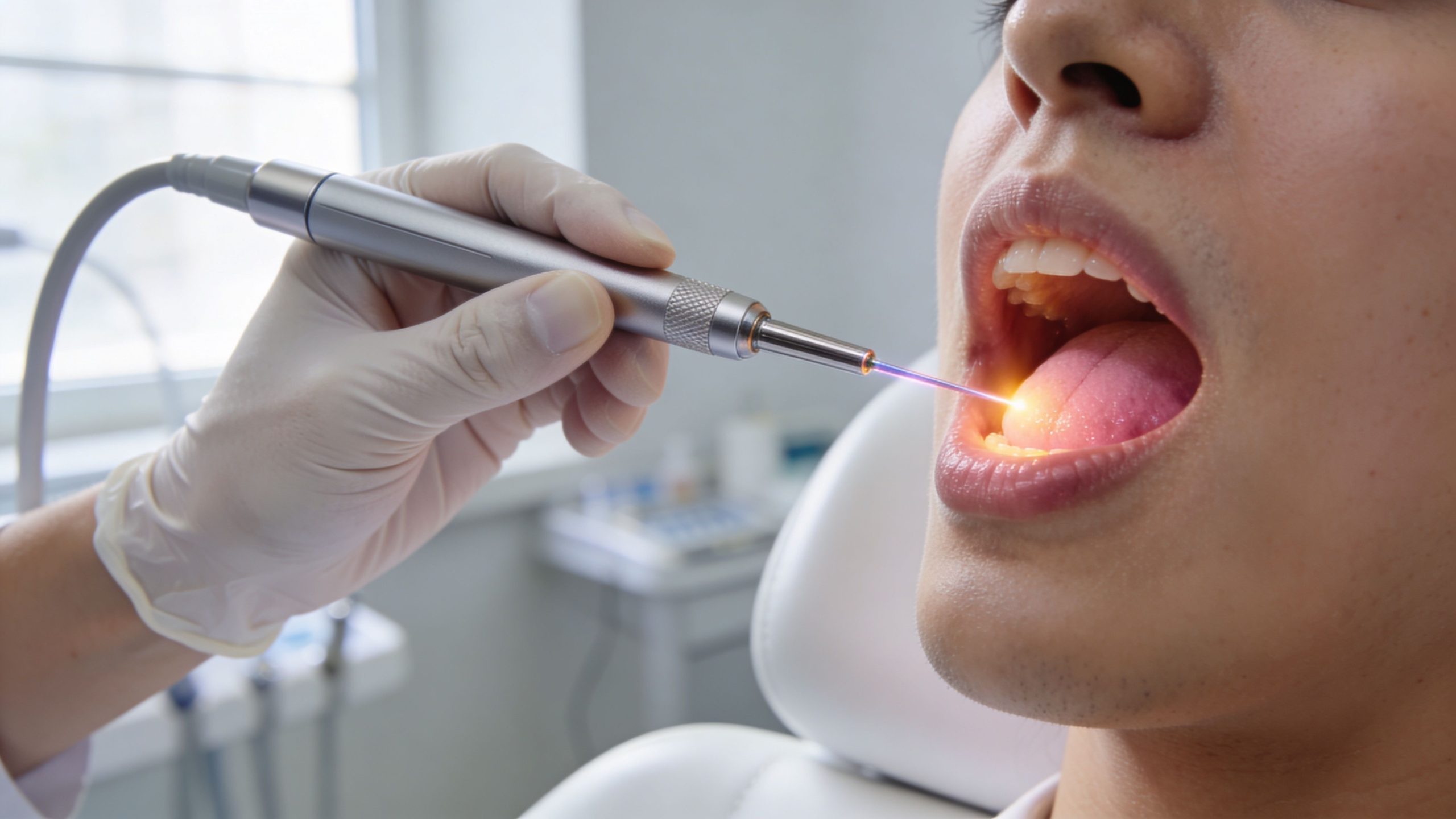
You might be reading this after noticing blood when you brush, after seeing more gum than teeth in photos, or after hearing that “you may need gum treatment” and feeling your stomach drop. That reaction is common. For many adults in Rancho Bernardo, Poway, Rancho Peñasquitos, and nearby San Diego communities, gum concerns sit in an awkward middle ground. They affect health, comfort, and confidence all at once.
Some patients are searching for a dentist near me because their gums feel tender and puffy. Others are looking for a cosmetic dentist near me because they’re unhappy with a gummy smile or uneven gum line. Some want a calm answer from a dentist in San Diego, CA who can explain what’s happening without making the experience feel overwhelming.
Laser gum tissue removal can be that answer for the right patient. It gives dentists a more precise way to remove diseased or excess gum tissue while protecting as much healthy tissue as possible. For many people, that means a more comfortable procedure, less bleeding, and a smoother recovery than they expected.
A Confident Smile for Every San Diego Lifestyle
A lot of gum concerns show up in ordinary moments. A family photo at the beach. A work event in Rancho Bernardo. Dinner with friends in Poway. You smile, then immediately wonder if your gums look too prominent, too uneven, or too inflamed.

For some people, the issue is cosmetic. Their teeth may look short because excess gum tissue covers too much of the enamel. For others, it’s a health problem first. They notice bleeding, bad breath, tenderness, or spaces forming where the gums should fit snugly around the teeth. Many have both concerns at the same time.
Why patients delay treatment
The hesitation usually isn’t about whether something feels off. It’s about the fear of what treatment might involve.
Patients often worry about:
- Pain during treatment if gum work means cutting or stitches
- Downtime after treatment when work, family, and daily routines can’t pause
- Appearance concerns if treatment changes the gum line in a way that looks unnatural
- Dental anxiety from past experiences with more invasive procedures
That’s why laser dentistry matters. It changes the conversation from “How bad will this be?” to “What’s the gentlest way to fix the problem well?”
Healthy gums do more than support teeth. They shape the entire smile and affect how comfortably you eat, speak, and smile in daily life.
In a relationship-focused office setting, patients usually want two things at once. They want modern care, and they want to feel looked after as a person. That’s especially true when they’re searching for the best dentist in Rancho Bernardo, CA or comparing options for restorative and cosmetic care.
A more comfortable path forward
At Dr. Salami and Associates in San Diego’s Rancho Bernardo area, laser gum tissue removal fits into a bigger philosophy of care. The goal isn’t just to remove tissue. It’s to diagnose accurately, explain clearly, numb thoroughly, move gently, and help patients leave feeling relieved instead of rattled.
That matters whether someone is coming in for gum treatment, cleaning and exams, new patient exams, dental x-rays, cosmetic smile improvements, or restorative treatment such as a crown or tooth extraction. When gum health improves, many other parts of dentistry become easier, more predictable, and more comfortable too.
Understanding the Root of Gum Concerns
Gums don’t usually become irritated for no reason. In many cases, the problem starts with bacteria collecting along and below the gumline. If that buildup stays in place, the tissue becomes inflamed. Over time, the gum can start to pull away from the tooth, creating a deeper space that’s harder to clean.
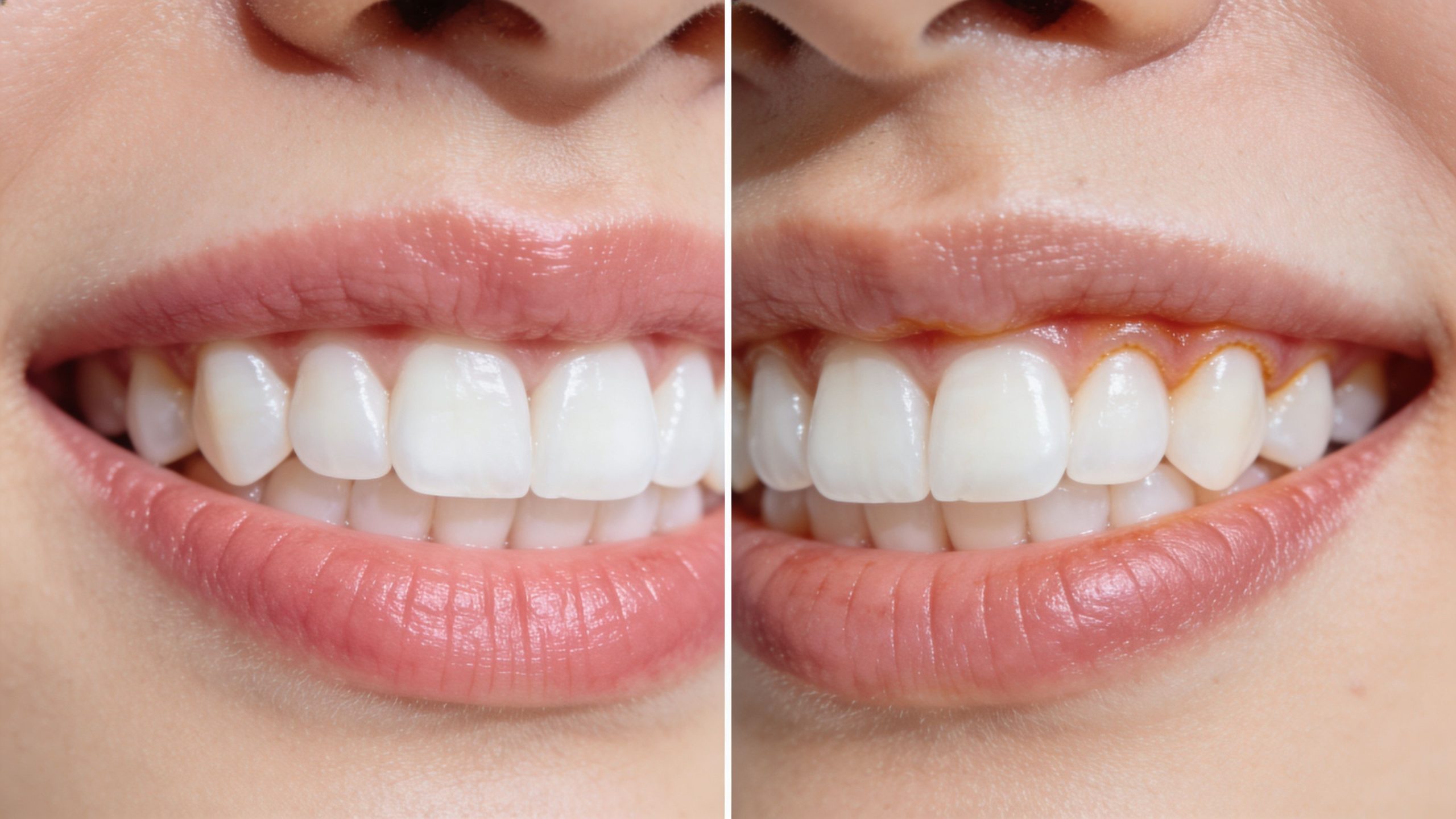
Think of that space like a narrow crevice behind a cabinet. A toothbrush may clean the visible surface well, but it can’t fully reach what’s packed deep inside. That’s one reason gum disease can continue even when someone brushes every day.
When gum inflammation becomes periodontitis
Early gum irritation may show up as redness, swelling, or bleeding when brushing and flossing. If the infection deepens, the attachment between gum and tooth weakens. At this stage, treatment becomes more important, because the goal shifts from simple cleaning to controlling infection and protecting the structures that hold teeth in place.
Some signs deserve prompt attention:
- Bleeding while brushing or flossing that keeps happening
- Persistent bad breath that doesn’t improve with routine hygiene
- Tender or swollen gums that feel different from normal
- Loose-feeling teeth or changes in how the bite comes together
- A receding or uneven gumline that makes teeth look longer or irregular
Patients who want a fuller explanation of early warning signs can review signs of gum disease before scheduling an exam.
Clinical data supports treating periodontal problems thoroughly. In randomized clinical trials, laser-assisted therapies achieved probing pocket depth reductions of 1.16 to 4.2 mm and a 43% reduction in bleeding on probing, compared with lower improvements from conventional treatment alone, as reported in this clinical review of periodontal laser therapy.
Cosmetic gum concerns matter too
Not every gum concern starts with infection. Some patients have healthy gums that cover too much of the teeth. Others have an uneven gumline that makes one side of the smile look higher or fuller than the other. These issues can make teeth appear short, crowded, or asymmetrical even when the teeth themselves are healthy.
A “gummy smile” is often a cosmetic concern, but it still deserves careful planning. Good contouring isn’t random trimming. It requires judgment about smile balance, tooth proportions, and how the gumline will frame the front teeth after healing.
Clinical point: Gum treatment works best when the diagnosis is precise. Inflamed tissue, excess tissue, and altered tooth display can look similar in a mirror, but they are not treated the same way.
Why this affects overall dental care
Gum health influences nearly every other treatment in a dental office. A stable, healthy gumline supports cleaner impressions, better-fitting restorations, more predictable cosmetic work, and easier home care. If the tissue is inflamed, even simple hygiene visits can feel more uncomfortable.
That’s why patients looking for a dentist near me, emergency dentist, or ongoing family dental care shouldn’t think of gum treatment as separate from the rest of dentistry. It’s often the foundation.
Laser Gum Removal vs Traditional Surgery
Traditional gum surgery has helped many patients, but it isn’t the only way to treat diseased or excessive gum tissue. Laser gum tissue removal gives dentists a more selective tool. The practical difference is easy to understand. A scalpel removes tissue by cutting. A laser removes targeted tissue with concentrated light energy while also helping control bleeding during treatment.
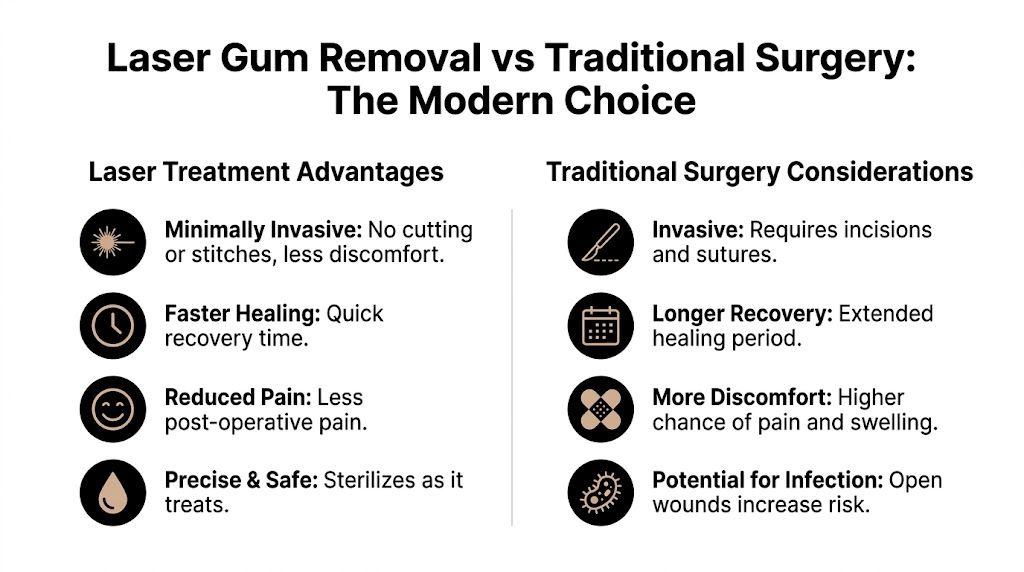
For the right case, that changes the patient experience in meaningful ways. The procedure usually feels less intimidating, the field stays cleaner, and recovery tends to be easier to manage.
Side by side comparison
| Feature | Laser Gum Removal | Traditional Scalpel Surgery |
|---|---|---|
| How tissue is treated | Targets specific soft tissue with focused laser energy | Removes tissue with a scalpel |
| Bleeding during treatment | Typically less bleeding because the laser helps seal vessels as it works | More open bleeding during cutting |
| Precision | Selective treatment of diseased or excess tissue | Less selective, especially in delicate contouring |
| Need for sutures | Often reduced or avoided in many soft-tissue procedures | Commonly needed |
| Post-op comfort | Often easier for patients to tolerate | Usually more soreness and swelling |
| Recovery pace | Faster return to normal routine in many cases | Longer downtime is more common |
| Risk profile | Cleaner field and less open tissue exposure | Open surgical sites can raise complication concerns |
| Gum preservation | Better at preserving healthy tissue in regenerative protocols | Can remove both diseased and healthy tissue |
Where laser treatment clearly performs better
The strongest example is the LANAP protocol, which has been FDA-cleared since 2004 and offers 60% faster healing times than conventional surgery. Patients often return to normal activities in 24 to 48 hours, while traditional methods may involve 2 to 4 weeks of recovery, according to this LANAP treatment overview.
That speed matters in real life. Most adults can’t step away from work, parenting, or daily routines for weeks after gum treatment. Faster healing doesn’t just sound appealing. It changes whether patients feel able to move forward with care.
There’s also a tissue-preservation advantage. Traditional surgery can remove healthy gum along with diseased areas, which may contribute to permanent recession. Laser-based treatment is designed to be more selective.
Where traditional surgery still has a role
Laser treatment is not a magic wand. It’s a tool. Like any tool, it has cases where it shines and cases where another approach may still be appropriate.
Traditional surgery may still be considered when:
- The anatomy is complex and direct surgical access is necessary
- There is extensive structural damage that requires a broader surgical approach
- A patient’s goals are not limited to soft tissue and the treatment plan involves multiple procedures
- Diagnosis shows that contouring alone won’t solve the issue
That’s why a proper exam matters. Good dentistry isn’t about pushing one method for everyone. It’s about choosing the method that matches the biology, the anatomy, and the patient’s priorities.
A laser is more like a sculptor’s fine instrument than a broad cutting tool. That precision helps, but only when the diagnosis and treatment plan are sound.
What works and what doesn’t
What works is using laser gum tissue removal for clearly defined indications such as periodontal pocket treatment, removal of diseased soft tissue, or careful cosmetic contouring.
What doesn’t work is assuming every swollen or uneven gumline should be lasered immediately. Inflamed tissue sometimes needs periodontal therapy first. Cosmetic reshaping needs a smile design mindset, not just tissue removal. And any patient with advanced dental needs may also require related services such as restorative dentistry, dental implants near me, crowns, or bite evaluation.
Patients in Rancho Bernardo and greater San Diego usually do best when they choose a practice that can evaluate the whole picture, not just the laser itself.
How Gentle Laser Technology Reshapes Your Gums
Dental lasers aren’t all the same. Different wavelengths behave differently in tissue, which is why dentists choose specific lasers for specific jobs. In soft-tissue dentistry, diode lasers in the 810 to 980 nm range and Nd:YAG lasers at 1064 nm are commonly used because they interact well with hemoglobin and bacterial pigments, as explained in this overview of minimally invasive dental laser technology.
That interaction is the key to why laser gum tissue removal can be both precise and gentle. The energy is drawn to the tissue characteristics the dentist is targeting. It’s not random heat sweeping through the mouth.
Why lasers can be so selective
A simple way to think about it is this. The laser acts a bit like a highly selective search tool. It’s drawn toward what absorbs its energy best, especially pigmented bacteria and blood-rich tissue. That lets the dentist remove diseased tissue more precisely while preserving more healthy structure.
If you’ve ever wanted a plain-English comparison of selective laser targeting, this consumer-friendly explanation of how laser hair removal works is useful because it shows the same broad principle of wavelength, absorption, and selective treatment in another setting.
These soft-tissue lasers can kill up to 99.9% of periodontal pathogens and reduce intraoperative bleeding by up to 95% compared to a scalpel, according to the same dental laser review above. Those two effects are a big part of why the procedure often feels cleaner and more manageable for patients.
What patients usually notice in the chair
Most patients don’t care about wavelength charts. They care about what the procedure feels like.
They usually notice:
- Less bleeding because vessels are sealed as treatment progresses
- Less swelling afterward because tissue trauma is more controlled
- A shorter, cleaner appointment than they expected
- More confidence once they understand what the laser is doing
For patients comparing treatment options, Dr. Salami and Associates also provides laser dentistry benefits that fit into broader family, periodontal, cosmetic, and restorative care.
What this technology cannot do on its own
A laser improves execution. It does not replace diagnosis, home care, or maintenance.
If plaque control stays poor, gum inflammation can return. If a patient needs bite adjustment, crown work, or restorative treatment, the laser may be only one part of the plan. And if cosmetic gum contouring is done without careful attention to tooth shape and smile symmetry, even a technically smooth procedure can lead to a result that feels off.
That’s why the technology matters, but the treatment planning matters more.
Is Laser Gum Treatment Right for Your Smile
The best candidates for laser gum tissue removal usually fall into three groups. Some need help with gum disease. Some want cosmetic reshaping. Others need gum modification to support another dental procedure.
The common thread is that the treatment has to solve a real problem, not just sound advanced.
Patients treating active gum disease
If your gums bleed easily, feel chronically irritated, or have deeper periodontal pockets, laser treatment may be part of a periodontal therapy plan. In these cases, the goal isn’t cosmetic first. The goal is to reduce infection, improve tissue health, and protect the support around the teeth.
For regenerative periodontal treatment, the PerioLase MVP-7, an Nd:YAG laser operating at 1064 nm, plays a central role in the LANAP protocol and is described as the only laser scientifically proven to regenerate bone and periodontal tissues lost to gum disease, with studies showing true new cementum and alveolar bone formation in this PerioLase LANAP clinical overview.
If you’ve been told you need more than a regular cleaning, this is the kind of discussion to have during consultation. The decision should be based on measurements, tissue condition, and the long-term plan for keeping teeth stable.
Patients unhappy with a gummy smile
Cosmetic contouring is a different conversation. These patients often say their teeth look small, boxy, or hidden by too much gum tissue. Others notice one side of the smile sits higher than the other.
Laser reshaping can help when:
- Excess gum display makes teeth look short
- The gumline is uneven and distracts from the smile
- A smile makeover is planned with veneers, bonding, or whitening
- The patient wants a more balanced frame around the visible teeth
Restraint matters. Good cosmetic laser work respects natural tooth proportions. Removing too much tissue creates a harsh result, and removing too little may not address the concern.
Patients preparing for restorative treatment
Some patients need laser gum removal to make another procedure possible. If a tooth needs a crown but too much gum tissue covers the area, reshaping the gumline can expose more tooth structure and improve the fit and finish of the restoration.
That can be relevant in care involving:
- CEREC same-day crowns
- Replacement of old restorations
- Cosmetic-restorative cases
- Selected implant or bridge planning
The right question isn’t “Can a laser do this?” It’s “Will laser treatment improve the outcome for this specific tooth, gumline, or periodontal condition?”
Who may need a different plan
Not every patient with gum concerns needs laser treatment first. Some need a professional cleaning, a deep periodontal cleaning, or improved home care before any tissue reshaping makes sense. Others may need restorative stabilization, bite management, or treatment sequencing that starts elsewhere.
That’s one reason an exam matters more than internet self-diagnosis. Patients searching for the best dentist in Rancho Bernardo, CA or a dentist in San Diego, CA should look for a practice that can sort cosmetic wants from periodontal needs and explain the trade-offs plainly.
Your Laser Gum Treatment Journey in Rancho Bernardo
The first visit usually feels calmer once patients realize nothing is rushed. A good consultation starts with listening. What’s bothering you most. Bleeding. Appearance. Sensitivity. A tooth that looks too short. Anxiety about dental treatment itself.
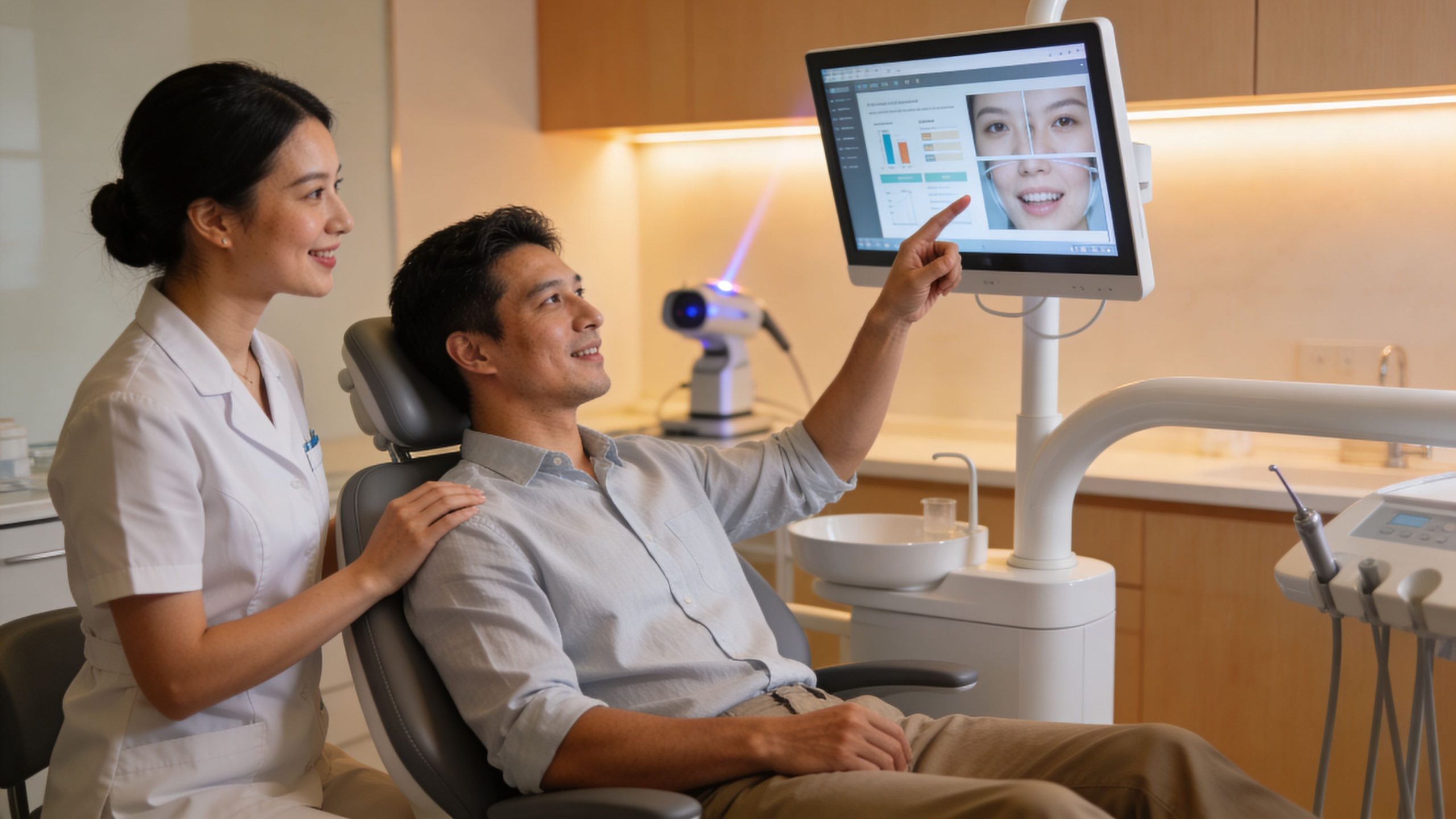
At the Rancho Bernardo office, the process typically begins with photos, digital imaging as needed, and a close look at the gumline and surrounding teeth. If the issue is periodontal, the exam focuses on gum health and pocketing. If the issue is cosmetic, attention shifts to smile balance, tooth display, and how much tissue should be reshaped.
The consultation feels practical, not sales-driven
Patients often come in expecting a hard sell for treatment. They usually relax when they realize the conversation is more grounded than that.
The appointment may include:
- A visual explanation of what the gums are doing now
- Discussion of options if laser treatment is one choice among several
- A comfort plan for patients with dental anxiety or a strong gag reflex
- Coordination with other care if crowns, whitening, aligners, implants, or restorative work are part of the bigger picture
For many patients, predictability lowers anxiety more than anything else. They want to know what will happen, what they’ll feel, and what the next day will look like.
What treatment day is usually like
Most laser gum tissue removal procedures are done with local anesthetic. Once the area is numb, patients often feel pressure or movement more than sharp discomfort. The sound and sensation are usually less dramatic than people imagine before they come in.
When the laser is used for soft tissue contouring or periodontal treatment, the appointment tends to feel controlled and focused. There’s less of the visual intensity people associate with traditional surgery. For anxious patients, that alone can make a meaningful difference.
Chairside advice: If you’re nervous, say it early. Anxiety is easier to manage when the team knows before treatment starts, not halfway through the appointment.
Communication matters here. A calm team will tell you when they’re starting, when they’re pausing, and what sensation is normal. That steady narration prevents small surprises from feeling big.
A short visual overview can also help patients understand the procedure before or after consultation:
Support after you leave the office
The patient journey doesn’t end when the chair goes upright. Good follow-through matters, especially for busy adults balancing work schedules, school pickup, and family logistics across Rancho Bernardo, Poway, and Escondido.
Many healthcare practices now use text-based communication to simplify reminders and follow-up because patients respond well to timely, clear updates. For anyone curious about that side of patient communication, this overview of Call Loop messaging for healthcare is a helpful example of how secure, organized messaging can support appointment flow and patient follow-through.
In practical terms, patients usually want answers to simple questions after treatment. Can I eat this. Is this tenderness normal. When do I brush that area again. Those questions are easier to manage when the office has already explained what to expect and how to get help if something feels unclear.
How this fits with full-service care
Laser gum treatment often connects naturally with other services. A patient may start with a new patient exam, move into periodontal therapy, then later choose teeth whitening, veneers, a crown, or even dental implants near me if missing teeth are part of the bigger issue. Someone else may arrive because of swelling and pain and need an evaluation that overlaps with emergency dentist concerns.
That full-picture approach is what helps patients avoid fragmented care. The gums aren’t treated in isolation. They’re treated as part of the smile, the bite, and long-term oral health.
Fast Recovery and Beautiful, Lasting Results
One reason patients ask about laser gum tissue removal is simple. They want a procedure that solves the problem without taking over their week. Recovery is often one of the strongest practical advantages.
For many soft-tissue laser cases, people return to normal routines quickly and with less disruption than they expected. The area may feel tender for a short time, but the recovery experience is often more manageable than older assumptions about gum surgery.
What to do after treatment
The exact instructions depend on the procedure, but the basics are usually straightforward:
- Choose softer foods while the area settles down
- Keep the mouth clean using the hygiene instructions given by the office
- Avoid irritating the treated area with rough brushing or crunchy foods early on
- Attend follow-up visits so healing can be checked and the next phase planned correctly
Patients usually do best when they treat healing as active care, not downtime to ignore. Small choices in the first days affect comfort and tissue response.
Why the results matter beyond appearance
A better gumline can absolutely improve a smile. Teeth often look more balanced after contouring, and inflamed tissue no longer distracts from otherwise healthy teeth. But the value goes beyond photos.
Healthy gums support routine chewing, make brushing and flossing easier, and create a stronger foundation for future work such as crowns, bridges, whitening, bonding, aligners, or implants. In other words, laser gum treatment can be a turning point, not just a cosmetic touch-up.
Patients often focus on the visible result first. The bigger win is usually that the mouth becomes easier to keep healthy afterward.
Long-term success depends on maintenance
No gum procedure replaces home care and professional maintenance. If the original issue was periodontal disease, follow-up cleanings and ongoing monitoring remain important. If the treatment was cosmetic, keeping tissue healthy protects the result.
That’s where full-service dental care matters. The same practice that helps with laser contouring should also be able to support cleaning and exams, restorative care, smile enhancement, and ongoing periodontal maintenance so your result stays stable.
Frequently Asked Questions About Laser Gum Removal
Is laser gum tissue removal painful
Most patients are surprised by how manageable it feels. The area is usually numbed with local anesthetic, so the goal isn’t for you to “tough it out.” During treatment, patients commonly notice pressure, vibration, or movement more than pain.
If you’re someone who worries about numbing, it can help to understand the basics of topical comfort options before injections. This patient-friendly effective lidocaine cream guide explains how numbing creams are generally used to reduce surface discomfort before procedures.
Is it only for gum disease
No. Laser gum tissue removal can be used for periodontal treatment, cosmetic gum contouring, and selected restorative situations where the gumline needs to be adjusted around a tooth. The reason for treatment determines the plan.
Someone coming in for a gummy smile needs a very different evaluation than someone with inflamed periodontal pockets. The tool may be similar, but the diagnosis is not.
How much does laser gum treatment cost
Cost depends on the diagnosis, how much tissue is being treated, whether the goal is periodontal or cosmetic, and whether the care is part of a larger plan involving crowns, implants, or restorative work. There isn’t one honest flat fee that fits every case.
The best way to get a real answer is to have the gums examined, the treatment goal defined, and the steps laid out clearly. A transparent consultation should explain what is necessary, what is optional, and what may be phased over time.
Are the results long-lasting
They can be, but maintenance matters. If the procedure treats excess tissue or creates a more balanced gumline, the cosmetic result can remain stable when the mouth stays healthy. If the issue is gum disease, long-term success depends on home care, professional maintenance, and control of the factors that caused inflammation in the first place.
Laser treatment can improve the environment around the teeth. It cannot do daily brushing and flossing for you.
What if I have dental anxiety
That’s common, and it should be discussed directly before treatment. Many anxious patients do better when the appointment is explained in plain language, broken into steps, and done with careful local anesthetic and frequent check-ins.
If you’ve been avoiding treatment because you’re worried about pain, embarrassment, or the sound of traditional gum surgery, laser treatment may feel much more approachable. The key is choosing a dental office that takes comfort and communication seriously, not one that treats anxiety like a minor detail.
If you’re dealing with bleeding gums, an uneven gumline, or a smile that doesn’t feel like you, schedule a consultation with Pegah S. Salami, DMD, FAGD. Dr. Salami and Associates provides personalized family, cosmetic, periodontal, and restorative care in Rancho Bernardo for patients across San Diego, Poway, Rancho Peñasquitos, and Escondido. If you’ve been searching for a dentist near me, a cosmetic dentist near me, or a trusted dentist in San Diego, CA, this is a comfortable place to start.





