
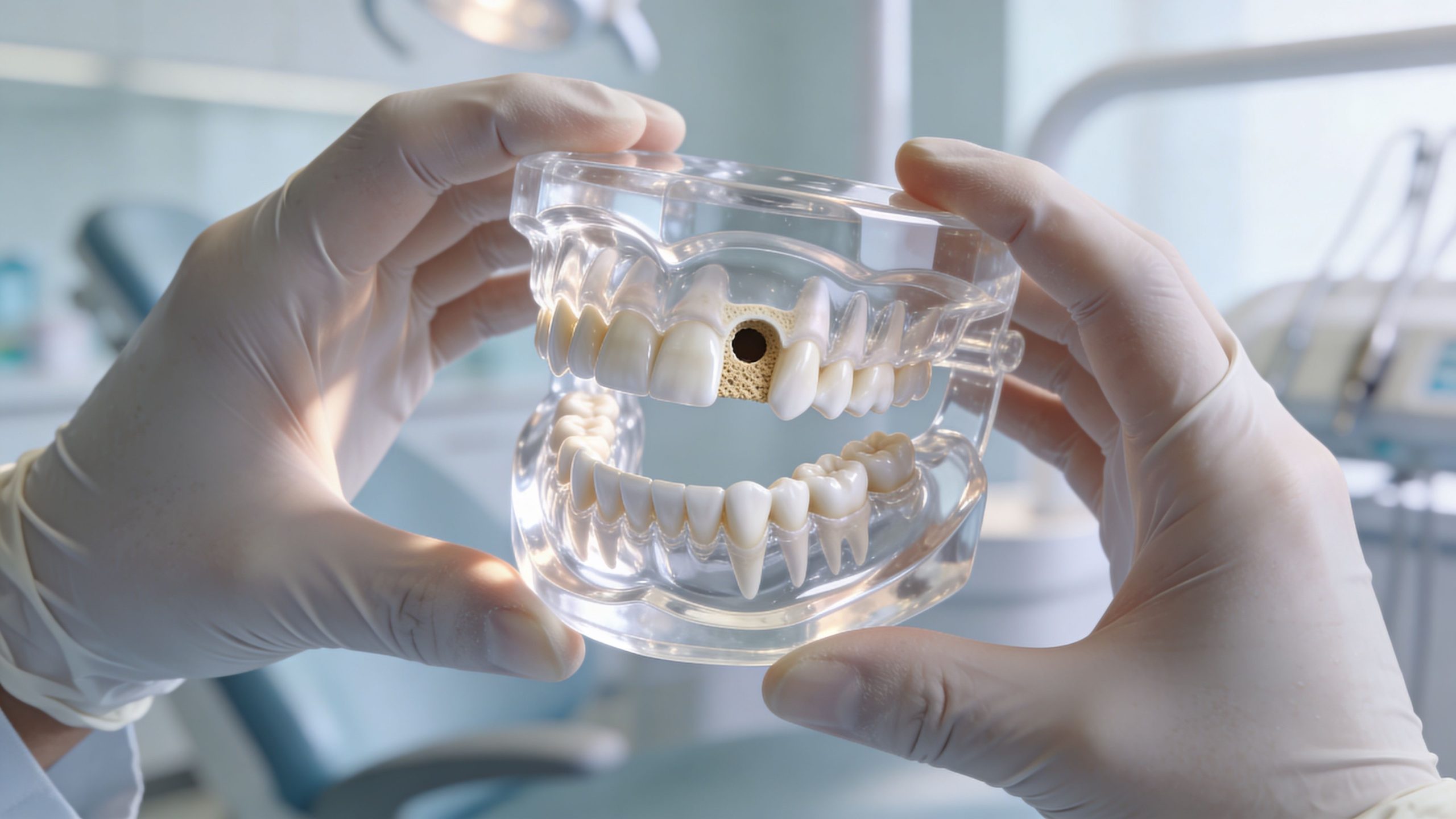
If you’re dealing with a recent tooth extraction, or you’ve been told you may need one soon, the next question usually comes fast. What happens to the bone underneath that tooth, and can you protect it?
You can. The timing matters.
For many patients in Rancho Bernardo and the greater San Diego area, the biggest mistake isn’t the extraction itself. It’s treating the empty space as if nothing urgent is happening below the gums. Bone loss after a tooth is removed is a normal biological process, but that doesn’t mean you’re powerless. With the right plan, you can preserve the shape of your jaw, protect future treatment options, and make restorations like dental implants much more predictable.
If you’ve searched for a dentist near me, tooth extraction, dental implants near me, or the best dentist in Rancho Bernardo, CA, you’re probably looking for more than general advice. You want a clear path. This guide breaks down how to prevent bone loss after tooth extraction in plain language, with a strong focus on what to do in the first 12 weeks and what options still help if some time has already passed.
Why Your Jawbone Changes After a Tooth Extraction
A tooth does more than help you chew. Its root constantly stimulates the surrounding jawbone.
When that root is removed, the body starts to remodel the area. The part of the jaw that once held the tooth no longer receives the same pressure and stimulation from biting and chewing, so the bone begins to shrink. A simple way to think about it is a muscle that weakens when it isn’t used. Bone behaves differently than muscle, but the idea is similar. Your body responds to use. When that use stops, it reallocates resources.
That’s why an extraction isn’t only about healing the gums. It’s also about protecting the underlying bone before the ridge loses too much shape and volume.
What the bone is responding to
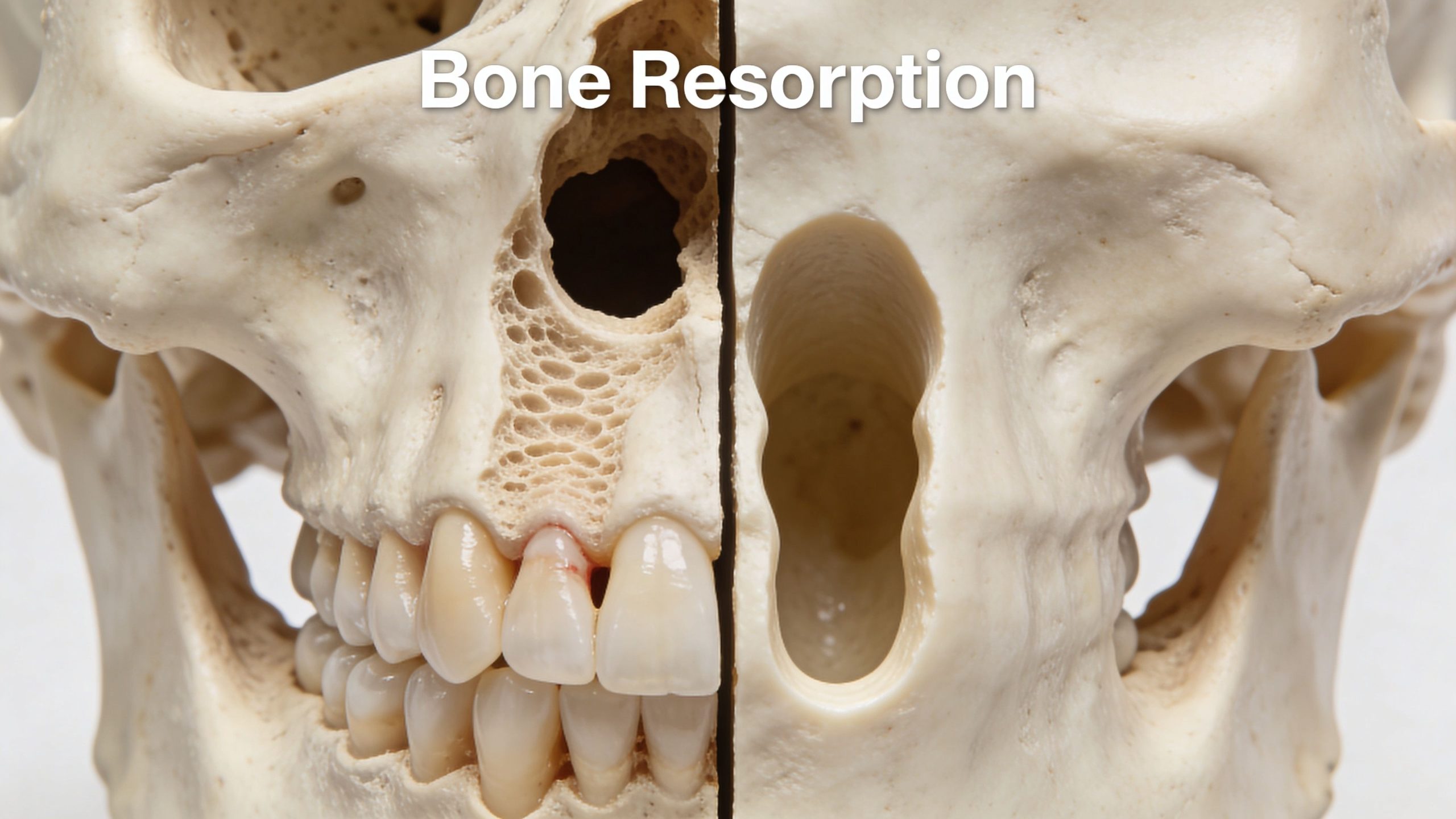
The alveolar bone is the section of bone that surrounds and supports your tooth roots. Once a tooth is gone, that bone loses its main job. The body starts a process called resorption, which means it gradually breaks down and reshapes the area.
This is why patients are often surprised to hear that “letting it heal” without a restoration plan can create future problems. The site may look fine from the outside while the ridge narrows underneath.
For people considering restorative dentistry, bridges, dentures, or dental implants in San Diego, CA, this matters because bone volume affects what can be done later and how natural the result can look.
How fast changes can happen
Bone loss after extraction is not a slow, distant issue. It starts early.
According to clinical guidance on post-extraction bone resorption, the alveolar bone can lose 50% of its width within the first year, with changes beginning as early as 12 weeks after extraction. The same source notes that human re-entry studies confirmed horizontal bone loss of 29-63% and vertical bone loss of 11-22% after 6 months.
Most of that loss happens in the first six months.
What this means for patients: if you know you may want an implant later, the best time to protect that option is usually at the extraction visit or soon after, not months down the road.
Why this affects more than one missing tooth
Patients often assume bone loss only matters if they care about replacing the missing tooth right away. In reality, the effects can spread.
A shrinking ridge can make an implant site harder to prepare. It can affect how a bridge or denture fits and looks. It can also contribute to gum contour changes that make the smile look uneven, especially in visible areas. In some cases, nearby teeth can begin to drift into the open space, which changes bite balance and complicates treatment.
That’s one reason patients looking for an emergency dentist after a painful or broken tooth should still think beyond the immediate extraction. Relief comes first, but long-term planning matters too.
What doesn’t stop the process
Not every tooth replacement protects bone in the same way.
A bridge can restore appearance and chewing. A denture can replace missing teeth and improve function. Those can be appropriate choices in the right situation. But they don’t replace the root inside the jawbone, so they don’t provide the same direct stimulation to preserve bone.
That trade-off is important. A treatment can still be helpful without solving every problem.
Some restorations replace the visible tooth. Only one option replaces the root-like function inside the bone.
For patients across Rancho Bernardo, Poway, and nearby San Diego communities, early planning with a dentist makes a real difference. The extraction site isn’t just an empty space to watch. It’s an area that needs a strategy.
Your First 12 Weeks The Critical Window for Bone Preservation
The first few days after an extraction are about healing well. The first 12 weeks are about healing well and making smart decisions before avoidable bone changes become harder to manage.
Research summarized in this discussion of the post-extraction management gap notes that resorption can begin within 12 weeks and highlights an important point many patients never hear clearly. Socket preservation grafts should be placed immediately at extraction, not delayed, and PRF therapy is most useful in the early healing phase.
That’s why a timeline-based plan works better than vague advice to “wait and see.”
What to do in the first few days
Right after a tooth extraction, protect the blood clot and avoid unnecessary irritation. This is the foundation for normal healing.
A simple early checklist helps:
- Control pressure gently: Bite on the gauze as instructed and change it only when advised.
- Keep the area calm: Avoid aggressive rinsing, spitting, smoking, and anything else that could disturb the clot.
- Eat carefully: Choose softer foods and chew away from the extraction site when possible.
- Clean the rest of your mouth: Good hygiene still matters, but the extraction area should be treated gently.
If you’re preparing for an upcoming procedure, this guide on how to prepare for tooth extraction can help you know what to expect before and after the appointment.
Why waiting can cost you options
Many patients assume they can think about bone preservation later, after the site “settles down.” In practice, that’s often too late for the most conservative approach.
Socket preservation is a same-day decision because the socket is open and accessible at that moment. Once the area heals and collapses, rebuilding the site can become more involved. That doesn’t mean later treatment isn’t possible. It means the simplest window has passed.
This is especially relevant if you’re likely to want an implant, even if not right away. If budget, scheduling, or healing needs mean the implant itself will come later, preserving the socket now often protects the future plan.
A practical timeline for weeks 0 through 12
Days 1 through 7
Focus on uneventful healing. Follow the post-op instructions closely, take medications only as directed, and keep follow-up visits if your dentist wants to monitor the site.
Watch for anything that seems off, such as worsening pain, unusual swelling, or a bad taste that doesn’t improve. Those don’t automatically mean something serious is happening, but they deserve a prompt call.
Weeks 2 through 6
Soft tissue closes and the area can start feeling “normal” before the underlying bone has stabilized. At this point, some patients lower their guard. Don’t.
Keep the site clean in the way your dentist recommends. Stay consistent with brushing, flossing the rest of the mouth, and avoiding habits that interfere with healing.
Practical rule: If you think you may want a long-term fixed replacement, make that known early. Treatment planning works best before the ridge has had time to shrink.
Weeks 6 through 12
In this situation, patients often feel caught between doing nothing and doing too much. The better approach is reassessment.
If socket preservation was placed at extraction, your dentist will monitor healing and begin planning the next step. If no preservation was done, this is still the right time to evaluate how much ridge change may be happening and whether you need restorative planning, periodontal support, or imaging.
What patients can control during this period
The clinical side matters, but your habits matter too. In the first 12 weeks, patients have more influence than they realize.
Here are the actions that make the biggest practical difference:
- Attend follow-ups: Healing looks different from patient to patient. A quick exam can catch concerns early.
- Protect the area from trauma: Crunchy foods, smoking, and poor hygiene can complicate healing.
- Ask the restoration question now: Don’t wait until months later to ask whether you’re a candidate for an implant, bridge, or denture.
- Treat timing as part of treatment: The calendar is not separate from the procedure. Timing is part of the procedure.
For patients in Rancho Peñasquitos, Poway, and Rancho Bernardo, this early phase is often the point where a routine extraction becomes either a well-managed restorative case or a more complex one later. The difference is rarely luck. It’s planning.
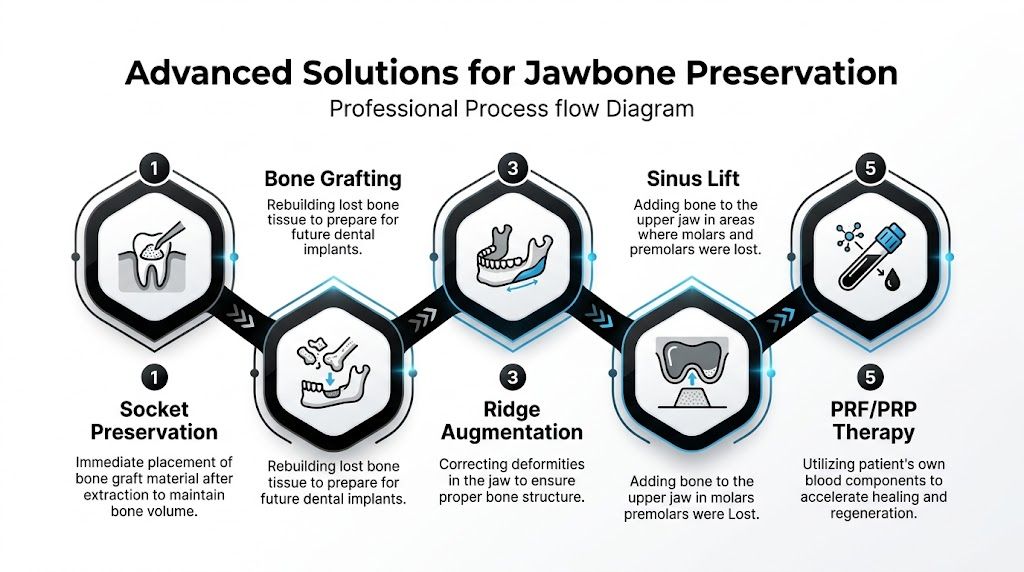
Advanced Clinical Options to Stop Jawbone Loss
The treatment that makes sense depends on where you are in the healing timeline.
If the extraction is happening now or happened very recently, the focus is usually preservation. In the 0 to 3 month window, the goal is to hold as much ridge shape and volume as possible so future treatment stays simpler. Once you move into the 3 to 6 month period, the conversation often shifts. At that point, we may be dealing less with prevention and more with rebuilding what the site has already lost.
Socket preservation after extraction
Socket preservation is usually the best first move when the tooth is being removed and the bone walls are still in a condition we can protect. Right after extraction, graft material is placed into the socket to support the space and limit the collapse that often follows healing.
The graft material acts as a scaffold, helping maintain the site’s shape while your body repairs the area. It does not replace a tooth by itself, and it does not function like an implant. What it often does is preserve better bone contour for the next step, especially if you may want an implant later.
In practical terms, this option matters most during the first 0 to 3 months. Waiting until the site has already flattened or narrowed can still leave treatment options, but those options are usually more involved.
PRF as a healing support
PRF therapy uses your own blood components to concentrate healing factors at the surgical site. I use it as a support treatment, not as a replacement for grafting when the socket needs structural support.
PRF can help the tissue heal more favorably and may improve how the grafted area matures. Patients often like it because it uses their own biology rather than adding another synthetic step. The trade-off is straightforward. PRF can improve the healing environment, but it does not hold ridge volume on its own the way a grafting procedure can.
For some patients, combining socket preservation with PRF gives the site both structure and a stronger healing response.
When the site has already changed
If you are now 3 to 6 months out from an extraction and the ridge has already narrowed, treatment may need to shift toward rebuilding.
That may include:
- Bone grafting: Adding graft material where more bone is needed for future treatment
- Ridge augmentation: Rebuilding the contour of an area that has collapsed
- Sinus lift procedures: Creating more usable bone height in some upper back jaw cases before implant placement
These procedures can be very effective, but patients should understand the trade-offs. They usually add cost, healing time, and another stage of treatment. In my office, I frame them as problem-solving procedures that can reopen good options, not as a failure of the earlier extraction.
For patients reviewing best options for missing teeth, the missing tooth is only part of the decision. The condition of the bone often determines which replacement options will work well and which ones will require extra preparation.
Why implants matter for long-term bone health
A bridge replaces the visible tooth. A denture replaces teeth across a larger space. A dental implant replaces the missing root within the jawbone, which is why it stands apart from other restorations.
That root replacement matters because the jaw responds to function. When an implant integrates with bone, it helps maintain stimulation in a way a bridge or denture cannot. If a patient’s goal is both tooth replacement and long-term bone support, implants usually offer the strongest path.
| Option | Replaces visible tooth | Replaces root function | Helps preserve jawbone directly |
|---|---|---|---|
| Bridge | Yes | No | No |
| Denture | Yes | No | No |
| Socket preservation graft | No, not by itself | No | Helps preserve site for future treatment |
| Dental implant | Yes | Yes | Yes |
That does not mean every patient should get an implant immediately. Some sites need time to heal first. Some patients need grafting before implant placement. Others choose a bridge or denture because of budget, health history, or timing. Those are real considerations, and they deserve a clear conversation, not sales language.
Planning the right option at the right time
The first question is not only, “How do we replace this tooth?” The better question is, “What can we do at this stage of healing to protect your future options?”
In the first 3 months, socket preservation often gives us the best chance to keep treatment straightforward. In the 3 to 6 month period, we may need to assess whether rebuilding is necessary before placing an implant. Good planning follows the biology.
Bone healing also depends on your overall health. Adequate nutrition supports the repair process, including nutrients such as calcium, vitamin D3, and K2. Clinical treatment sets the stage, but your body still has to do the rebuilding.
Lifestyle and Nutrition for Stronger Bone Healing
Clinical treatment does a lot of the heavy lifting, but healing doesn’t happen only in the dental chair. Your daily habits can either support the extraction site or make recovery harder.
That matters whether you’ve had a routine tooth extraction, socket preservation, periodontal therapy, or you’re planning ahead for dental implants.

Smoking is one of the clearest risks
If you smoke or use tobacco, this is the time to have an honest conversation with yourself and your dentist.
Tobacco delays healing and raises the risk of problems after extraction and grafting. It affects blood flow, irritates tissue, and makes it harder for the site to recover the way it should. Patients often focus on pain control after an extraction, but blood supply and tissue quality are just as important for long-term success.
If you’re trying to protect bone, quitting or even pausing tobacco use around treatment is one of the most meaningful actions you can take.
Healing depends on what your body can build. Tobacco makes that job harder.
Oral hygiene protects the healing environment
Bone preservation and oral hygiene are tightly connected.
Plaque and bacteria don’t just threaten teeth. They can also create inflammation around healing tissues and accelerate periodontal problems that affect the surrounding support structure. That’s why dentists consistently stress twice-daily brushing, flossing, and regular dental visits after extraction and during long-term maintenance.
A simple routine works best:
- Brush gently but consistently: Keep the rest of your mouth clean without traumatizing the extraction site.
- Floss the neighboring teeth: Food and plaque buildup around the area can inflame the gums.
- Keep recall visits: Healing should be checked, especially if you’ve had grafting or are planning implants.
Patients sometimes assume they should avoid the whole area for too long. The better approach is controlled, gentle hygiene guided by your dentist.
Nutrition supports the rebuilding process
Bone healing needs raw materials. If your diet is poor, the body has less to work with.
A nutrient-rich diet that meets the recommended dietary allowance for calcium and vitamin D supports bone mineral density and overall healing. If you want a practical overview of nutrients that are often discussed together, this article on calcium, vitamin D3, and K2 is a useful general resource.
Focus on consistent nourishment rather than chasing a miracle food or supplement. In everyday terms, that usually means eating enough protein, choosing calcium-rich foods, and making sure vitamin D intake is addressed with your physician or dentist if needed.
A short visual overview can help reinforce these habits:
Small choices add up during healing
Patients often ask whether one missed brushing, one cigarette, or one poor meal will ruin the result. Usually, healing is more about patterns than isolated moments.
What matters is the trend:
- Are you giving the site a clean environment?
- Are you avoiding habits that slow healing?
- Are you supporting your body nutritionally?
- Are you showing up for follow-up care?
Good outcomes come from that combination. Dental care and preventive dentistry don’t stop at the procedure. They continue at home, every day, especially when bone preservation is the goal.
Your Bone Health Consultation at Our Rancho Bernardo Office
When a patient comes in worried about a recent extraction or a tooth that may need to come out, the appointment usually starts with two concerns. First, “Will this hurt?” Second, “What happens if I wait?”
A good consultation answers both clearly.
At our Rancho Bernardo office, the visit is designed to feel calm, practical, and unhurried. Many patients arrive feeling stressed because they’ve been searching for a dentist in San Diego, CA, a best dentist in Rancho Bernardo, CA, or an emergency dentist after pain disrupted their routine. The goal is to replace uncertainty with a plan.
What the visit usually includes
The first step is a thorough exam and updated imaging. Digital dental x-rays help evaluate the extraction site, surrounding teeth, and the amount of bone support present. If the tooth is still in place, imaging also helps determine whether the goal should be preservation before extraction, immediate planning for replacement, or staged restorative care.
That information matters because treatment choices look very different when there’s strong existing bone versus a site that has already started to collapse.
A conversation that covers your actual priorities
The next part of the consultation is just as important as the x-rays. Patients need space to talk about timing, budget, appearance, anxiety, and daily life.
Some patients want the most conservative step right now because they’re not ready for a full restoration. Others want the strongest long-term fix and are thinking about implants from day one. Some want to know whether a bridge, denture, or same-day crown might fit into a larger plan. All of those questions are reasonable.
The right treatment plan has to fit both the biology and the person living with it.
That’s especially true for families and working adults in Rancho Bernardo, Poway, Rancho Peñasquitos, Escondido, and nearby San Diego communities. You may be balancing school schedules, work demands, travel, and dental anxiety at the same time. A plan that looks good on paper but doesn’t fit your life often gets delayed.
What patients can expect after the exam
Once the exam is complete, you’ll leave with clarity on the next step.
That may mean moving forward with an extraction and immediate socket preservation. It may mean planning for a future dental implant. It may mean addressing periodontal concerns first, or discussing restorative options such as bridges, dentures, or CEREC same-day crowns if they fit the case better.
Patients also appreciate knowing that comfort matters here. If you’re anxious about treatment, say so. Supportive care, clear explanations, and a steady pace can make a major difference in how manageable the visit feels.
Why timing is part of the consultation
A bone health consultation isn’t only about whether you need treatment. It’s also about when each step should happen.
That’s why the timing of the extraction, grafting, healing review, and final restoration should be mapped out clearly. Even when treatment needs to happen in phases, a written sequence gives patients confidence and helps prevent the kind of delay that shrinks options later.
For new patients, that first visit is also a simple way to get established with a local practice that provides ongoing cleaning and exams, dental x-rays, new patient exams, and advanced restorative care in one place. Many people find that easier than piecing treatment together from multiple offices.
Common Questions About Bone Health After an Extraction
How will I know if I’m losing too much bone?
Most patients won’t be able to measure bone loss by looking in the mirror. Early changes are often easier to see on dental imaging and during an exam than at home.
What you may notice is a site that starts to look narrower, a change in gum contour, or a restoration plan becoming more complicated than expected. If you’ve had a tooth removed and want to keep future options open, the safest next step is a follow-up evaluation rather than guessing.
Is bone loss painful?
Not usually in a direct, obvious way.
The extraction itself can be sore while healing, but bone resorption often happens unnoticed. That’s one reason patients delay care. They assume that if nothing hurts, nothing important is changing. In reality, the area may be remodeling underneath the gums even when you feel fine.
Can bone loss be reversed years after an extraction?
Often, bone can be rebuilt or improved with grafting and related procedures, even if the tooth was removed long ago.
The trade-off is that later treatment is usually more involved than immediate preservation. You may need additional imaging, staged healing, or bone-building procedures before an implant becomes possible. It’s not hopeless, but it usually isn’t the simplest version of care.
If the extraction already happened years ago, don’t assume you missed every option. Assume you need a current exam.
Will losing bone affect my other teeth?
It can.
Changes in the ridge can influence gum support, spacing, and how neighboring teeth function over time. Depending on the situation, nearby teeth may shift, the bite may change, or replacement choices may narrow. That’s why replacing a missing tooth is about more than appearance.
Are implants always the right choice?
No. They’re the strongest option for stopping bone loss after extraction, but they still have to fit your health, goals, timeline, and budget.
Some patients start with socket preservation and place the implant later. Some choose bridges or dentures for practical reasons. The key is making that decision with a clear understanding of what each option does and does not do for the bone.
What if I need an extraction urgently?
Urgent care still allows for planning.
If you’re seeing an emergency dentist because of pain, infection, or a broken tooth, the first priority is stabilizing the problem. But even in urgent cases, it’s smart to ask one more question before the tooth is removed: “What can we do today to protect the bone?”
That one question often changes the long-term result.
If you’ve recently had a tooth extraction, or you’ve been told one is likely, the best next step is a personalized consultation. Pegah S. Salami, DMD, FAGD provides relationship-focused dental care in Rancho Bernardo for patients who want clear answers about bone preservation, tooth replacement, and long-term smile health. If you’re in Rancho Bernardo, Poway, Rancho Peñasquitos, Escondido, or nearby San Diego communities, schedule a visit to discuss your options and build a treatment plan that fits your health, goals, and timeline.





